
Top Five Potential Clients for a Future Su-35 Export Deal: From Algeria and Egypt to Iran and India
Military Watch Magazine Editorial Staff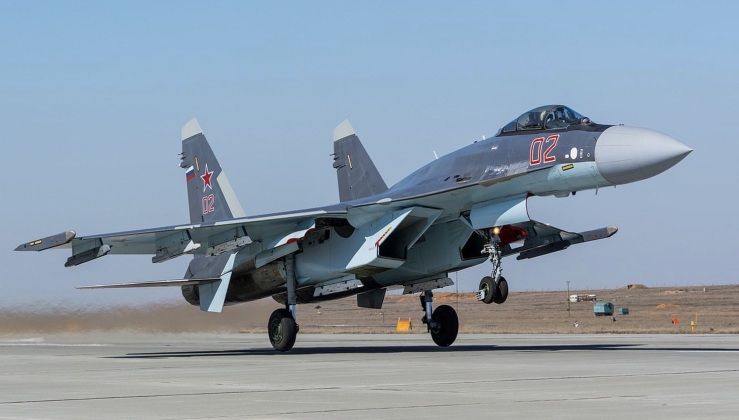
Su-35
Russia’s Su-35 ‘4++ generation’ air superiority fighter entered service in the country’s Air Force in 2014, and is a direct successor to the Soviet Su-27 Flanker which was designed to go head to head with elite of a NATO fleet such as the U.S. Air Force’s F-22 Raptors. The fighter is derived from the Su-27’s airframe, but boasts multiple significant differences including entirely new sensor, electronic warfare and avionics suites, a reduction in radar cross section around 70% lower, a high composite airframe which is both lighter and more durable, a higher sortie rate, more powerful AL-41 engines and a range of new weapons systems. With over 100 in service in the Russian Air Force today, and the fighter extensively combat rested in Syria since early 2016, the program is considered a major success with export orders for around two dozen fighters each signed with China and Egypt and a further agreement for sale of 11 fighters made with Indonesia. With Russia’s more advanced Su-57 next generation heavyweight fighter having yet to enter service, and the Chinese J-16 and J-20 and American F-22 all unavailable for export, the Su-35 is arguably the most capable fighter in air to air combat on world export markets today, and is expected to see at least some additional export orders over the next decade.
A look at the leading potential clients for future sales of the Su-35 is given below.
Egypt
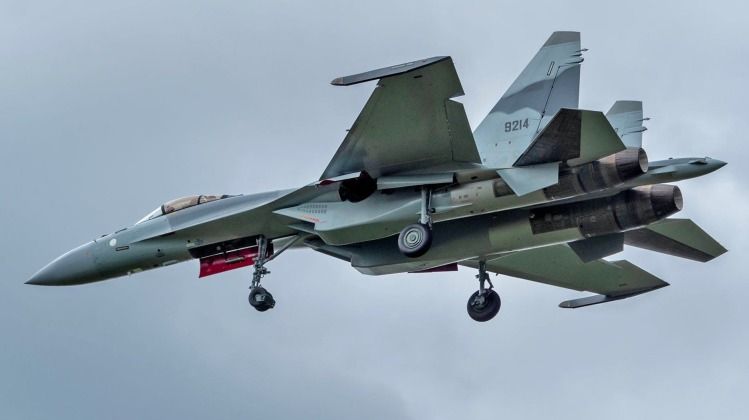
Egypt placed an order for Su-35 heavyweight fighters in 2018, with the deal announced in March 2019 and the first images of the aircraft in Egyptian colours released in July 2020. Egypt’s order was relatively small, and with the Su-35 being its only class of heavyweight fighter, and its only combat jet which is considered 'high end' out of a fleet of over 400 jets, it is likely that followup orders for the fighters will be placed to form at least three squadrons. Egypt is thought to be seeking a balance of power with neighbouring Israel and a decisive advantage over NATO member Turkey in the air, with the former fielding around 85 F-15 heavyweight jets and planning to acquire approximately 25 F-15EX ‘4+ generation’ platforms and 50 F-35 stealth platforms. Turkey, for its part, is investing in its own stealth fighter program and is also considering very large scale acquisitions of the Su-35 and possibly even the Su-57 for its own fleet.
Iran
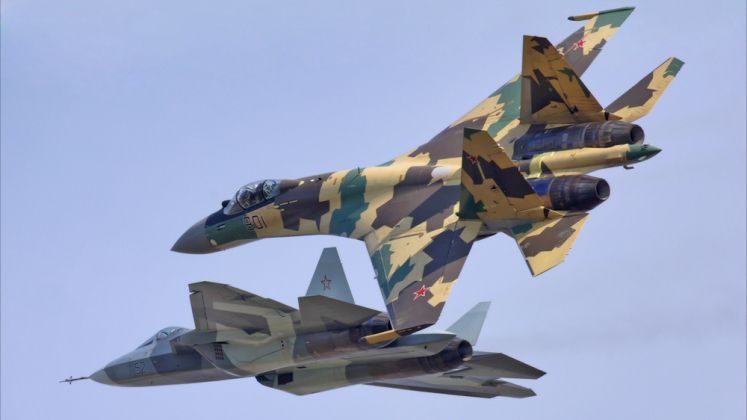
An arms embargo on Iran imposed by a Western-drafted resolution at the United Nations Security Council is scheduled to be lifted in October 2020, with the country expected to place orders for multiple high end fighter classes shortly afterwards. The Su-35 is a leading potential candidate to provide Iran with a more capable fighter class, which will be able to reliably counter the growing number of American F-22 and F-35 jets deployed to the Persian Gulf region - as well as the F-15QA and F-15SA jets of its Gulf allies and the F-35s of the Israeli Air Force. Iran’s potential purchases are restricted by a relatively limited defence budget and an ongoing economic crisis, and with the country today seeing much closer economic cooperation with China than with Russia and receiving very large amounts of Chinese investment it is highly possible that it will focus on the lighter but similarly sophisticated Chinese J-10C fighters and purchase a smaller quantity of Russian heavyweight jets. Competition from the Russian Su-30SM and Su-57 fighters could lead Iran not to purchase the Su-35 in favour of either a cheaper or a more modern class of heavyweight jet - but the possibility of a Su-35 sale still remains significant.
India
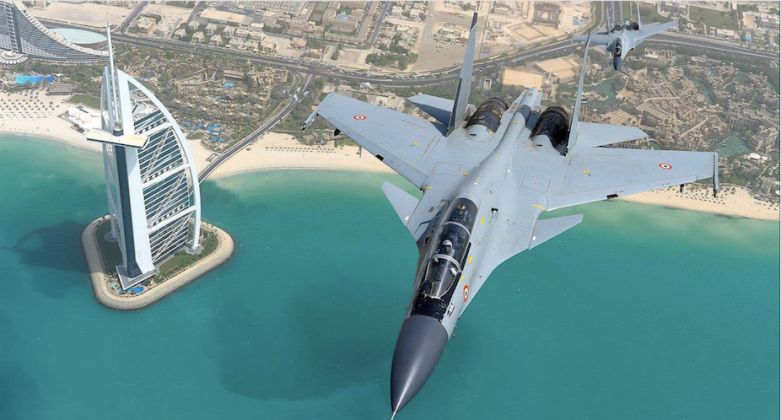
The Su-35 was considered a leading contender in India’s MMRCA tender for a next generation fighter jet, which would have seen the Air Force sign a contract to acquire 114 of the jets and produce them domestically under license. The tender has since reportedly been cancelled, although acquisitions of new foreign sourced fighters is still under consideration, possibly in smaller numbers and under a different kind of arrangement. India has been a leading client for several of Russia’s most prolific fighter designs, from the MiG-23 and MiG-21 of the Cold War era to the Su-30 and MiG-29 which it has continued to place orders for as recently as 2020. The Su-30MKI currently forms the backbone of the Indian fleet with over 270 in service, and while formidable its ability to go head to head with the latest fighters in neighbouring China is today in serious question. Although India has shown considerable interest in the Su-57 design, it is expected that these will only be purchased once the fighter further matures most likely in the second half of the 2020s. The Su-35 offers a more immediate answer to the presence of Chinese J-20 and J-16 fighters under its Western theatre Command facing India's northern border, which are expected to be joined by more capable jets in the next three years such as the J-20B and J-11D. Russia has also offered to integrate the Su-35’s Irbis-E radar and AL-41 engines onto the Su-30, which would drastically improve their capabilities and could accompany the Su-35 contract. The Su-35 is a promising option for the Indian Air Force, but ultimately the option of acquiring the Su-57 could dampen enthusiasm for acquiring the older jet.
Algeria
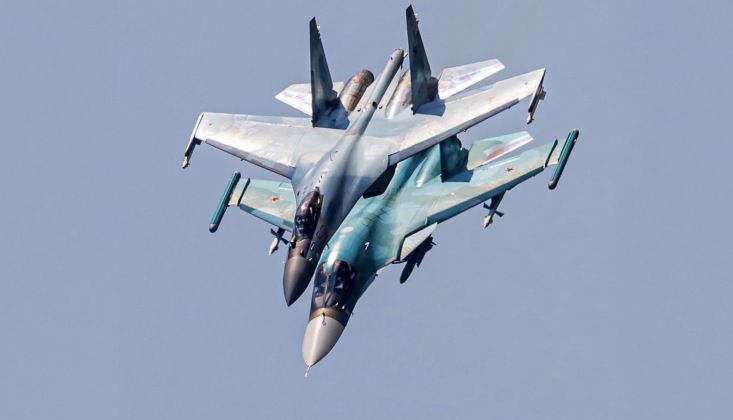
A number of unverified reports have indicated that Algeria is considering acquiring the Su-35 alongside the Su-34 strike fighter, possibly followed by the more advanced Su-57 platform. While the country is highly likely in the medium or long term to acquire the Su-57 to modernise its fleet, acquisition of the Su-35 remains more questionable in the near term. Where the Su-57 has been highlighted as a potential replacement for Algeria’s Su-30MKA heavyweight fighters, which are relatively new and could remain in service into the early 2030s, the Su-35 is thought to be intended to replace the country’s MiG-25 Foxhound interceptors. Although these jets are formidable and have been modernised to an advanced fourth generation standard, they are the oldest combat jets in the Algerian fleet and are expected to be phased out by 2025. The Su-35 is considerably more capable than the Su-30MKA in air to air combat, and could be fielded alongside them with commonalities between the two designs expected to make maintenance easier for the Algerian fleet.
Ethiopia
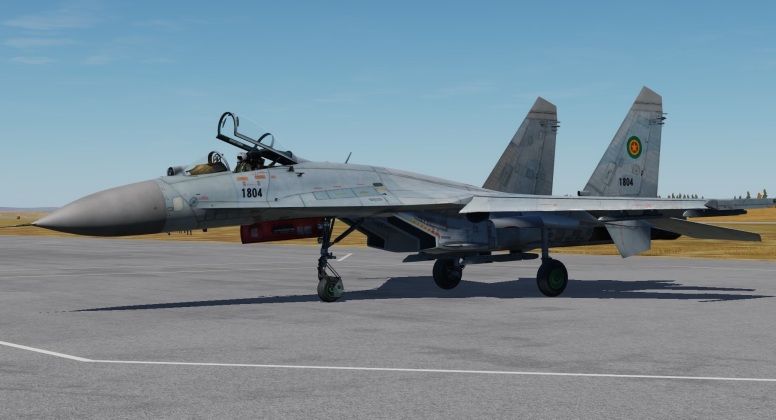
Ethiopia was one of the very first clients for the Su-27 Flanker, and today fields approximately 14 of the aircraft which form the backbone of its fleet. The aircraft are fast ageing, and have not been upgraded to a standard comparable to Russia’s Su-27SM2 meaning their sensors, electronics and weapons are today far out of date. With Ethiopia’s economy fast growing, and the country investing in more modern Russian air defence systems, it is likely that the country will begin to replace the ageing Su-27SK some time in the next decade. The threat of conflict with Egypt to the north, and growing instability in neighbouring Sudan following a Western supported coup in 2019, makes modernisation of the fighter fleet more imperative. With relatively small defence budget, Ethiopia may be more likely to invest in the Su-35 than the Su-57 - with the newer jet costing more both to acquire and to operate. The Su-35 is a natural successor to the Su-27SK in the Ethiopian fleet, and commonalities between the two designs will make the transition to the new fighter class particularly smooth from pilot training to maintenance infrastructure.
Worthy of Mention - North Korea
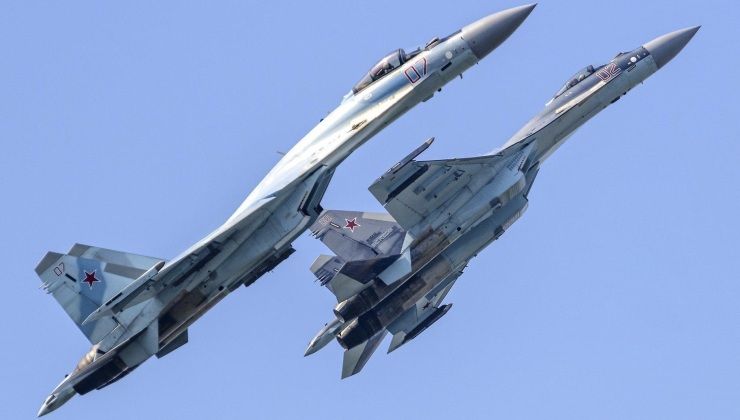
South Korean intelligence reports indicated that North Korea showed an interest in the Su-35 as early as 2015, despite the country sharply reducing spending on conventional arms in the latter half of the 2010s due to the greater security guarantees provided by its nuclear arsenal and advanced missile capabilities. It remains uncertain whether the East Asian state was genuinely interested in the new fighters, but Western-drafted economic sanctions imposed through the United Nations Security Council prevented Russia from making such overt arms sales to its neighbour. North Korea has sustained high levels of economic growth, which according to multiple South Korean sources have themselves been grossly underestimated when considering multiple important indicators, and should these be sustained into the 2020s the country will be in a strong position to purchase new fighter jets in the second half of the decade. With both South Korea and Japan deploying modernised F-15 variants as well as F-35A jets, the Su-35 could be the most cost effective means to gain some form of parity in the air - with a contract for 24-28 jets estimated to cost around $2 billion depending on specific technology transfers and armaments included. Whether the country will be able to make such a purchase depends heavily on whether UN sanctions can be lifted - although there are signs that the beginnings of a sanctions rollback could come in the near future particularly if the Donald Trump administration remains in power.
