
Indonesia Expects First Su-35 Deliveries By Year’s End - Acquisition to Go Ahead Despite American Threats
Military Watch Magazine Editorial Staff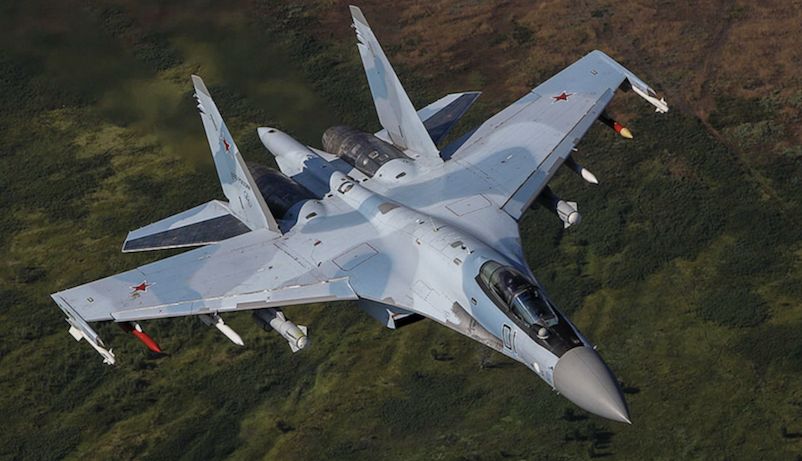
Su-35 Air Superiority Fighter
Indonesia’s armed forces expect the delivery of the first of eleven ordered Su-35 twin engine heavy air superiority fighters from Russia’s United Aircraft Corporation by the end of 2019 - according to a recent statement from Defense Minister Ryamizard Ryacudu. The Southeast Asian state concluded negotiations to acquire the Russian combat jets in February 2018, and Jakarta reported considerable pressure from the United States to terminate the order in August of that year as part of the U.S. policy to reduce Russian arms exports. The U.S. for its part has threatened clients for high end Russian equipment with economic sanctions under the Countering American Adversaries Through Sanctions Act - a move widely seen as an attempt to both undermine Russia’s defence sector, weaken its defence ties globally and gain markets for Western manufacturers. In October 2018, however, Indonesia affirmed that it would go ahead with planned acquisition of the Su-35 regardless of American threats.
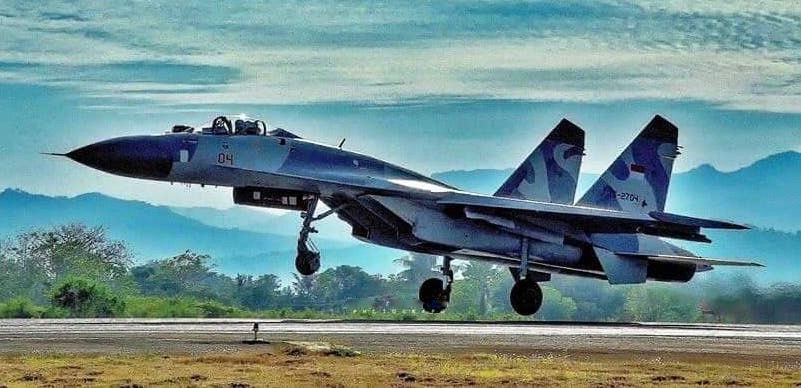
Regarding threats of American sanctions Minister Ryacudu stated that "fundamentally the issue has been solved." He elaborated that in attempting to finalise the acquisition: “certain challenges are due to the fact that three departments of the republic are involved in the process… The Defense Ministry has signed all documents, whereas the Trade Ministry and Finance Ministry are still in the process of approval.” While Indonesia formerly relied heavily on Western arms, namely the American F-5 and F-16A, the politicisation of arms sales by the U.S. and Europe which manifested in an embargo on spare parts during a dispute with Australia over East Timor from 1999 left the Western manufactured fleet unable to operate. Acquisition of non-Western aircraft to avoid such a vulnerability has since been imperative to the Indonesian Air Force, the backbone of which is currently comprised of Su-27 and Su-30 air superiority fighters supported by lighter single engine F-16 Fighting Falcons. Russia for its part has never blocked supplies of parts to operators of its hardware unless they are directly used against the Russian military - as in the case of Georgia from 2008.
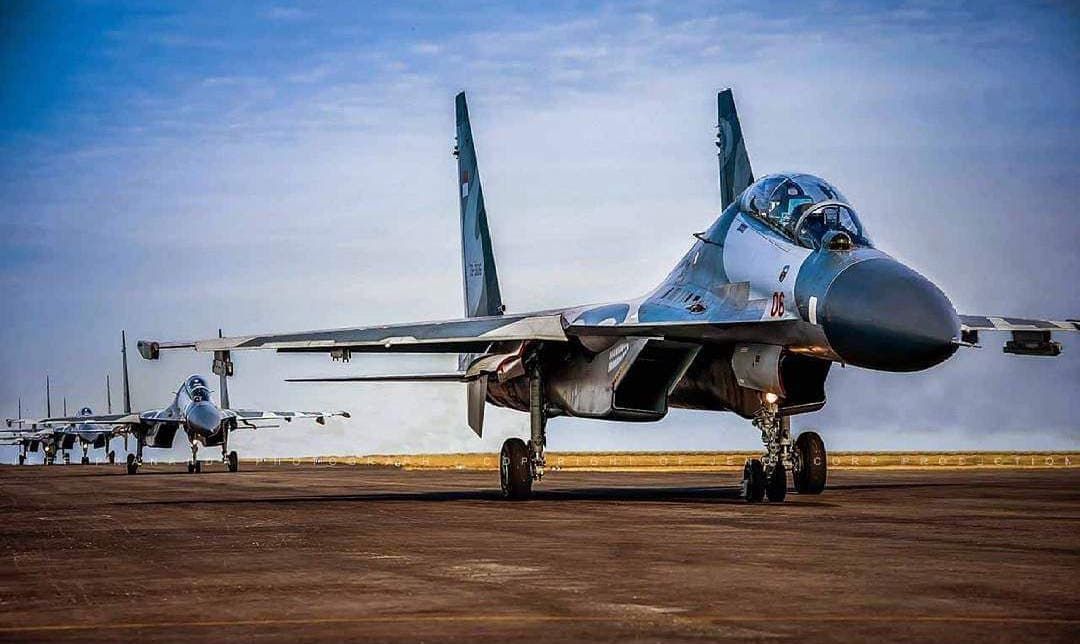
The Su-35 represents a heavily enhanced derivative of the Su-27 design, and upon entering service will be the most capable air superiority aircraft in Southeast Asia. The fighters deploy a powerful Irbis-E radar and infra red search and track system for excellent situational awareness, with a lightweight airframe made largely of advanced composite materials and three dimensional thrust vectoring engines combining to provide unrivalled manoeuvrability. The aircraft can be outfitted for long range ship hunting and ground attack, but is at its best in an air to air role where it can deploy up to 14 air to air missiles - including the hypersonic R-37M Mach 6 missile. The fighter benefits from state of the art electronic warfare systems, a high speed of over Mach 2.2, a high 20km operational altitude and access to munitions such as the Kh-35 and R-27ER for air to air combat. Indonesia’s armed forces have indicated potential interest in further followup purchases of the Su-35, though whether this will come as part of a further expansion of the fighter fleet or will be intended to replace older aircraft remains uncertain. Indonesia was the second country in the world after China to place an export order for the Su-35, with the cheaper but significantly less capable Su-30SM proving a more popular aircraft. Egypt and Algeria have reportedly since concluded negotiations and decided to acquire the aircraft, although details on how final these acquisitions are remains uncertain.
