
F-22 Raptors May Not be Able to Overcome Russia's Su-35 After All; Severe Shortcomings America's Most Advanced Fighter Emerge During Operations in Syria
Military Watch Magazine Editorial Staff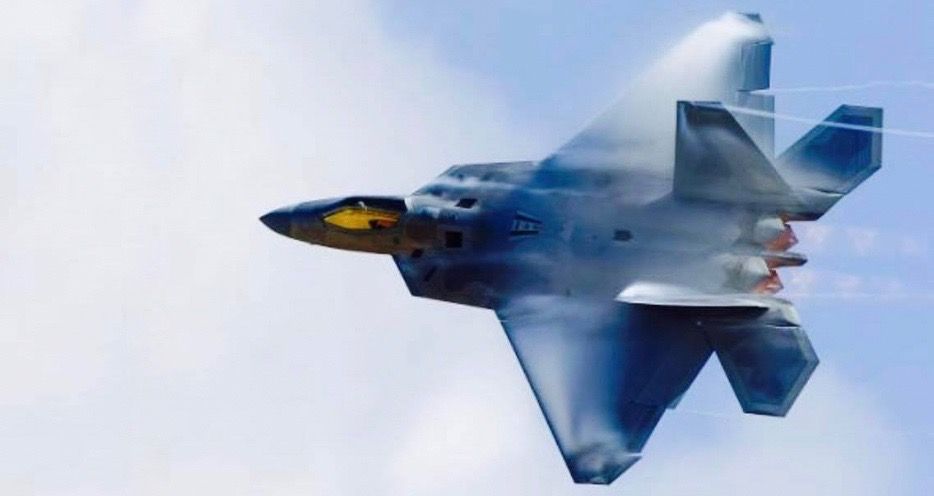
U.S. Air Force F-22 Raptor Fifth Generation Air Superiority Fighter
Since the Russian Air Force began to conduct large scale combat operations in Syria in September 2015 the service had deployed some of its most advanced combat aircraft to its bases in the Middle Eastern country - namely to the Khmeimim Air Base in far western Latakia province near the Mediterranean coast but also to a lesser extent to Shayrat Airbase which is shared with the Syrian Air Force. While the bulk of the contingent deployed has been comprised of platforms specialised in an air to ground role, including 10 Su-34 and 8 Su-24M strike fighters, and six Su-25SM attack jets, aircraft specialised in an air superiority role have also been deployed including 4 Su-30SM and 5 Su-35 fighters. These heavy twin engine platforms are based on the airframe of the elite Soviet Su-27 Flanker, and integrate state of the art sensors, air to air missiles, electronic warfare systems and unique thrust vectoring systems - two dimensional for the Su-30SM and three dimensional for the Su-35 - for enhanced manoeuvrability. While Russia's air contingent was initially deployed with few air to air capabilities, the Turkish downing of a Russian Su-24 strike fighter in November 2015 led the Air Force to deploy advanced Flanker derivatives with air to air missiles to guard against potential attacks by NATO fighters which also operate in the region, while also equipping Su-34 jets with a small defensive air to air armament. As Russia's most capable air superiority fighter, which had entered service only in 2014, the deployment of the Su-35 in particular was a major show of force to Russia's potential adversaries - which also represented the first confirmed deployment of fighters equipped with new R-77 air to air missiles overseas by the Russian Air Force.
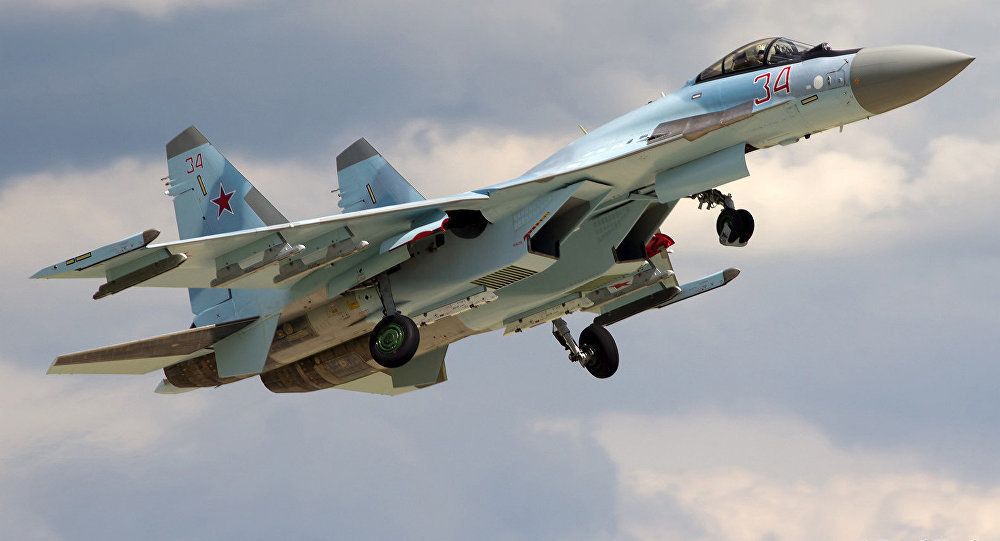
With heavily armed Su-30 and Su-35 fighters flying regular sorties over Syria, combined with the deployment of Russia’s most sophisticated long range air defence systems to its military facilities including the S-400 and S-300V4, the balance of power in the skies over Syria was in Russia’s favour despite the relatively small size of its expeditionary force - which even by 2017 numbered just 6000 personnel. Reports from official U.S. sources such as the Centre for Strategic and Budgetary Analysis indicate that the Russian Su-35 is more capable in air to air combat than any fighter in the American or NATO inventories - with the sole exception of the F-22 Raptor fifth generation air superiority fighter. With tensions with Russian forces growing, and the U.S. continuing to call for the removal of the Moscow aligned Syrian government from power in favour of Western aligned opposition forces, the United States Air Force began to fly its most advanced air superiority platform over Syrian and neighbouring Iraqi airspace on combat missions. The F-22 was expected to shift the balance of power firmly in favour of America and its allies - a much needed asset in the Middle Eastern theatre capable of engaging both Russian fighters and air defence platforms. Raptors deployed from the Al Dhafra Air Base in the United Arab Emirates, which also served as a base of operations for strikes in Afghanistan. Raptors were supported by E-3 Sentry AWACS platforms and KC-10A Extender aerial tankers.
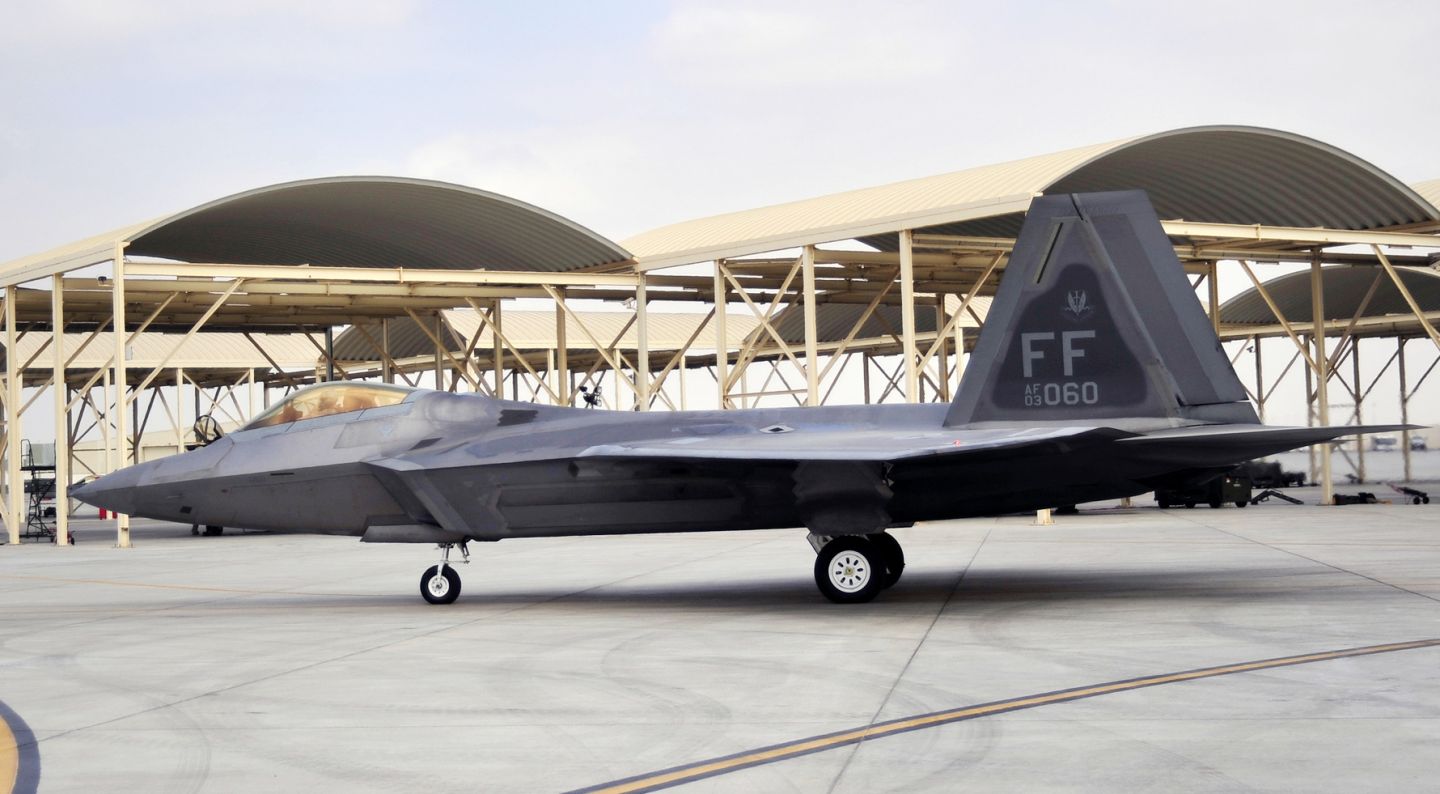
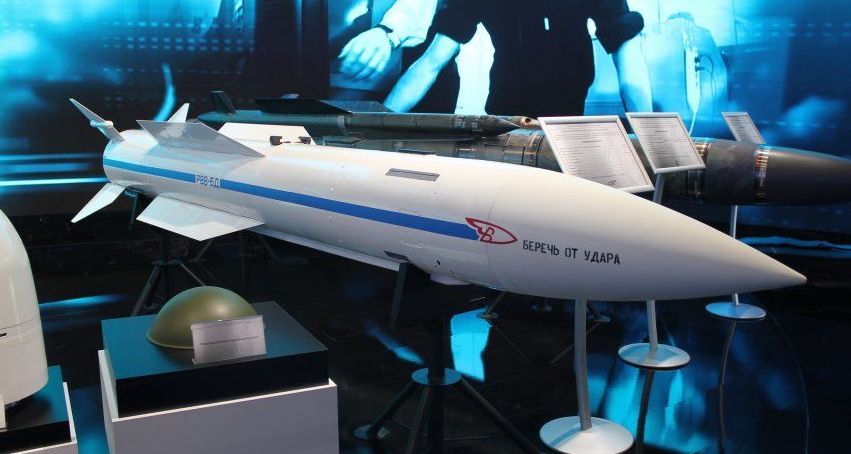
While it is by far the most capable Western fighter in service, the a number of performance issues have affected the Raptor’s ability to counter the Russian fleet over Syrian skies. Foremost among these are the F-22’s extreme maintenance requirements, which make sorties more than once a week extremely difficult - exacerbating their numerical disadvantage. A comparison of the Su-35 and the F-22 further indicates than an advantage for the American platform is far from certain in the event of an engagement. The Su-35 carries 175% of the F-22’s air to air missile payload, and its unique integration of three dimensional thrust vectoring allows it to more easily evade enemy missile attacks and manoeuvre better for visual range engagements. The fighter also integrates an infra red search and track system (IRST) which the Raptor lacks, allowing it to maintain situational awareness without using its radar and thereby engage targets with no radar signature. The computer architecture of the Su-35 is also considerably more modern, with that of the Raptor dating back to the 1990s. The F-22 for its part retains a number of considerable advantages of its own, most notably its radar cross section reducing stealth profile - the most advanced in the world on a fighter sized aircraft - which makes it extremely difficult to track or lock onto at extreme ranges. While the Su-35 has some limited stealth capabilities, with its radar cross section less than a third that of the preceding Su-27, its radar cross section is still considerably greater than that of the Raptor. The recent integration of the AIM-120D air to air missile onto the F-22, at present the most capable fully operational Western long range air to air missile, further provides it with a range advantage over the Su-35, with the missile retaining a 180km engagement range where the Russian jet can only engage at 130km using the R-27ER. The Su-35's manoeuvrability advantage somewhat compensates for this, and makes it considerably more difficult to hit at long ranges. The Su-35 for its part is set to deploy the R-37 hypersonic air to air missile in the early 2020s, a ramjet powered Mach 6 platform currently deployed by Russian MiG-31 interceptors with a range estimated at between 350km and 410km.
A further significant advantage for the F-22 is its integration of an advanced active electronically scanned array (AESA) radar, the AN/APG-77, which provides a longer detection and tracking range than passive platforms such as the Su-35's Irbis-E and has a lower radar signature. Despite the sophistication of the Raptor, reports of operations over Syria indicate that Russian Flankers have managed to overcome its superior sensors and stealth capabilities - evading detection by the F-22 using their advanced electronic warfare systems and themselves detecting the American stealth jets. A report from the commander of the U.S. 95th Reconnaissance Squadron stationed at UAE Al Dhafra Air Base stated that Raptors were unable to effectively track Russian Flankers in Syria. Russia's Air Force for its part has published evidence of the Su-35's ability to track the Raptor - forming a lock with what appears to be an infra red search and track system. According to the commander, a number of significant drawbacks have hindered the F-22's operational capabilities including a lack of infrared and optic capabilities to allow for night time tracking, a lack of helmet-mounted displays forcing pilots to actively look around to find other aircraft, and an inability to transfer data through the Link 16 tactical data exchange network and a resulting reliance on radio communication. The result is that, though it lacks stealth capabilities or an AESA radar, the Su-35 may well overall exceed the capabilities of the F-22 - particularly when accounting for the Raptor's extensive maintenance requirements and resulting long absences from the frontline. The age and complexity of the Raptor's computer architecture will make integration of upgrades to its electronic warfare systems, countermeasures and sensors extremely difficult - far moreso than for the Su-35 or other American jets such as the lighter F-35. While there is little doubt that the F-22 is one of the world's most capable combat aircraft, it's position as the world's foremost air superiority fighter may well not be guaranteed in light of recent Russian technological advancements and the Raptor's demonstrated failures when operating in Syria in proximity to the Su-35.
An older version of this article was previously published in November 2017.
