
Russia's Latest Specialised Air Defences Deployed to Syria; The Effect of the S-300V4 and S-400 Missile Systems on the Balance of Power in the Syrian Conflict
Military Watch Magazine Editorial Staff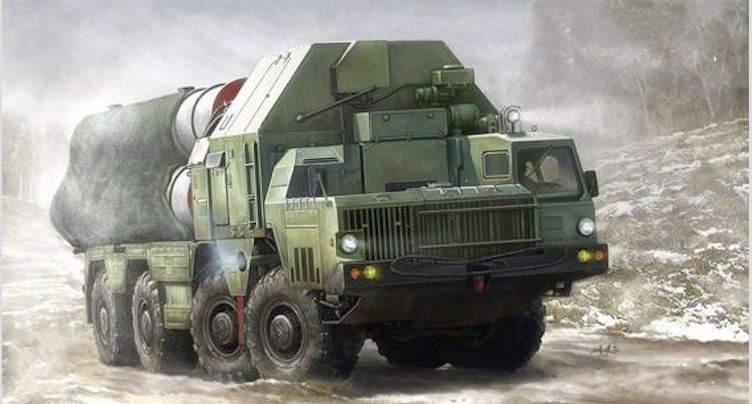
S-400 Surface to Air Missile System - Artwork
Since the downing of a Russian Su-24M strike fighter by a Turkish F-16 near the Syrian-Turkish border on November 24th, 2015, Russia has taken extensive measures to protect its forces and those of its allies from air attacks by hostile NATO powers. Russian forces' primary task was and remains to target Islamist insurgent forces from the numerous Al Qaeda affiliates and from Islamic State - parties which possess little to no capabilities for aerial warfare. Following Turkey's hostile action however, and with the U.S. Air Force deploying an increasing number of assets to Syria, Russia's armed forces perceived a need to deploy anti-aircraft capable surface to air missile systems to Syria to deter the Turkish, American and other forces hostile to the Syrian government from targeting Russian assets.
With its air fleet comprised of just a few dozen fighters, Russia has deployed advanced asymmetric weapons platforms to the country capable of engaging large numbers of enemy aircraft and missiles simultaneously to compensate for its small numbers. On December 1st 2015 the Russian armed forces deployed its S-400 Triumf surface to air missile systems to Syria, a platforms designed to destroy NATO's most advanced combat jets for the ground with the ability to engage up to 80 targets simultaneously with up to 160 missiles - some of which can travel at hypersonic speeds and neutralise aircraft flying as low as 5 meters off the ground. The S-400 was at the time considered the most advanced long range surface to air missile system in the world, and according to Russian missile specialists, the S-400 is capable of targeting any and all forms of aircraft including stealth platforms such as the F-22 Raptor and B-2 Spirit. Missile system has a maximum range of 400km and a detection range of 600km against most types of aircraft, which covers almost all of Syria as well as much of southern Turkey, Israel, Lebanon, Jordan and Iraq - as well as British military facilities in Cyprus. To complement the S-400, a newer and more specialised long range surface to air missile system was deployed to Syria shortly afterwards - the S-300V4. This was a modified version of the S-300 developed especially to target cruise and ballistic missiles, which first entered service in 2014 eight years after the S-400. The variant deployed to Syria, the S-300V4, reportedly also retains a 400km engagement range, and can intercept manoeuvring targets at high altitudes. While the S-400 has anti missile capabilities, the S-300V4 is superior in an anti missile role against several types of munitions. Several shorter ranged air defence systems with specialised roles such as the BUK and Pantsir have also reportedly been deployed to complement the capabilities of the two long ranged platforms.
Alongside the air defence systems, Russia's armed forces began to equip Su-30 and Su-35 air superiority fighters stationed in Syria, the most advanced fighter jets in service, with air to air missiles. According to U.S. military analysts the Su-35 is second in capabilities only to the U.S. F-22 Raptor, though which aircraft is more capable remains more disputed. While the Su-34 strike fighter had previously been deployed to Syria to target Islamist forces, the deployment of air superiority aircraft with state of the art air to air missiles such as the R-77, R-73 and R-27 gave Russian forces a potent anti aircraft capability. Though Russian forces were previously highly vulnerable to any aerial or missile attacks from hostile forces, with the deployment of new weapons systems the balance of power over Syrian airspace has notably shifted in their favour. With the downing of a Syrian Su-22 attack jet by US forces on June 18th 2017, Russia has suspended cooperation with the U.S. Air Force and the Russian defence ministry warned that U.S. fighter jets could become targets for its anti aircraft missiles deployed to Syria. The Russian Defence Ministry stated: “In the areas of combat missions of the Russian air fleet in Syrian skies, any airborne objects, including aircraft and unmanned vehicles of the (US-led) international coalition, located to the west of the Euphrates River, will be tracked by Russian ground and air defence forces as air targets." Russian and Syrian forces have on several occasions downed hostile UAVs over Syrian territory of Western, Turkish and Israeli origin as well as those operated by Islamist militant forces. U.S. aircraft, or those of any nation hostile to the Syrian government and their Russian allies today face a significant threat and can be denied access to Syria airspace at any time. While Syrian aircraft and troop concentrations may again be targeted in future, direct aggression against Russian forces by the U.S. or its allies is highly unlikely due to the potency of the assets deployed. Under this effective air cover Syrian and Russian forces can focus their efforts on defeating Islamist insurgents. Whether they will succeed in decisively doing so, with jihadist insurgents pouring into the country and a steady flow of arms continuing to supply them, remains to be seen.
