
The F-22’s Achilles Heel Which Led to Early Cancellation of Production; Why Raptors Cost $700 Million Per Fighter and How Their Sixth Generation Replacements Could be Cheaper
Military Watch Magazine Editorial Staff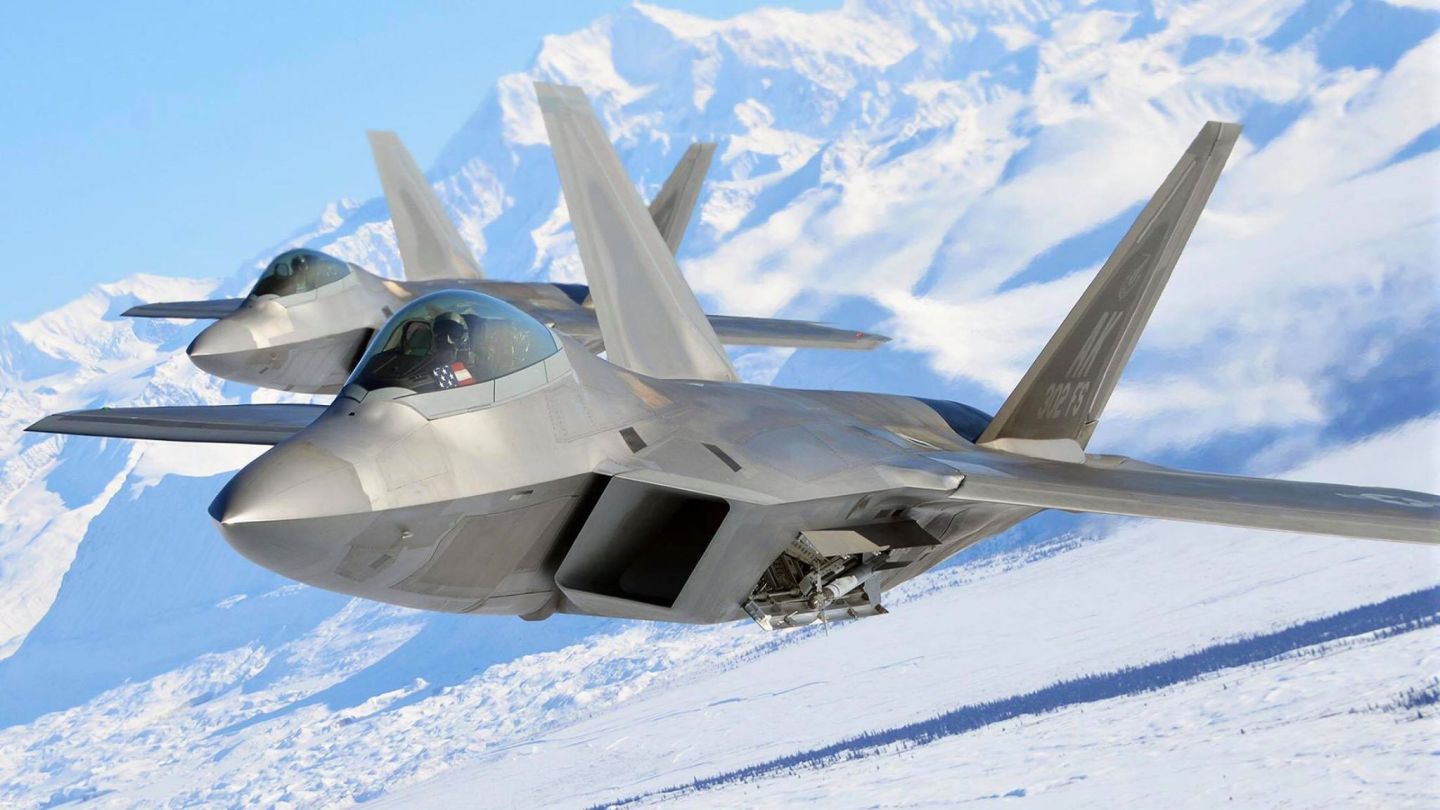
F-22 Raptors
Following the first flight of the Soviet Su-27 Flanker air superiority fighter in 1977, a platform designed to surpass the U.S. F-15 Eagle in air to air combat and ensure the Soviet Air Force would dominate the skies in a potential conflict with the Western Bloc, the United States Air Force urgently sought to commission a next generation fighter jet capable of outperforming the Flanker and ensuring parity or even supremacy could be retained. While testing of the Su-27 and the lighter MIG-29 were carried out in secret, U.S. intelligence were well aware of their presence by the early 1980s. The induction of the elite MiG-31 interceptor in 1981, a platform of which America’s elite fighters remained highly weary, further strengthened calls for a more advanced American fighter capable of surpassing the Eagle and better contending with the new Soviet designs. The new fighter was to retain the speed and manoeuvrability of the F-15, but the Air Force further required the addition of next generation technologies, a stealth profile, a longer range, and, perhaps most crucially, lower maintenance requirements than the F-15.
With the F-22 Raptor’s induction into service in December 2005, the aircraft was considered a great success - with an extremely low radar cross section and revolutionary new technologies integrated from its engines to its radar. The platform was only slightly slower than the Eagle, at Mach 2.25 rather than Mach 2.5, but was more manoeuvrable and retained the same air to air missile payload despite being required to store its munitions internally. Where the Raptor fell terribly short however was in its maintenance requirements - which not only failed to undercut those of the F-15 but were in fact far higher. This had two key consequences - the first being that the Raptor would cost a great deal to operate, over $60,000 per hour which made it the most expensive fighter to fly in the world by a considerable margin. The second was that the aircraft would be able to fly even less frequently than the already high maintenance Eagle, giving it a sortie rate of less than once long flight per week and thus seriously limiting its practical usefulness in a major war. While the Raptor was extremely sophisticated, and remains arguably the most advanced fighter in service anywhere in the world today, this came at a considerable cost - paid primarily not in acquiring or designing the fighter but rather in maintaining and flying it.
Maintenance would come to be the Achilles heel of the Raptor, not only in limiting the otherwise highly formidable fighter’s combat potential but also in undermining the viability of the entire program. With the U.S. Air Force having initially planned to acquire 750 Raptors, the cost of maintaining so many fighters over their estimated 55 year lifespan would have been phenomenal. While the cost of an F-22 airframe is approximately $150, the cost of operating the fighter over a 40 year lifespan is approximately $550 - possibly much more as the jets age and maintenance costs rise further, giving a total cost of at least $700 million per fighter. While the U.S. military may well have been able to afford a Raptor fleet of approximately 350 fighters even after the Cold War’s end had the aircraft had less extreme maintenance costs and requirements, the ongoing and ever increasingly costs of maintaining the fighter were likely key to the Obama administration prematurely terminating Raptor production at just 187 fighters - fulfilling just 25% of the Air Force’s needs and cancelling entirely prospects for a carrier based variant to replace the F-14 or a strike variant under the FB-22 program to replace the F-15E Strike Eagle. Had the F-22’s maintenance requirements and costs been less extreme, or even below those of the already expensive F-15 Eagle as the Air Force had initially requested, these specialised variants would have been far more likely to have been pursued while the Air Force’s prime air superiority fighter could well have entered service in twice the numbers of today. Ultimately the failure of the Raptor in this one key field undermined the otherwise highly successful program as a whole - though whether the F-22 would have been accepted into service with such a key shortcoming had the Soviet Union not disintegrated remains uncertain. It is highly likely however that, with a sixth generation air superiority fighter currently under development to replace the Raptor under the F-X Air Dominance Program, the U.S. Air Force will place a greater emphasis on lower maintenance requirements a higher sortie rate to ensure the program remains viable in the face of growing threats to American air superiority posed by new Russian and Chinese designs.
