
Who Will Win India’s MMRCA Competition? MiG-35, Su-35, Rafale, Super Hornet and More Go Head to Head
Military Watch Magazine Editorial Staff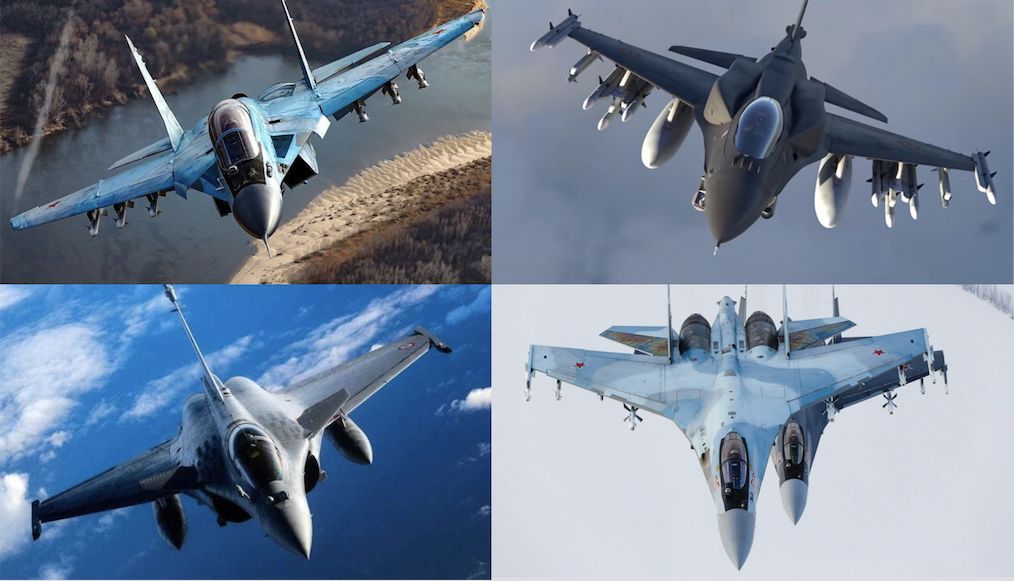
MiG-35, F-21, Su-35 and Rafale Fighters (clockwise from top left)
India Armed Forces have received seven offers from the Medium Multi-Role Combat Aircraft (MMRCA) tender, under which the country seeks to jointly manufacture 114 fighter aircraft to support its ‘Make in India’ initiative and assist its Air Force expansion plans. The Indian Air Force currently fields 32 squadrons of combat aircraft, which it seeks to expand to 42 by the year 2027. With 17 of its existing squadrons comprised of Mirage 2000, MiG-27/23 and MiG-21 fighters and Jaguar attack jets set to be phased out of service by then, the Air Force will need to acquire at least 27 new squadrons to meet its goal. A number of new types of combat aircraft will comprise the new squadrons with indigenous Tejas light fighters and heavyweight Russian Su-57 and Su-30MKI platforms each set to make up multiple new squadrons and new medium weight MiG-29 fighters having recently been ordered. An advanced foreign medium or light weight jet with robust next generation capabilities and lower operational costs is set to comprise a significant proportion of the new squadrons inducted however, and the possibility remains that further orders will be placed beyond the initial 114 jets under the contract. An assessment of the contenders in the Indian competition and the likelihood each had of being selected can thus provide considerable insight into the nature of India’s future defence partnerships, and gives some indication as to the likely future composition of the Indian fleet.
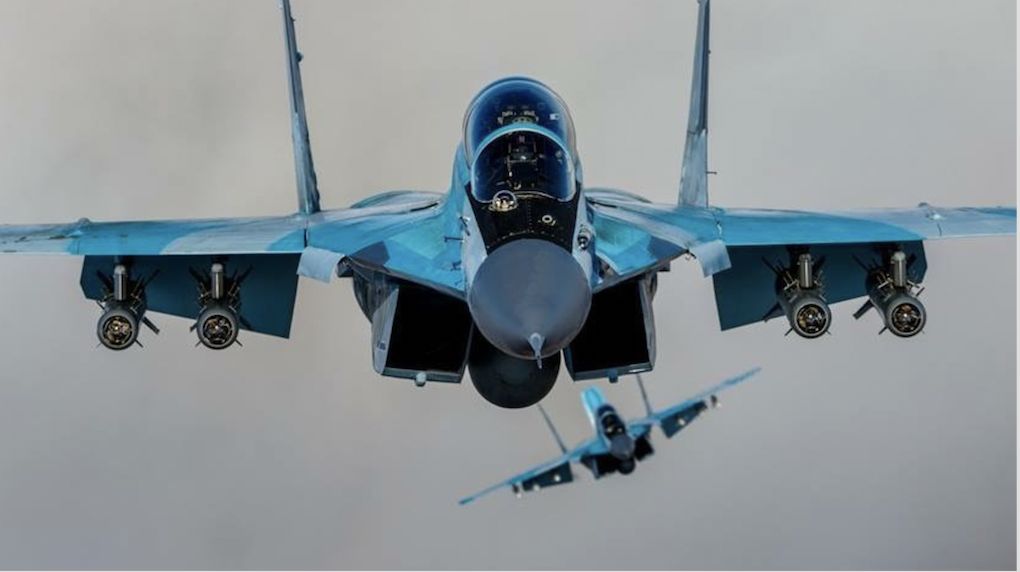
1 - MiG-35
The MiG-35 was designed to overcome the traditional weaknesses of light and medium weight fighters relative to their heavier counterparts in terms of situational awareness, altitude, range and payload - all while retaining their benefits in terms of low operational costs and maintenance requirements and the ability to deploy from short runways. The fighter appears to be the strongest contender in the Indian next generation fighter competition due to a number of factors. Russia has proven the most willing party to share its latest technologies with India’s defence sector and assist indigenous producers in licence manufacturing, a result of a longstanding defence partnership which dates back to the 1960s. India’s satisfaction with the performance of the MiG-35’s fourth generation predecessor the MiG-29, as demonstrated by its unexpected purchases in early 2019, means its next generation replacement is likely to be particularly attractive. Moreover, unlike India’s other medium weight fighter the Rafale, MiG purchases have been relatively straightforward with no misunderstandings over the terms of licence production and no internal controversy or corruption scandals regarding the contracts. The MiG-35 will be compatible with the maintenance infrastructure already in place to operate MiG-29 fighters, pilots will require minimal training to transfer form the MiG-29 to the MiG-35, and it will be compatible with the vast majority of air launched munitions in the Indian inventory which are either Russian made or indigenous but made for Russian aircraft. The MiG-35 was designed as a complementary lighter counterpart to the Su-57 air superiority fighter which India is likely to acquire in the 2020s - either under a licence production deal or directly from Russia, which allows for a synergy between the two jets which other contenders will lack. Regarding its capabilities, the MiG-35 is the only medium weight fighter in the world to integrate three dimensional thrust vectoring technologies, the first in the Russian inventory to deploy an AESA radar, and is compatible with next generation munitions such as the K-77 missile. With induction of the fighter into service in the Russian fleet beginning only in 2019, the MiG-35 is likely to prove a highly attractive export and a strong contender in the MMRCA competition.
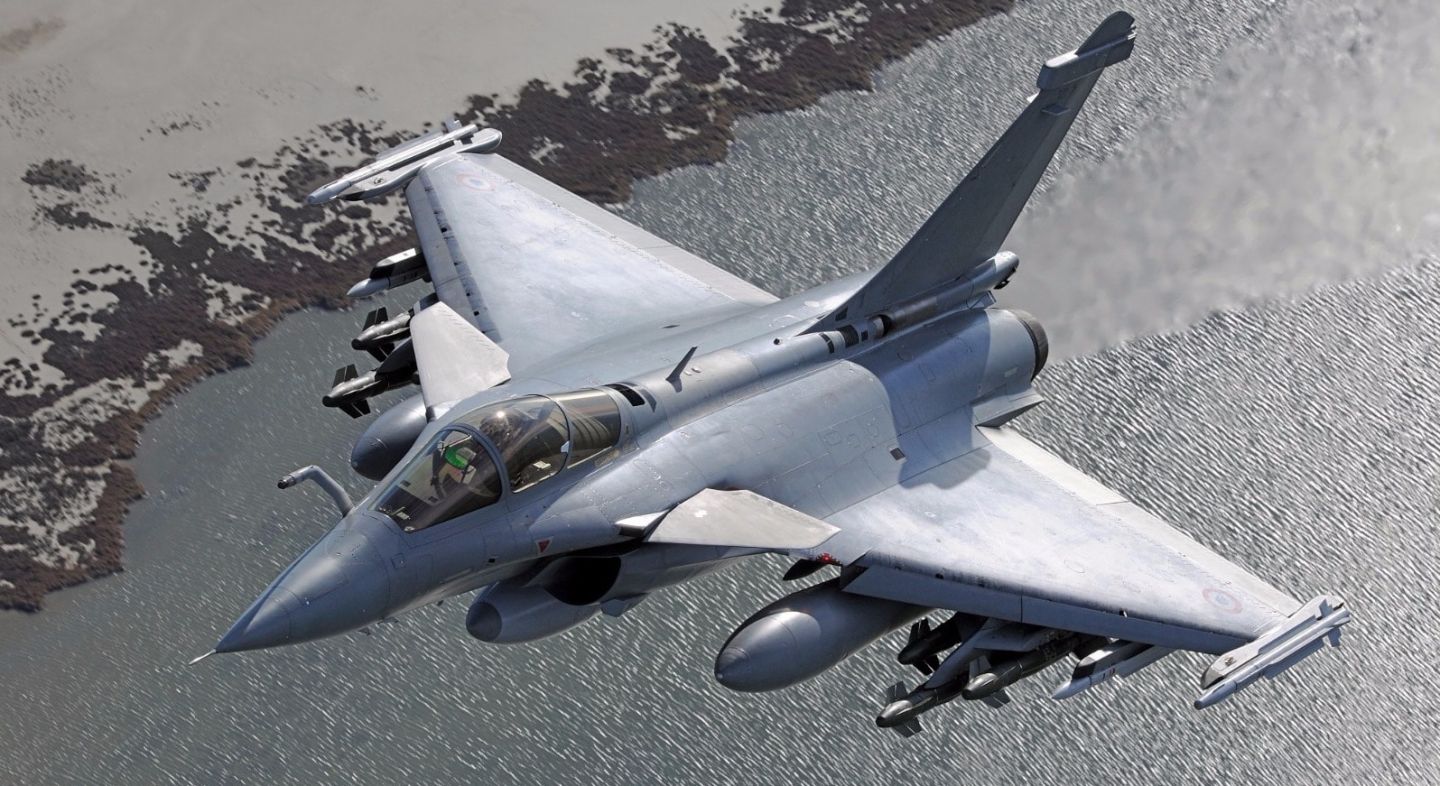
2 - Rafale
The Rafale previously won a tender for Indian medium weight fighter jets for 126 aircraft in 2012, although the deal was highly controversial domestically and has since led to a major corruption scandal. Disagreements over joint production and technology transfers with the French manufacturer led to the contract’s termination, although the Indian Air Force proceeded to place a smaller order for 36 fighters. The Rafale’s primary strength is that India’s Air Force will already be familiar with the platform by the time the deliveries under the MMRCA contract begin, with tactics for use having been developed, maintenance infrastructure put in place and airmen trained. While slow, restricted to low altitudes and using mediocre engines relative to its competitors, the Rafale most outstanding benefit may well be its access to the Meteor air to air missile - a slower equivalent to the Russian R-37M with a similarly extreme range. Ultimately while a measure of corruption is though to have facilitated the first Rafale deal, having some of the fighters in service already means that fleet expansion through further acquisitions may prove more attractive than acquiring an entirely new combat platform.
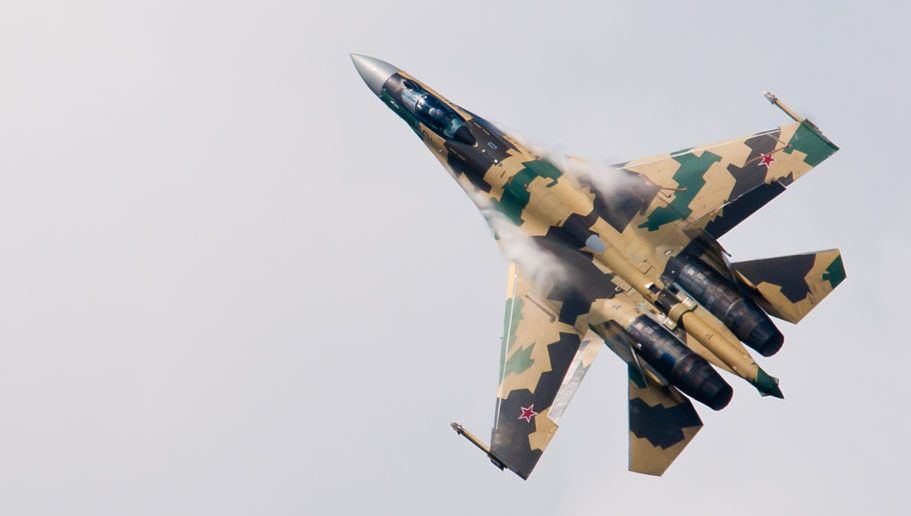
3 - Su-35
Perhaps the most unusual contender in the MMRCA tender, the Su-35 is the only heavyweight platform and the only platform with a specialised air superiority airframe to enter the competition. As a heavyweight aircraft it can comfortably outperform other jets in the competition across the spectrum, with a heavier payload, longer range, higher altitude, heavier sensors and electronics suites, and three dimensional thrust vectoring engines which provide a degree of manoeuvrability and a high speed unrivalled by all but the MiG-35. The fighter is the only one not to deploy an AESA radar, although this is compensated for by the far heavier radar it can accommodate which equates to more power. It has been reported that Russia could offer a specially enhanced variant of the fighter with an AESA radar now that these technologies have been perfected - with some reports also indicating that a variant with some stealth features could be on offer. The Su-35’s primary drawbacks are its high maintenance requirements and need for longer runways relative to lighter fighters, which makes its suitability for the competition questionable. This is somewhat compensated for by India’s high degree of familiarity with the ‘Flanker’ design - with the platform’s older and less specialised twin seat analogue the Su-30MKI forming the mainstay of the Indian fleet today with over 250 currently in service and dozens more planned. While the Su-35 offers a number of capabilities the Su-30MKI lacks, pilot training and maintenance infrastructure investments will be greatly reduced by the new platform’s similarity to the older one. Like the MiG-35, the Su-35 also benefits from compatibility with the vast majority of India’s existing munition types.
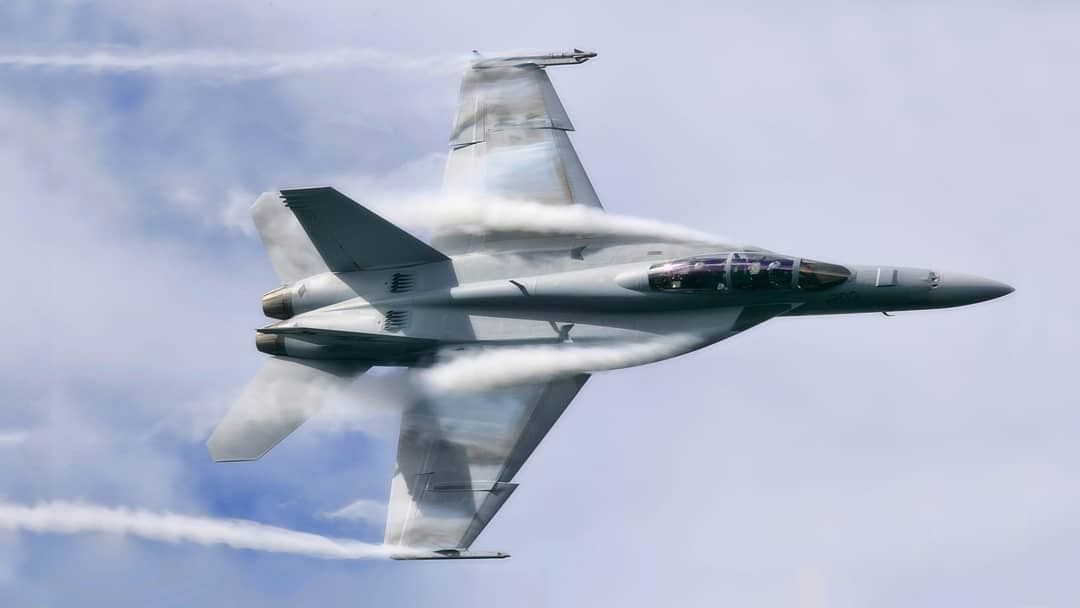
4 - F-18E Block 3
The American Super Hornet Block 3 brings a number of new capabilities to the field which could prove highly attractive to the Indian Air Force. The fighters are speculated to be selected for deployment from the country’s upcoming aircraft carrier INS Vishal, and deploying ground based units to complement those in the Navy before this date could prove beneficial. The latest variant of the Super Hornet is set to be heavily relied on by the U.S. Navy throughout the 2020s, particularly given difficulties bringing its single engine counterpart the F-35C to full operational status, The F-18E Block 3 thus benefits from some fo the most powerful American sensor and electronic warfare technologies available. The aircraft is set to be compatible with some of the most advanced American munitions developed, including the AIM-120D with an impressive 180km range and the upcoming AIM-260 the capabilities of which have only been speculated. These assets come at a cost however. In terms of aeronautical performance the F-18E is by far the least impressive in the MMRCA competition, with a low speed and altitude and poor manoeuvrability. Furthermore, India currently deploys almost no advanced munitions compatible with the Super Hornet or no maintenance infrastructure which can be used to service the jets - meaning considerably greater investments will be required. Perhaps the only exception to this is the fighter’s F404 engine which is also used by the indigenous Tejas fighter. The fighter’s missiles are extremely costly, with the AIM-120D coming at over $2 million each and the AIM-260 expected to be considerably more expensive - meaning equipping a fleet of fully armed Super Hornets would be particularly costly at several billion dollars.
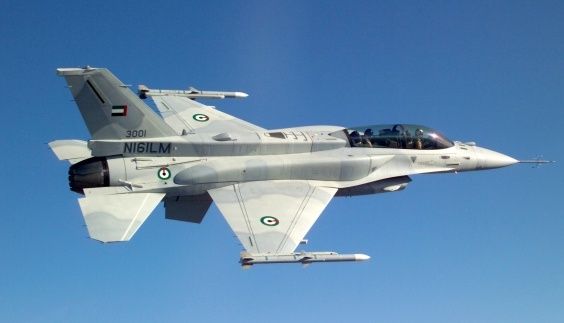
5 - F-21
A fighter developed especially for the MMRCA competition, the F-21 represents a further adaptation of the F-16E 'Desert Falcon' designed for the United Arab Emirates and integrates an expanded payload of eight air to air missiles. It was important for Lockheed Martin to rebrand the F-16, a legacy platform which as been in service for 41 years since 1978 and which is increasingly being phased out of service by the United States and its allies - with officials from Singapore to the U.S. itself alluding to its imminent obsolescence. India’s association of the F-16 with the Pakistani Air Force, which has fielded the jet since the early 1980s, and the claimed shootdown of a Pakistani Fighting Falcon in February 2019, further impedes prospects of a sale to India. The F-21 does benefit from state of the art avionics, electronic warfare systems, sensors and munitions - although overall its capabilities leave much to be desired compared to other contenders particularly the MiG-35 - which has access to more advance munitions in the form of the K-77. The fact that the U.S. Air Force itself is not buying the aircraft further reflects poorly on its capabilities - with India for decades accustomed to acquiring top of the line jets from Russia, France and Britain which are deployed for frontline action and often combat tested by these countries themselves.
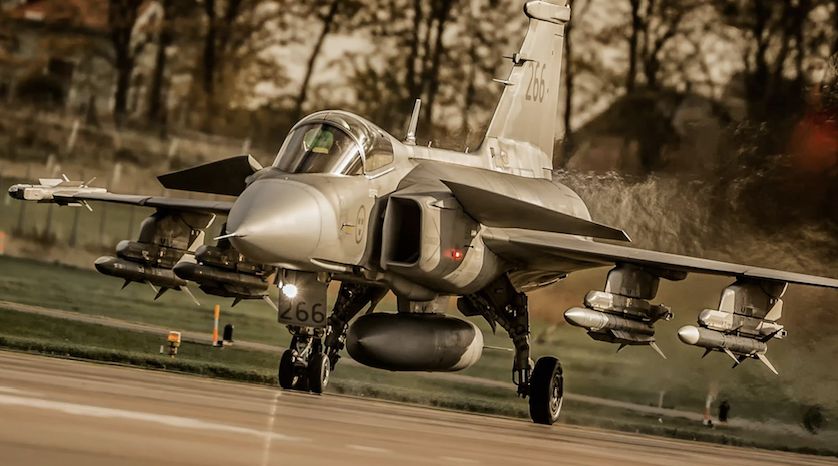
6 - Gripen-E
The design of the Gripen-E conceptually closely resembles that of the American F-16E and F-16V - a heavy enhancement on an ageing and unspecialised lightweight fourth generation design. The fighter’s capabilities are surpassed by those of the F-16E and F-21 across the spectrum however, with a weaker engine and no access to the latest American sensor and electronic warfare technologies. Access to technology transfers from Sweden, the research and development investments of which are dwarfed by that of the U.S., will be a considerably less attractive prospect for India - with the fighter also lacking the political benefits of acquiring an American warplane. Perhaps the only strengths of the platform are its low maintenance requirements, its access to the Meteor missile and its use of the F404 engine. This is the same engine as that used by Tejas fighter meaning some maintenance infrastructure could potentially be shared. Ultimately the Gripen appears by far the weakest fighter on offer, and brings few technologies to the field which India’s indigenous fighter cannot already provide.
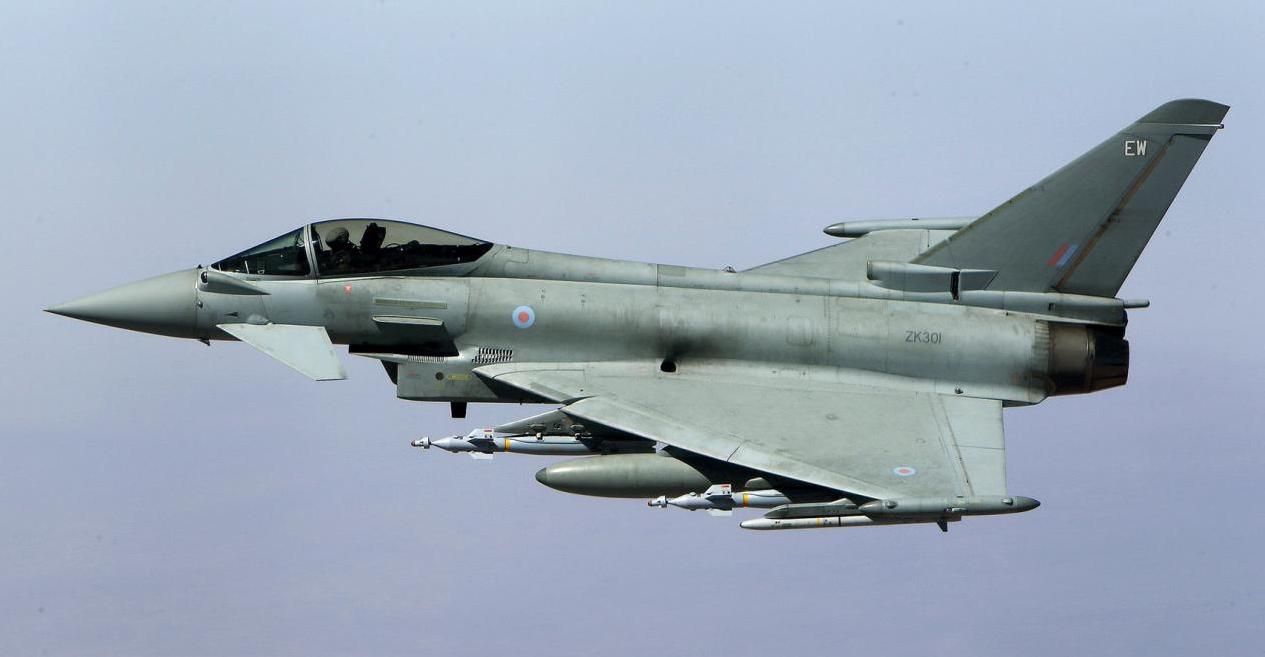
7 - Eurofighter
The Eurofighter is one of the most formidable fighters int he MMRCA competition, with capabilities surpassing those of the Rafale across the spectrum other than its range and with a high operational altitude and weapons payload more commonly found on heavyweight jets such as the F-15. The fighter is nevertheless highly unlikely to be selected for the MMRCA tender for two primary reasons. The first is that the Eurofighter has reportedly left an extremely poor impression on the Indian Air Force, with Indian Su-30MKI jets overwhelmingly defeating them in mock battles with a 12:0 outcome, and while this has partly been attributed to the superior training of Indian pilots relative to their British counterparts the capabilities of the aircraft also played a significant role. The second is that the fighter’s design is highly similar to that of the Rafale, with the two having their origins in the same program with capabilities, roles and even outward appearances which are very much alike. Thus with the Rafale already on order, these is little reason for India to order its close sister fighter considering the costs of maintenance infrastructure and pilot training which would ensue for unnecessarily introducing a new fighter class. Although the Eurofighter would be a strong contender, the fact that India already fields the Rafale seriously undermines its prospects.
