
MiG-35 vs. F-35; Which is the Better Fighter For India? (Infographic Comparison)
Military Watch Magazine Editorial Staff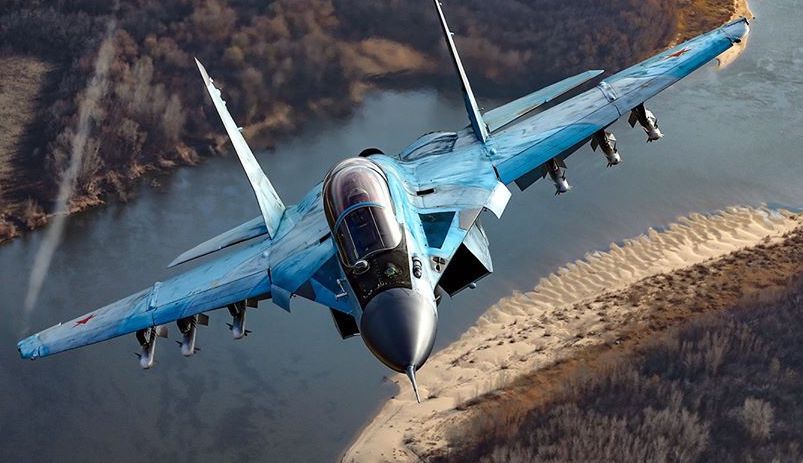
Russian Air Force MiG-35 Multirole Fighter
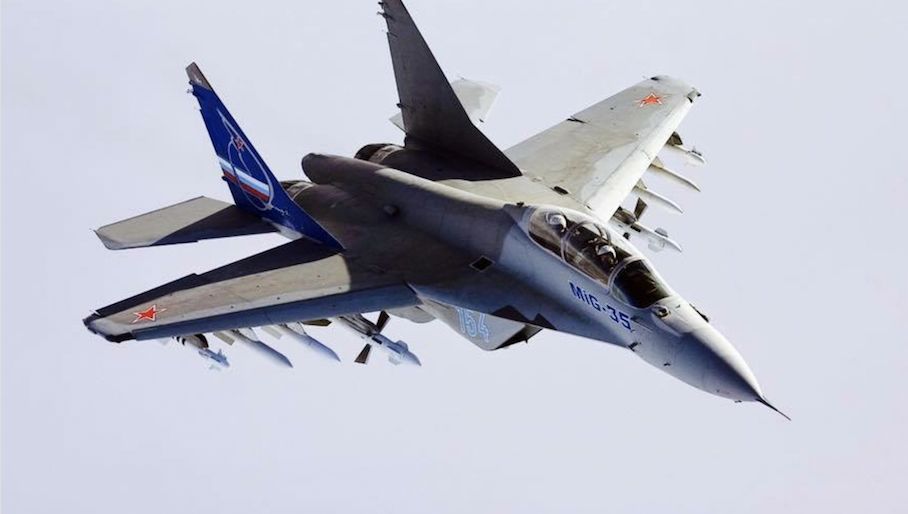
The MiG-35 entered service in the Russian Air Force in June 2019 as the most advanced fully operational fighter jet in the country’s inventory, and the first to deploy a number of next generation technologies including state of the art electronic warfare systems, the world’s lowest maintenance thrust vectoring engines and the first AESA radar on a Russian fighter jet. The fighter was designed as a lighter and lower cost complement to the heavyweight Su-57 next generation air superiority fighter, and integrates many of the same technologies. Much like the Su-57 was designed to replace the Soviet Su-27 air superiority fighter, the MiG-35 was intended as a replacement to the MiG-29 multirole medium weight fighter. Unlike the Su-57, which is designed primarily to prevail against the most capable jets in the world such as the American F-22 Raptor and Chinese Chengdu J-20, the MiG-35 is less specialised in the air to air domain but retains robust capabilities across the spectrum. Against all but the most advanced enemy combat jets, including heavier air superiority fighters of the fourth generation such as the F-15C Eagle and J-11B, the MiG-35 retains a number of advantages which will likely allow it to hold its own.
The MiG-35 benefits from a number of next generation technologies including three dimensional thrust vectoring engines - the second platform in the world to integrate them after the Su-35 - powerful sensors and a heavy armament of eight air to air missiles. With twice the missile payload of the American F-35, rivalling far heavier jets such as the F-22 and F-15C which also carry eight missiles, the MiG-35 is potentially highly effective in air superiority missions when properly outfitted. The MiG-35 appears to have been designed to overcome the traditional weaknesses of light and medium weight fighters relative to their heavier counterparts in terms of situational awareness, altitude, range and payload. The fighter’s AESA radar, though lighter than that of the Su-57, ensures a high degree of situational awareness and allows the fighter to lock onto stealth aircraft at intermediate ranges. The fighter retains a 19km maximum operational altitude - just 5% lower than the American F-15 and F-22 - and has a 50% longer range than the original MiG-29 allowing it to penetrate deep behind enemy lines. The MiG-35’s strength is its ability to combine these highly impressive performance specifications with the benefits of a medium weight fighter - low costs both to operate and acquire, a high sortie rate and ease of maintenance, and the ability to deploy from short runways near the frontlines. Perhaps the most attractive feature of the MiG-35 is that in terms of maintenance and operational costs, it is quite possibly the most efficient jet in the world. Where next generation fighters such as the F-35 and F-22 have far higher maintenance requirements than their fourth generation predecessors, the MiG-35’s maintenance needs are lower than those of the MiG-29 - reportedly with an 80% lower operational cost.
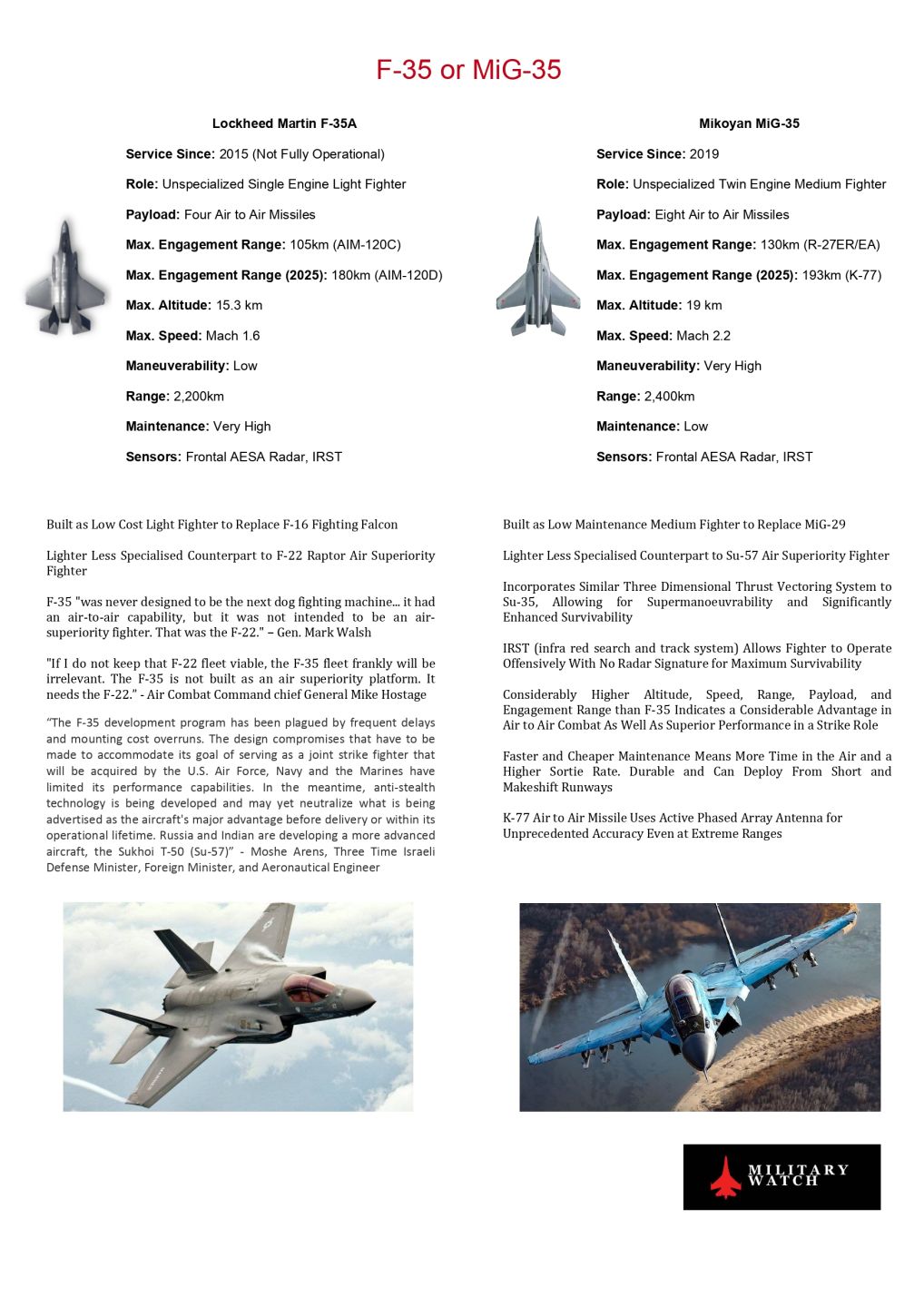
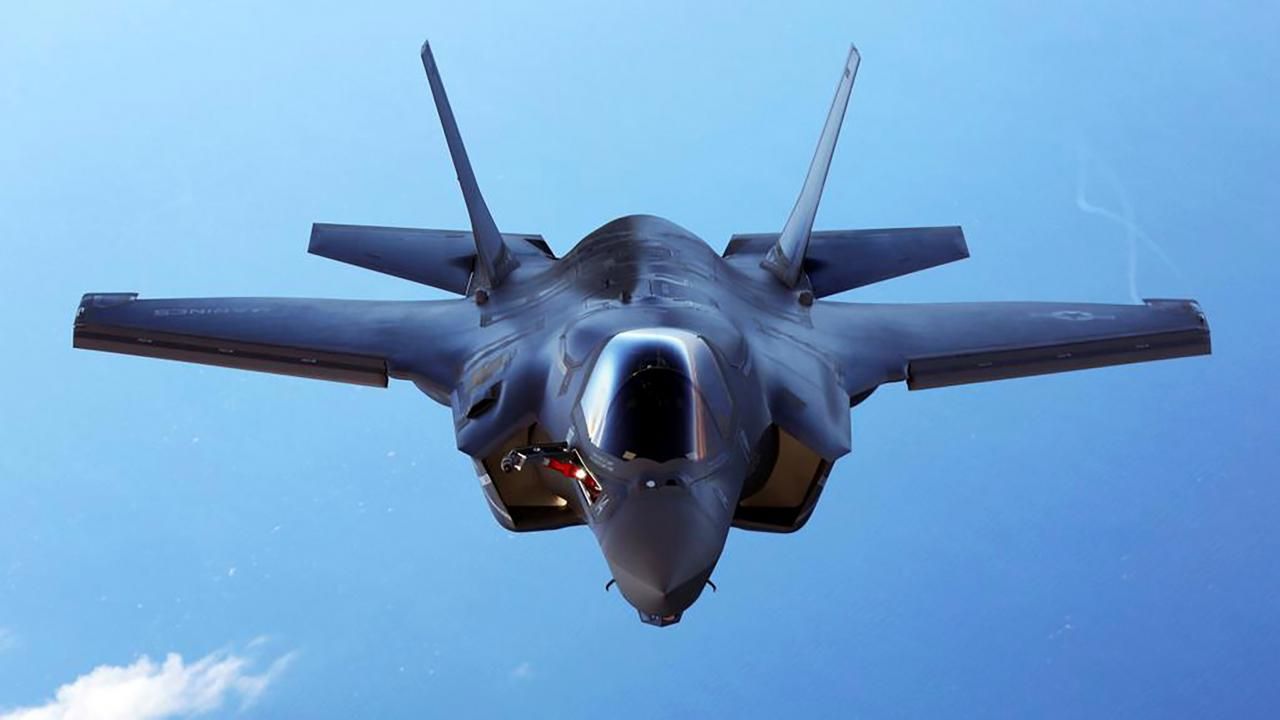
The American counterpart to the MiG-35, the F-35A Lightning II stealth fighter, differs drastically in its design philosophy. The F-35 employs a far more powerful engine, the Pratt & Whitney F135, which allows it to achieve supersonic speeds despite its bulky airframe and single engine configuration. The way in which stealth has been integrated onto the F-35’s airframe, which was also designed with the integration of a lift fan in mind for the specialised F-35B vertical landing variant, has led to a relatively poor aeronautical performance inferior to that of its Russian counterpart across the spectrum. The F-35 is restricted to a speed of Mach 1.6, making it the slowest modern fighter jet in the world, while the MiG-35’s Mach 2.2 speed places it on par with the F-22 Raptor, Su-35 and other high end designs. While the F-35’s manoeuvrability is poor - surpassed by many American fourth generation jets - the MiG-35 not only builds on the already impressive manoeuvrability of the MiG-29 with a lighter and more aerodynamic airframe and stronger engines, but also integrates three dimensional thrust vectoring engines for true supermanoeuvrability - rivalled only by that of the Su-35. This not only makes the MiG-35 an unrivalled dogfighter, but also allows it to far more easily evade beyond visual range missile attacks in a way the F-35 cannot.
In terms of munitions the MiG-35 not only benefits from twice the payload of the F-35 - possibly more with some sources indicating it can carry up to ten missiles for a small compromise in manoeuvrability - but it also has an edge in missile technologies. Both fighters have yet to integrate the next generation long range air to air munitions designed for their heavier counterparts - the K-77 designed for the Su-57 and AIM-120D currently fielded by the F-22 Raptor. The MiG-35 currently deploys the R-27ER and R-77 with ranges of 130km and 110km respectively, while the F-35 deploys the AIM-120C with a 105km range. The discrepancy will remain once next generation munitions are integrated, which is expected to have taken place for at least some of the American and Russian fleets by 2025. The K-77 retains a 193km range, but benefits from a unique active phased array antenna guidance system which makes it near impossible to evade even when fired from extreme ranges. The AIM-120D, with a shorter 180km range, has no comparable technologies.
The only category in which the F-35 has a decisive advantage is in its stealth capabilities, as while the MiG-35’s airframe is designed to reduce its radar cross section the design was not built around stealth in the same way as its American counterpart. The F-35’s radar evading profile, while detectable by basic long wave radars, is extremely difficult to lock onto at long ranges which gives the fighter an advantage in beyond visual range combat and when attempting to penetrate enemy air defences. Stealth somewhat compensates for the fighter’s lack of manoeuvrability and low speed and operational altitude - but only in some combat scenarios. The F-35’s radar is also heavier than that of the MiG-35, meaning that assuming roughly equal sophistication the American jet should have superior situational awareness. The same may not be the case in the capabilities of their infra red search and tracking systems. The F-35’s electronics and computer architecture are also the most advanced in the Western world - likely placing them on part with those of the MiG-35.
The F-35 remains far from fully combat ready, as has been widely reportedon by prominent American sources, with bugs continuing to surface which rule it out from operations in contested airspace or against near peer adversaries at present. It is also important to note that, due to the complexity of its systems, the F-35 suffers a number of disadvantages particularly for export clients outside of NATO and Five Eyes. The fighter relies on software which is closely linked to facilities in the United States itself, to the extent that the aircraft can effectively be disabled from America should it be used in a way deemed contrary to U.S. interests. The fighter’s close connections to American facilities also allow it to collect sensitive data on its operators - which it has been found doing on a number of occasions. For non aligned states with independent foreign policies, such a level of oversight and penetration will likely be unacceptable. Furthermore, it must be taken into consideration that India has historically had hostile relations with the United States during a number of periods - with Washington coming close to attacking India in 1971 which was prevented only by a swift Soviet intervention. The U.S. has repeatedly cut off arms supplies including supplies of spare parts to operators of its hardware conducting policy deemed contrary to American interests, and the Indian F-35 would be highly vulnerable to the same kind of political intervention - one which Russia and the Soviet Union have no history of conducting.
As an export client which has sought to expand its air fleet from 42 combat squadrons by the year 2027 from 32 currently, and with 17 of its existing squadrons comprised of Mirage 2000, MiG-27/23, Jaguar and MiG-21 aircraft set to be phased out of service by then, the Indian Air Force will need to acquire at least 27 new squadrons of fighters to meet its goal. While these will not be comprised of a single fighter type, with indigenous Tejas light fighters and heavyweight Russian Su-57 and Su-30MKI platforms set to make up multiple new squadrons, a foreign medium or light weight jet with robust next generation capabilities and lower operational costs is set to comprise a significant proportion of the new squadrons inducted. The United States has repeatedly offered the F-35A to Delhi, although India’s armed forces have repeatedly stated that they have no interest in the design despite persistent American overtures. India has, however, moved to expand its fleet of MiG-29 fighters in 2019 representing its satisfaction with the fourth generation Russian design. Interest in its next generation successor has also been considerable, with negotiations for a contract announced in October 2018 and Russia in February offering considerable technology transfers and rights to manufacture the jets under licence in India - terms which Lockheed Martin cannot contend with.
While the Indian Air Force does not currently field any American combat jets or combat jets which use American missiles, the MiG-35 will be fully compatible with the infrastructure already in place in India to maintain the MiG-29, and will use many of the same munitions. While the F-35 was designed as a lighter counterpart to the American F-22 Raptor, which is banned from export and has been out of production for ten years, the MiG-35 can benefit from operations alongside its heavier counterpart the Su-57 in Indian service - with the Air Force showing considerable interest in acquisitions of the next generation Russian platform and a contract expected to be signed in the early 2020s. The MiG-35’s low operational cost and modest price, particularly when considering the sophistication of its capabilities, makes it a potentially ideal platform to fulfil Indian ambitions for fleet expansion. With the F-35 costing over fifteen times as much to operate per hour, even if excluding its far higher acquisition cost and its significant performance shortcomings, operating a large fleet of the fighters remains impractical. The MiG-35, when placed in production under licence in India, is likely to be procured in very large numbers possibly on a similar scale to the Su-30MKI - of which little under 300 are planned with over 250 currently in service.
