
Did an Indian MiG-21 Shoot Down a Pakistani F-16? A Look at the Bison’s Capabilities and Prospects for a Successful Air to Air Kill
Military Watch Magazine Editorial Staff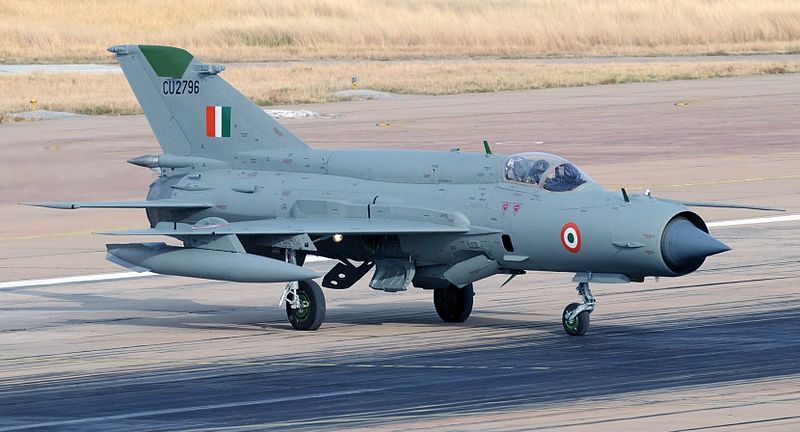
Indian Air Force MiG-21 Bison
Following reports that the Pakistani Air Force shot down two Indian fighter jets on February 27th 2019 - capturing a single pilot with the second landing in India, the Indian Air Force issued its own report stating that its MiG-21 single engine fighters had shot down a Pakistani F-16 Fighting Falcon. While Indian claims were initially widely doubted due to a lack of evidence, the Air Force’s Air Vice Marshal RGK Kapoor confirmed that a MiG-21 Bison shot down a Pakistan Air Force F-16 - which was closely followed by the publicising of images of an AIM-120C-5 long range air to air missile. This went a long way towards verifying the Indian narrative, as there was previously no evidence of involvement of the F-16 in the border engagements with the Pakistani JF-17 Thunder Block 2 fighters credited for shooting down Indian aircraft. The AIM-120C is comparable only with the F-16 in the Pakistani Air Force inventory, and the recovery of one of these missiles indicates that at the very least these fighters were involved in the conflict.

While the age of the MiG-21, a fighter design which dates back to 1959 when it first entered service in the Soviet Air Force, has been a major source for doubt in reports that the aircraft could have taken down an advanced fourth generation American made fighter armed with cutting edge munitions, a closer look at the capabilities of the two aircraft indicates that a shootdown in line with Indian claims is far more plausible than it may appear. Much like the F-16 design, which dates back 41 years in service to 1978, the MiG-21 has been extensively modernised since its first entry into service. Other than high end Chinese derivative variants such as the J-7G, MiG-21 fighters in Indian service, known as the 'Bison,' are the most advanced in the world. While the original MiG-21 has been obsolete for decade therefore, this is far from the case for the Bisons in the Indian fleet. The fighters field advanced Phazotron Kopyo radars, helmet mounted sights, and tactical data links - features usually only found on higher end fourth generation fighters. They are also compatible with modern medium and long range air to air munitions such as the R-27 and R-77, possibly even the longer range R-27ER variant, making them highly potent in beyond visual range as well as visual range engagements.
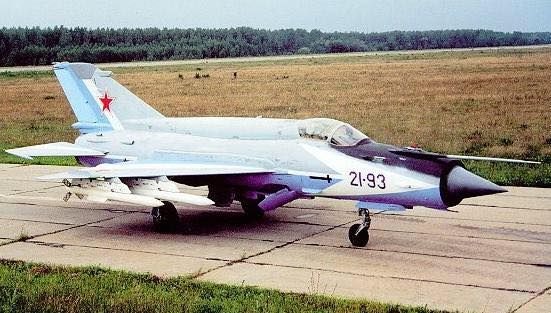
Another formidable feature of the MiG-21 variants in Indian service, perhaps its most potent asset, is the Israeli made EL/L8222 self escort jamming pods - which make them extremely difficult to detect or target by radar at long ranges. As the fighter’s beyond visual range capabilities in particular are somewhat lacking relative to the F-16, these jammers can potentially go a long way towards facilitating a closing of the ranges between the fighters - allowing the Indian jets to engage at closer range where capabilities are more balanced. Indian MiG-21s notably made use of this tactic in combat exercises against elite U.S. Air Force F-15C Eagles, high end air superiority fighters designed as heavier complements to the F-16 with considerably more powerful sensors, and it proved highly successful much to the surprise of the Americans.
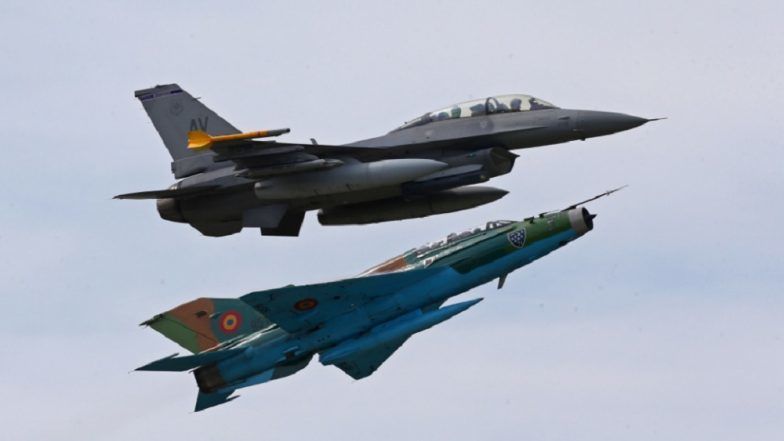
Given the sophistication of the Indian MiG-21s and considering their use of Tactical Data Links and high end avionics and sensors surpassing those of early fourth generation fighters, there is little reason to think that they could not down a Pakistani F-16. The F-16A and more modern F-16C relied on by the Pakistani Air Force notably lack many of these high end capabilities - with their jamming capabilities in particular leaving much to be desired relative to those provided by the EL/L8222 jamming pods - though Pakistani JF-17s reportedly do deploy many more modern avionics and sophisticated jammers. While the name MiG-21 resonates with the idea of a pre-Vietnam War era jet, the Indian Bison variant's capabilities today are in many ways fourth generation - surpassing those of fourth generation fighters of the 1970s and many of the 1980 and 1990s in a number of aspects including the sophistication of their munitions and jammers. The F-16 for example notably did not deploy a long range air to air missile as advanced as the R-77 currently used by the Bison until the late 1990s - much later for most Fighting Falcons - and they thus deployed for over 20 years as fourth generation platforms with considerably inferior beyond visual range air to air engagement capabilities to those of the Indian MiG-21 today. Given these factors, and the Indian Bison's formidable manoeuvrability in visual range combat and advantage of a higher operational altitude than the F-16, a shootdown remains highly possible. What is clear, however, is that India’s MiG-21 is far more capable than many may be led to believe, and the fighter type is very far from obsolete when compared to most fourth generation aircraft.
