
How Modern Avionics Can Make Legacy Fighters Competitive in Modern Combat; Indian MiG-21 Pilots’ Use of Advanced Jammers to Match U.S. F-15 Eagles
Military Watch Magazine Editorial Staff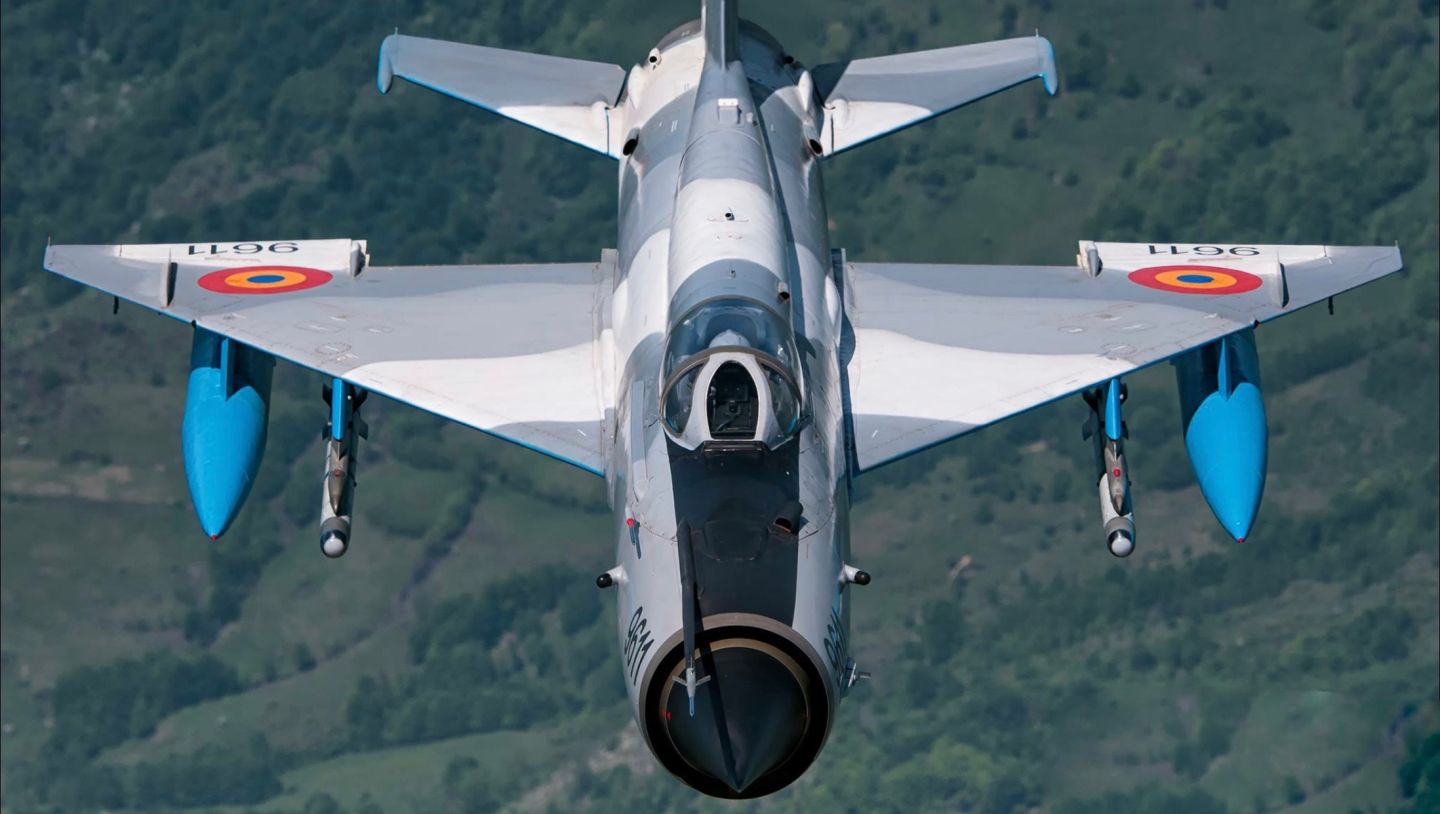
MiG-21 Fighter
First entering service in 1959, and making its debut during the Vietnam War, the MiG-21 second generation fighter has undergone extensive upgrades since it first entered service in the Soviet Air Force, and is today widely used by over two dozen countries across the world. While the fighter's original variants have long been considered obsolete, the platform remained in production until 2013 and has been kept viable as a modern combat aircraft with the addition of extensive upgrades. Indeed, the JF-17 fighter produced by China and Pakistan today is a direct derivative of the MiG-21 and with extensive upgrades including an advanced AESA radar, new engines, composite materials in its airframe and some of the world’s finest air to air missiles. The platform can outperform most fourth generation fighters despite the age of its origin. While the MiG-21 is today often derided as obsolete by Western analysts, it retains the potential when adequately upgraded and placed in the right hands to prove extremely lethal against far more modern and heavier aircraft. This was demonstrated successfully by the Indian Air Force, which used their own Soviet built MiG-21 fleet to seriously challenge elite American F-15 heavy air superiority fighters during the Cope India war games.
India’s MiG-21 fighters, while not as sophisticated as the JF-17 or the Chinese J-7G, are still among the most capable variants of the platform. Known as the MiG-21 Bison, these fighters came equipped with advanced Phazotron Kopyo radars, helmet mounted sights, and tactical data links - features usually only found on fourth generation fighters. The fighters were upgraded to deploy advanced Russian made R-27 and R-77 long range radar homing air to air missiles, which gave Indian MiG-21 fighters considerable firepower and made them highly capable for beyond visual range engagements. Perhaps most significantly, the fighters were equipped with advanced EL/L8222 self escort jamming pods, which made them extremely difficult to detect by radar at long range. The allow aircraft to effectively evade, degrading and even blind enemy sensors at long range and thus provide significant enhancements to their survivability.
The MiG-21's small size and radar evading capabilities made it highly effective in combat exercises against elite U.S. F-15 Eagles, and the Indian fighters were able to engage the American jets from short ranges without being detected and put the heavier fighters in a vulnerable position. Combined with their helmet mounted sights and advanced air to air missiles, the MiG fighters gave the American F-15 fighters, which had hoped to contend with Delhi’s more advanced fighters such as the Su-30MKI, a wholly unexpected and very serious challenge. Needless to say, when engaging India’s Su-30 air superiority fighters, the elite of its Air Force, the F-15s lost overwhelmingly.
While India’s MiG-21 fighters were able to make effective use of their jamming pods to gain an advantage over far more sophisticated and heavier fighters, the MiG-21 retains the ability to gain a greater advantage still by deploying more advanced low observability systems. Had the fighters been equipped with advanced infrared search and track (IRST) systems, they would have likely not only been able to engage the U.S. F-15s but could very possible have come out decisively on top in the engagement. The IRST would have allowed the MiG-21 to maintain situational awareness without making use of radars, and is deployed by Indian MiG-29 and Su-30 jets - though not by the F-15. This would provide the MiG with an invaluable further addition to its survivability, as while using radars give off a large signature which can be detected by hostiles, an IRST gives off none and allows a fighter to remain almost completely silent.
Fighters equipped with IRST systems are not only capable of remaining radar silent, but are also capable of firing air to air missiles without a radar lock. While radar locks can be detected by hostile targets and give them time to respond with evasive manoeuvres, firing missiles using an infra red tracker gives targets a far shorter response time. This would give the MiG-21 an effective advantage over the F-15, which not only lacks an IRST but also lacks an AESA radar. The Eagle's combination of a far larger radar cross section and a higher radar signature made them it considerably easier to detect than the MiG-21. While the performance of India’s MiG-21 against the F-15 when equipped with advanced jamming pods demonstrated the fighter’s potential when properly upgraded to pose a threat to more modern and elite combat aircraft, IRST systems would take this advantage far further and could well yield a one sided result favouring the MiG-21 against heavier and more modern Eagles which lack such advanced systems themselves.
IRST systems are notably immune to electronic warfare in a way radars are not, providing fighters with a more reliable means of maintaining situational awareness. The implications of the MiG-21’s success with jamming pods, and its potential when deploying infra red search and track systems, are manifold. While the United States’ elite fighters such as the F-15 and F-18E are expected by Western analysts to have little trouble engaging legacy Cold War era fighters in theatres such as the Korean Peninsula, highly cost effective asymmetric upgrades such as jamming pods and IRST systems could well prove a game changer for legacy fighters such as North Korea’s MiG-21s allowing them to pose a significant threat to more modern fighters - particularly when equipped with modern air to air missiles such as the R-27 in the same manner as the Indian fleet.
