
Indian FGFA Stealth Fighter Program To Go Ahead? Delhi Still Wants Russian Su-57 Jets After All
Military Watch Magazine Editorial Staff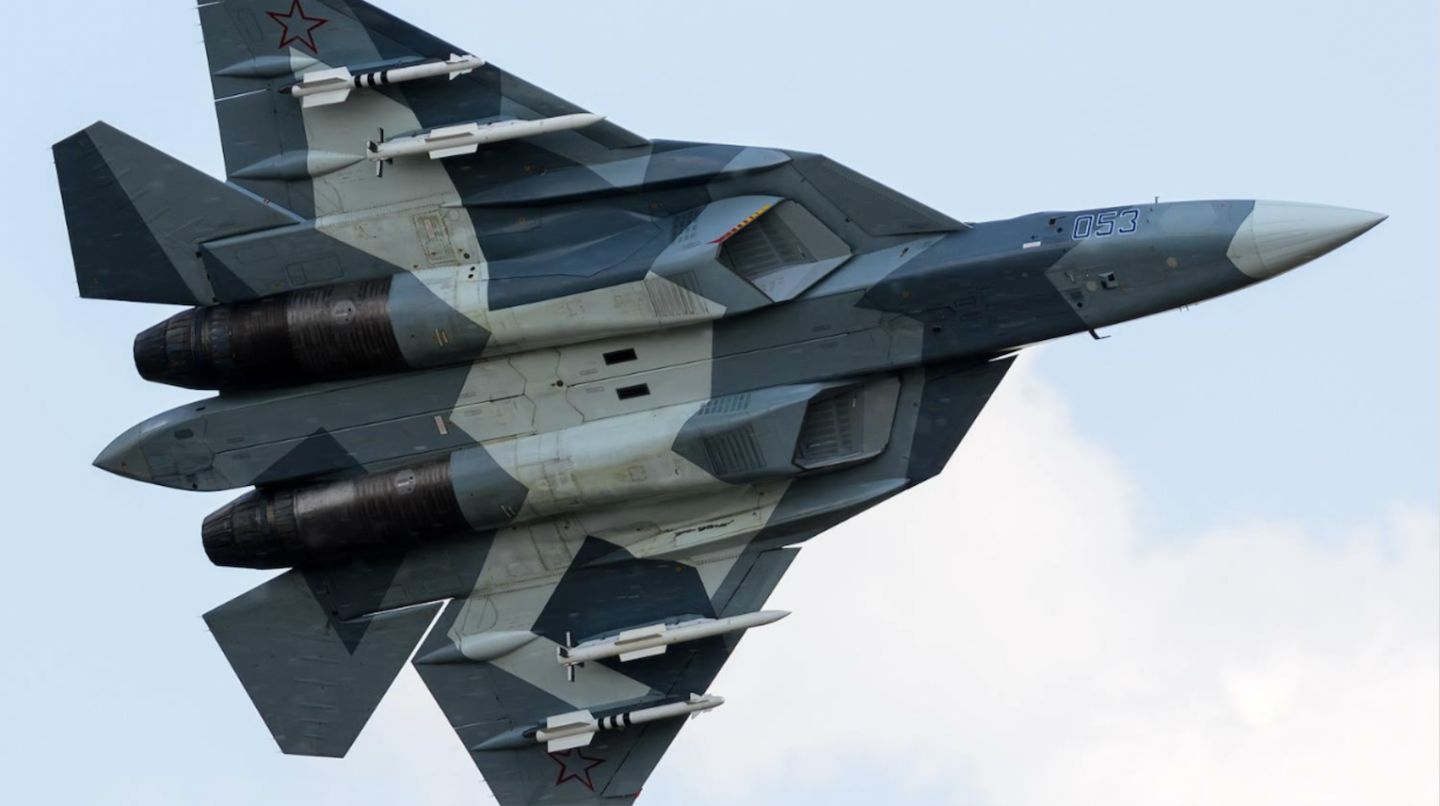
Su-57 Fifth Generation Air Superiority Fighter
Despite Indian media announcing the country’s withdrawal from the FGFA next Generation Fighter program with Russia, under which the Su-57 air superiority platform was set to be modified with Indian avionics and jointly manufactured under a similar arrangement to the Su-30MKI in the early 2000s, the Indian armed forces have contradicted these reports and refuted their withdrawal from the joint venture. Yuri Slyusar, president of Russia’s United Aircraft Corporation (UAC) responsible for the development of the Su-57 and the Russian side of the FGFA program, reported on August 19th that India was set to continue its involvement in the program. He stated: "We continue to discuss with India joint development of a fifth generation fighter jet. The topic is not closed. It has been said that India is withdrawing from this project. No, they are not... I hope very much our talks will be ultimately crowned by the designing stage and we will develop our joint fifth generation aircraft.”
With the FGFA considered a vital program for both parties, confirmation of its continuation is a highly positive development for the armed forces of both countries. India for its part; despite the sophistication of the Su-30 which currently forms the mainstay of its aerial warfare capabilities, requires a more advanced fighter capable of contending with the latest platforms developed by its neighbours. While Pakistan is reportedly working on a low cost fifth generation light fighter under Project AZM, a joint venture with China’s People’s Liberation Army (PLA) which is set to contribute key sensitive technologies as a major partner, the primary threat comes from China itself. India has increasingly struggled to keep pace with the PLA’s aerial warfare capabilities, with China inducting a number of elite next generation fighters far surpassing the Su-30 in their capabilities. These have included the Russian Su-35, the stealthy J-20, the heavily armed J-16 and the upcoming J-11D and J-15B, all next generation aircraft capable of air superiority. The next generation J-10C single engine light fighter first inducted in March 2018 is also a considerable threat, and technologically far surpasses anything in the Indian arsenal at present. With India’s own military aviation well behind that of its norther neighbour, the the troubled HAL Tejas light fighter program set to field similar capabilities to the J-10B should it materialise, the country desperately needs the Su-57 from Russia to match the vast advancements recently made by the PLA.
Russia for its part is in need of export clients for its Su-57, as much like most other major fighter programs in the post Soviet era the aircraft cannot be acquired in sufficient numbers through domestic demand alone to facilitate low unitary costs and mass production. With Russia having delayed the initiation of mass production, and reportedly focusing more on the development and integration of sixth generation technologies onto the fighter’s airframe before full scale production can be initiated, export orders may well bring this date forward considerably. Mass production of a less costly fifth generation variant of the Su-57 may as a result become viable, rather than waiting for sixth generation technologies to materialise as initially planned. Russia has reportedly gone to great lengths to prove the viability of the Su-57, including deploying the platform abroad for combat testing in Syria, and Indian participation - particularly now that the country’s other major export client the Chinese PLA has developed their own fifth generation technologies - is particularly critical. Indian export orders may well increase foreign interest in the air superiority fighter, and should fifth generation export variants enter mass production in the near future Iran, Vietnam, Algeria, Belarus and possibly even the United Arab Emirates are all leading potential clients.
The United States has openly exerted considerable pressure on Delhi to cancel acquisitions of other advanced weapons systems, namely the S-400 Triumf air defence platform, to achieve the dual strategic goals of strangling Russia’s defence industries and undermining the country’s military cooperation with India. Given this, and the FGFA fifth generation fighter program’s far greater scale and importance, it has been widely speculated that Western pressure has been key a key factor forcing India to reconsider the weapons program. With the S-400 and other relatively small sales having already been targeted, it is highly unlikely that Washington would fail to press Delhi over the far more critical Su-57 - a deal which is considerably more important to Russia’s defence sector. The refutation of the FGFA program’s cancellation notably comes just weeks after India’s Defence Minister reaffirmed her country’s plans to acquire the S-400, under which the official tacitly berated Washington’s attempts to interfere in the country’s relations with its longstanding defence partner.
