
Vietnam a leading customer for Russia's Fifth Generation Fighter? What the PAK FA Could Mean for Hanoi
Military Watch Magazine Editorial Staff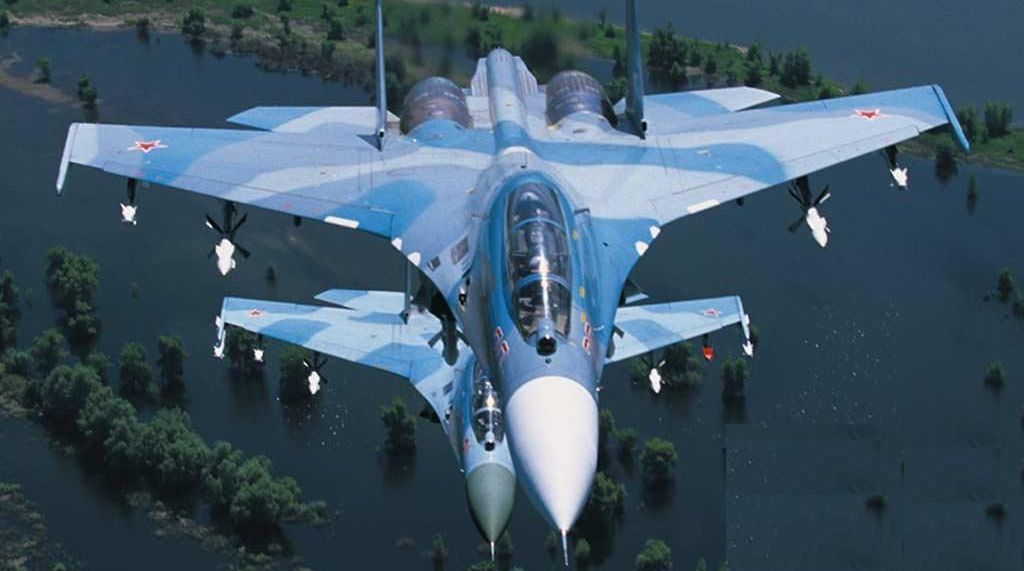
Vietnamese Air Force Su-30 Fighters
With Russia's Sukhoi PAK FA set to enter service in 2018 it will be the world's only fifth generation dedicated air superiority fighter in production other than the Chinese J-20. Based on the trend set by its predecessor the Su-27 it is likely to be the world's most formidable fighter in air to air combat. While it will be some years before enough PAK FA fighters are produced to satisfy Moscow's own military needs, Russia is set to export the fighter to friendly nations. With the program estimated to cost $10 billion, and fighters estimated to cost approximately $100 million each at minimum, exporting more aircraft will significantly reduce the PAK FA's unitary cost as the high development costs can be divided among more aircraft. With only 187 F-22 fighters ever having been produced, all of which are in U.S. service, the PAK FA will give any nation which purchases them a distinct technological advantage over its neighbours, and parity with the elite of the United States' own fleet. The PAK FA is therefore likely to be a highly sought after fighter able to alter the balance of power in any region to which it is deployed.
According to the Vietnamese paper Dat Viet the Vietnamese military is considering purchasing 12-24 PAK FA air superiority fighters between 2030-2035, with a deal likely to be concluded in the early 2020s. Dat Viet's predictions were supported by Russian the think thank Centre for Analysis of Strategies and Technologies, which projected that Vietnam would be the PAK FA's first export destination. Considering the time taken to produce fighters, and that Russia will prioritise its own defence needs, the schedule put foreword appears legitimate. While it is somewhat unusual for a such an announcement to be made before a fighter program is even completed and has passed state testing, it is far from unprecedented for states to show early interest in and make plans to acquire weapons systems under development by their close military partners. A notable example were the Israeli and Imperial Iranian Air Forces which placed advanced orders for American weapons such as the F-15 and F-14 years before development was complete and long before the U.S. military's own needs were met.
Vietnam's defence budget is currently approximately $8 billion per year, 5% of the country's GDP. Should the country order PAK FA fighters it will cost an estimated $1.2 billion to $2.4 billion, which will be payable over several years. The fighter's operational costs meanwhile are set to be considerably lower than those of U.S. made air superiority platforms such as the F-22, with Russian and Soviet military aviation historically having strongly prioritised low maintenance requirements. Considering the substantial capability boost and resulting deterrence value and prestige the PAK FA could grant the Vietnamese military, the cost of acquiring 12-24 fighters could be absorbed.
Having previously acquired a fleet of advanced advanced Su-27 and Su-30 air superiority fighters from Russia costing approximately $1.5 billion, which were alongside the MiG-31 Russia's most advanced and costly fighters at the time, Vietnam's acquisition of the PAK FA would be far from unprecedented. Vietnam currently faces military tensions with its Chinese neighbour, the military industrial base and defence budget of which it has little chance of matching. While Vietnam and China will both hope to avoid conflict at all costs, Vietnam's acquisition of a fifth generation air superiority fighter would allow it to negotiate its territorial dispute from a position of strength - with the PAK FA likely to outmatch anything currently in service in China's own fleet.
Ultimately both Russia and Vietnam can benefit substantially from Vietnamese acquisition of the PAK FA, and the more of the aircraft can be produced and sold the lower the cost per unit will fall. While the PAK FA would provide a substantial defence capability, even 24 such fighters would be unable to threaten China or its interests in any major way, and so Russia most likely would have little political grounds for opposing the sale. Vietnam itself does not have particularly hostile relations with any of its neighbours, but has nevertheless continued to prioritise its military needs and maintain very high levels of expenditure and the world's largest military reserve force at over 5 million reservists (not including paramilitary). Based on this, acquisition of the PAK FA remains a distinct possibility.
