
India’s Tejas Light Fighter Jet Passes FOC - Fighter Finally Combat Ready After Almost 40 Years of Development
Military Watch Magazine Editorial Staff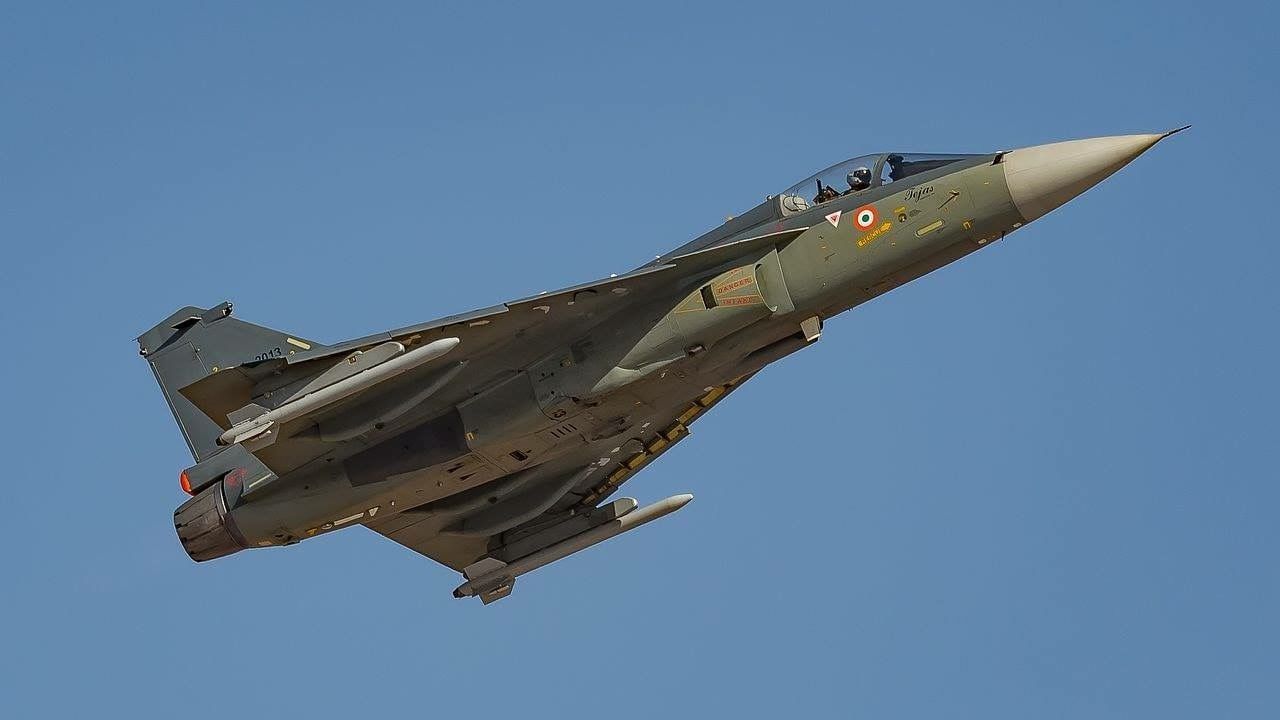
Indian Air Force Tejas Fighter
Indian state owned aerospace and defence company Hindustan Aeronautics Limited’s (HAL) Tejas single engine light fighter jet was accorded final operational clearance (FOC) by India’s aviation certifying authority on February 20th 2019, marking the culmination of almost 40 years of development ever since the aircraft was first conceptualised in the early 1980s. The Tejas program thus represents one of the longest development programs for a combat aircraft in world history preceding its entry into full operational service. Attainment of FOC certification means that the Tejas, which has been flown by Indian pilots for some time for testing, is now considered fully ready to be deployed for combat operations by the Indian Air Force. HAL is set to deliver four Tejas LCA indigenous single engine light fighters to the Indian Air Force in March 2019, providing the service with a total of sixteen aircraft.
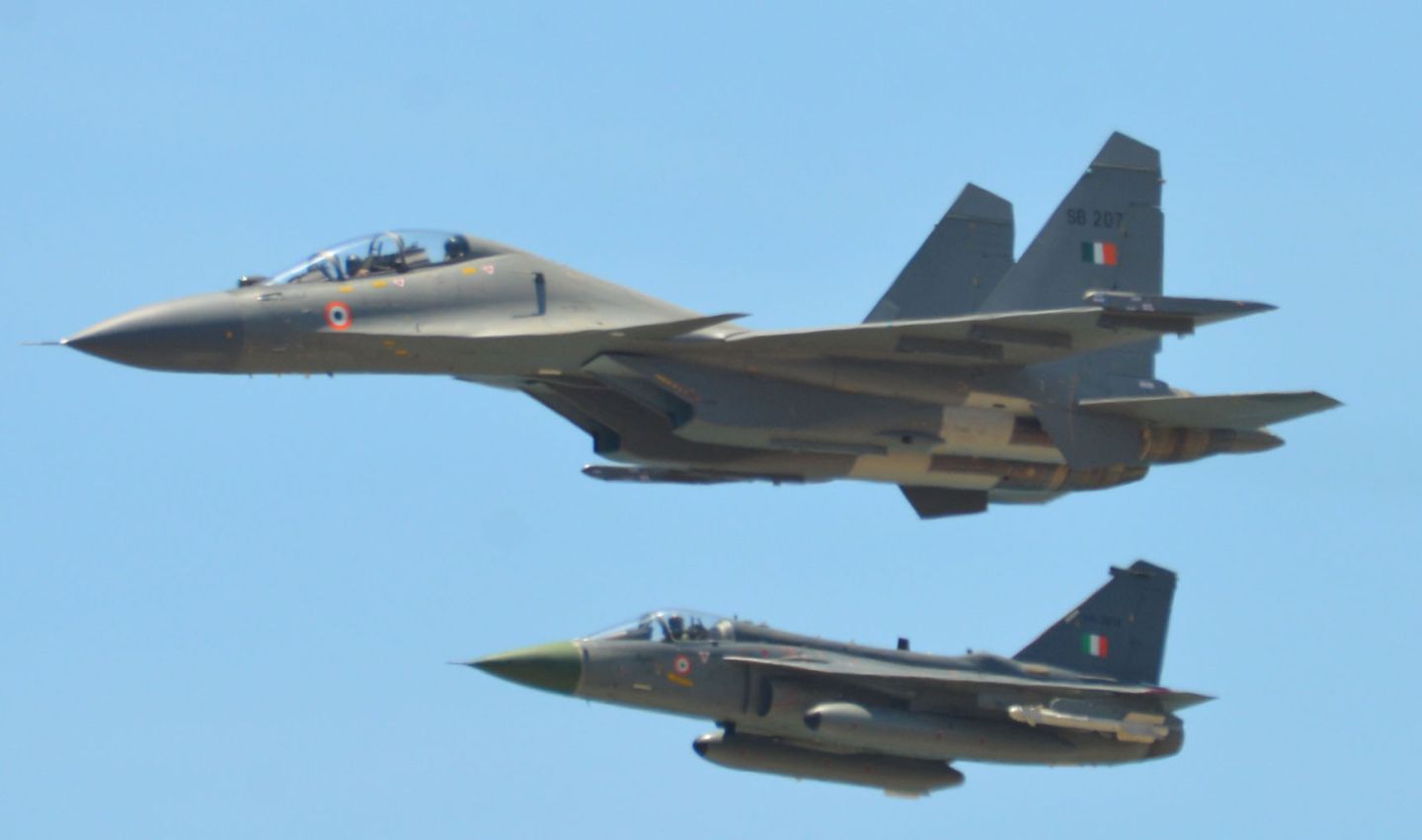
Indian Air Force Su-30MKI and Tejas
While conceptualised as an indigenous fourth generation light platform, a lighter complement to the medium weight Soviet MiG-29 which was then on order and the later acquired heavy Su-30MKI acquired from Russia, what are arguably the Tejas’ most key components have been foreign sourced to compensate for India’s rather limited domestic military aviation capabilities. The fighter relies on a F404 engine from the American General Electric Aviation - a platform first run over 40 years ago in 1978 with considerably less thrust that the F110 used by the U.S. Air Force’s own single engine light fighter - the F-16 - or a single of the Su-30's twin AL-31 engines. The thrust of the F404 is notably 40% lower than that of the Soviet R-29, an engine India's Air Force has operated since the 1970s on its third generation fighters - far from groundbreaking. The Tejas' radar is an Israeli Elta EL/M-2032 multi mode fire control system, and the fighter also relies on an EL/L-8222 ECM jamming pod from the same Israeli manufacturer. Beyond visual range air to air combat capabilities rely on the Russian R-77 long range air to air missile - a platform the Indian Air Force has a long history of operating.
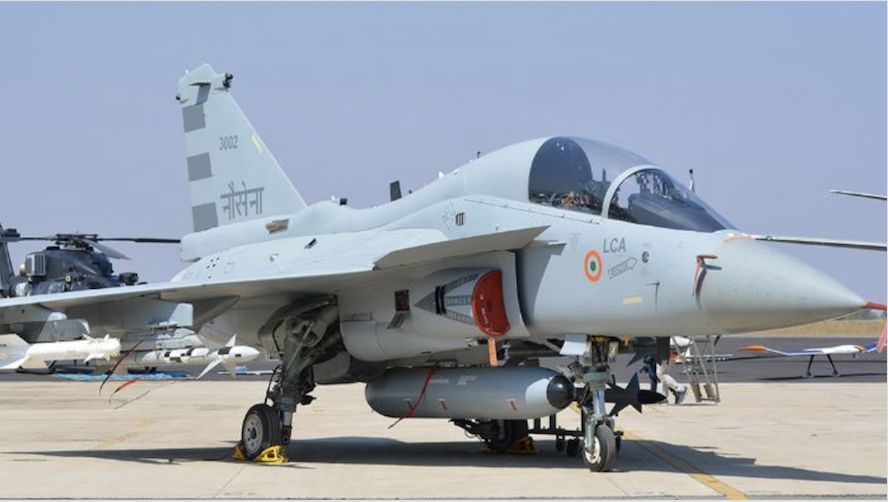
Indian Air Force Tejas - Carrier Variant
The viability of the Tejas program remains in serious question, leading the Indian Air Force to consider acquisition of the American F-16 Fighting Falcon - recently rebranded ‘F-21’ - despite their highly similar weights and roles. While the F-16 has been in service for over 40 years, and is increasingly considered near obsolete by a number of its operators, the aircraft is combat tested and has an impressive combat record over four decades. With the Air Force of neighbouring Pakistan having inducted the JF-17 into service in 2007, a semi indigenous single engine light fighter of similar weight and with effectively the same role, India's seeming inability to develop a comparable combat jet as a result of stalling in the Tejas problem has been a major embarrassment for the country's armed forces. Whether HAL will place the Tejas into mass production, and the fates of planned derivatives such as Tejas Mk 2 and the STOBAR launched carrier based Tejas, all remain to be seen.
