
China’s J-10C Reportedly Crushed the Russian Su-35 in Combat Exercises - How the Firebird Came Out On Top
Military Watch Magazine Editorial Staff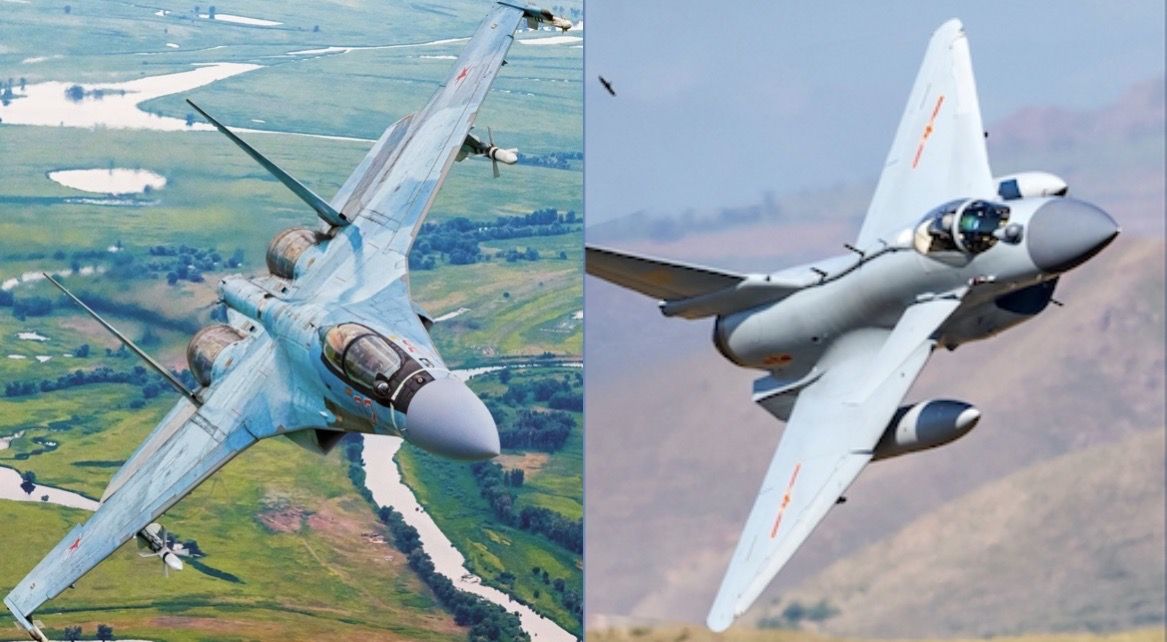
Russian Su-35 (left) and Chinese J-10C '4++ Generation' Fighters
Recent reports from Chinese media and a number of defence commentators have shed light on the outcome of war-games which pitted Russian built ‘4++ generation’ fighters against indigenous J-10C jets of the same generation. The exercises also featured slightly older but still advanced Chinese J-16 aircraft. The result was overwhelming victories for the Chinese built jets, which was particularly surprising for many analysts in the case of the J-10C. The Su-35 is a twin engine heavyweight air superiority fighter, and alongside the MiG-31BSM interceptor and Su-34 strike fighter it forms the elite of the Russian Air Force’s combat fleet today. The J-10C by contrast is a lightweight jet with a single engine which was designed to prioritise a lower operational cost, and was intended as a lighter counterpart to elite heavyweight designs such as the J-20 stealth fighter and J-11D - the latter being China’s direct analogue to the Su-35. The Su-35’s larger size allows it to carry a much heavier radar and over twice as many missiles, and the thrust of its engines is approximately double that of the J-10C which integrates a single Chinese made WS-10B engine.
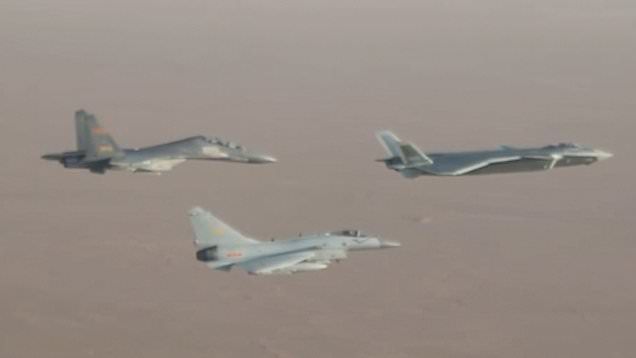
A comprehensive assessment of the two fighters and their capabilities can provide some indication as to how the J-10C could have proven more capable than a Russian aircraft from the same generation and a much higher weight range. Mock engagements reportedly took place at both visual and beyond visual ranges, which in both cases mean missile technologies are likely to be key. For visual range combat the Su-35 deploys R-73 missiles, an updated Cold War era short range design with capabilities which are respectable but far from outstanding. The J-10C for its part has access to the new PL-10 missile for close range engagements, a weapon which entered service around 2018 and is considered potentially the world’s most capable missile of its kind. Not only is it longer ranged and far more manoeuvrable than the R-73, but its countermeasures are more sophisticated and its sensors are more powerful. It can also make better use of helmet mounted displays to engage targets at extreme angles. The fact that both the J-10C and the Su-35 enjoy similar thrust/weight ratios, and both deploy three dimensional thrust vectoring engines, means that they are approximately equal in terms of manoeuvrability. This means the quality of missiles is likely to be decisive. The J-10C is one of just two non-Russian fighters classes with enhanced manoeuvrability due to thrust vectoring engines, and the only one with three dimensional thrust vectoring. China is thought to have developed three dimensional thrust vectoring engines based on Russian technologies it purchased when it acquired the Su-35.
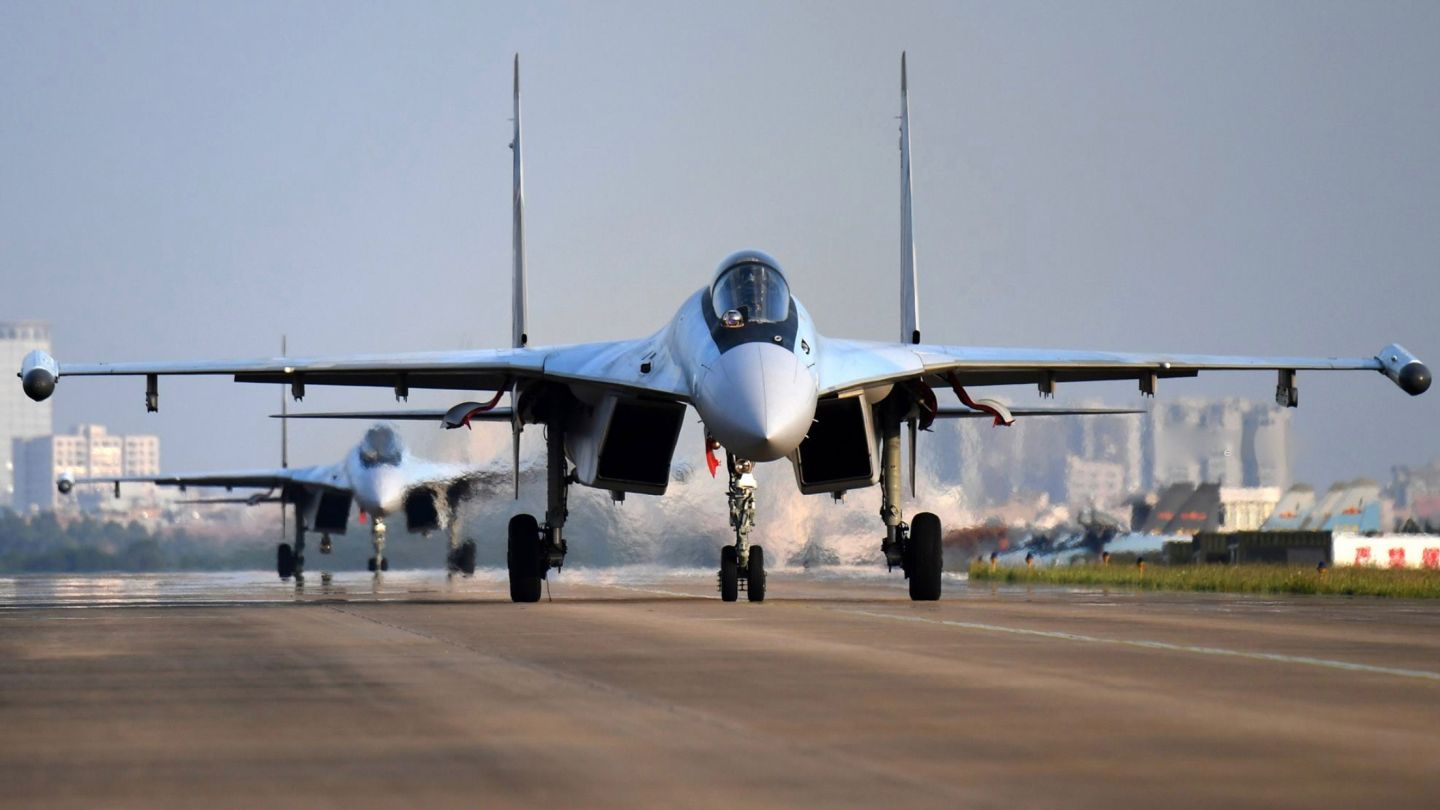
Looking to beyond visual range engagements, while the Su-35 deploys a much larger radar the radar on the J-10C is thought to be far more sophisticated and makes use of an active electronically scanned array (AESA) as opposed to the passive array on the Russian fighter's radar. This not only means that the J-10’s radar signature will be considerably lower, and that it will be much more difficult to jam, but also that it could compensate with sophistication for the discrepancy in size and potentially have a similar power level to the Su-35’s radar. Even if the J-10C’s radar is slightly less powerful, which is likely given how big the discrepancy in size is, its lower proneness to jamming could more than compensate for this. Looking to air to air missiles, this appears to be the field in which the J-10C enjoys the most significant advantage. The Su-35 deploys R-27ER and R-77 missiles as its primary long range air to air platforms. The R-27 is based on a Soviet design from the 1980s, and while its range is impressive at around 130km it does not have fully active radar homing meaning the fighter itself must guide it to its target over much of its course. The R-77 is a newer design, which was completed and made available for export in the 1990s but was only deployed by the Russian Air Force itself in advanced form around 2014. It benefits from fully active radar homing, but has a shorter range of just 110km. Its capabilities are roughly analogous to the Chinese PL-12 and American AIM-120C - although it its slightly superior to both of these.
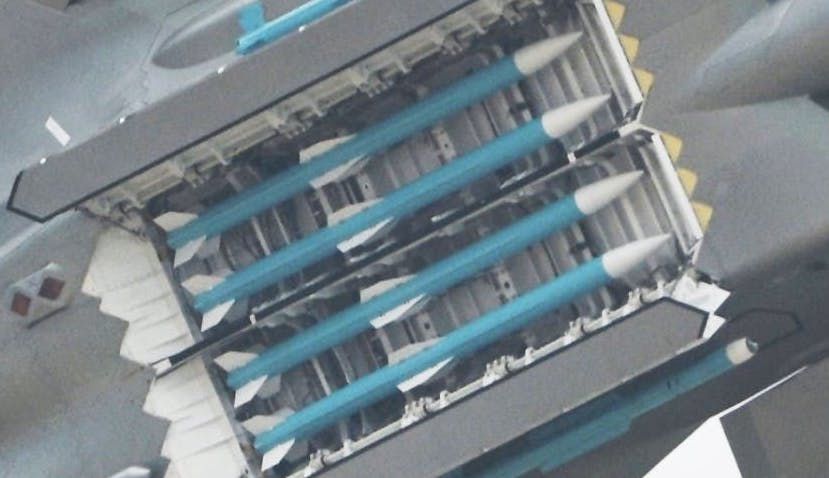
While the Su-35’s air to air missiles are mediocre, the J-10C deploys what is widely considered the most advanced and capable long range air to air missile in the world the PL-15. The missile entered service around 2018, and is deployed by elite J-20, J-10C and J-16 fighters as well as upgraded variants of the J-11B classified as the J-11BG. The PL-15 has an impressive range estimated at between 250 and 300km, meaning a J-10 could launch multiple salvos on the Su-35 long before it is itself vulnerable. More importantly than it’s range however, the PL-15 is the only major air to air missile class itself to integrate an AESA radar, and while this makes them expensive it also makes them much more reliable and difficult to jam. Traditional radar countermeasures involve identifying the frequency on which the threat system is operating, and then generating a jamming signal on the same frequency, cannot work as effectively against an AESA radar equipped missile. The U.S. is reportedly planning to integrate similar technologies onto its upcoming AIM-260 missile following the Chinese lead. While the Su-35 is compatible with R-37M missiles, which have a longer range of 400km and are faster than the PL-15, these have not yet been provided with the Su-35s sold to China. Despite its longer range, the R-37M lacks an AESA radar making it considerably easier to jam than the PL-15, and is thought to be much less manoeuvrable.
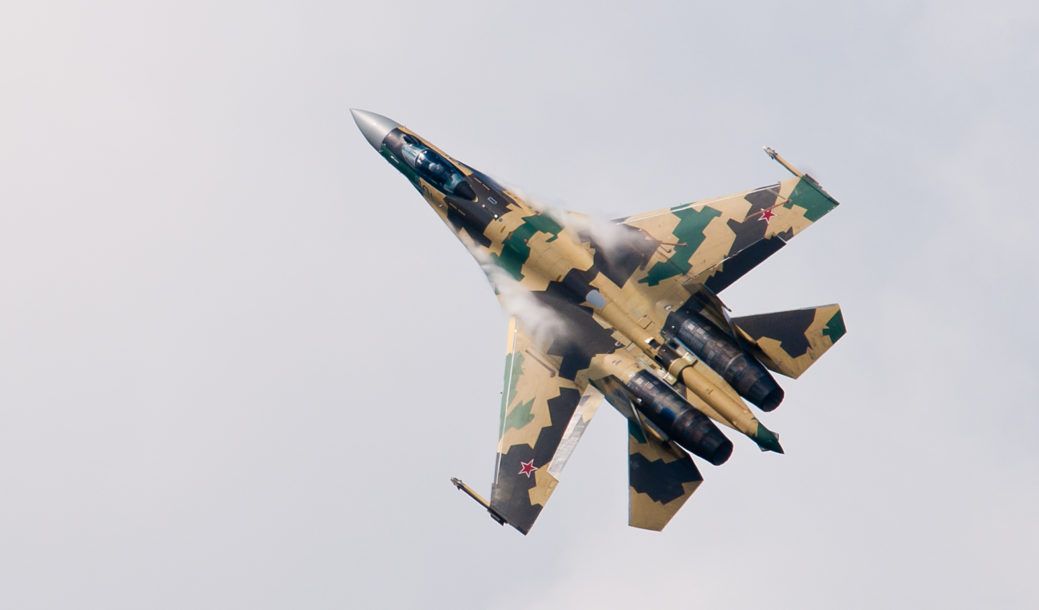
Looking at flight performance, the Su-35 is slightly faster and can attack from higher altitudes which does provide it with an advantage particularly at close ranges. Although not effecting combat performance, the Su-35 also has a much higher endurance than the J-10C as is almost always the case for fighters from its very high weight range, meaning it can stay in the air longer and patrol over wider areas. The high endurance provided by a heavyweight airframe also means that the Su-35 is well suited to carrying large arsenals of air to air missiles, and is able to deploy up to 14 where the much lighter J-10C is restricted to just six. Carrying more missiles can impede flight performance however, although the effect of this is much less pronounced on heavier fighters. While the Su-35's airframe does benefit from a radar cross section reducing profile, meaning it is under a third that of other heavyweight fighters such as the F-15 or Su-27, the J-10C is the stealthier of the two designs. The Chinese jet also has a reduced radar cross section, but pairs this with radar absorbent stealth coatings and a smaller airframe making it harder to detect at range. Given the strength of both fighters’ radars however, they are likely to detect each other beyond the engagement ranges of their missiles - particularly if multiple fighters are operating together and sharing data. The J-10C also benefits from superior Chinese data links allowing it to better take part in network-centric operations - a notable field where China has a significant advantage over its northern neighbour.
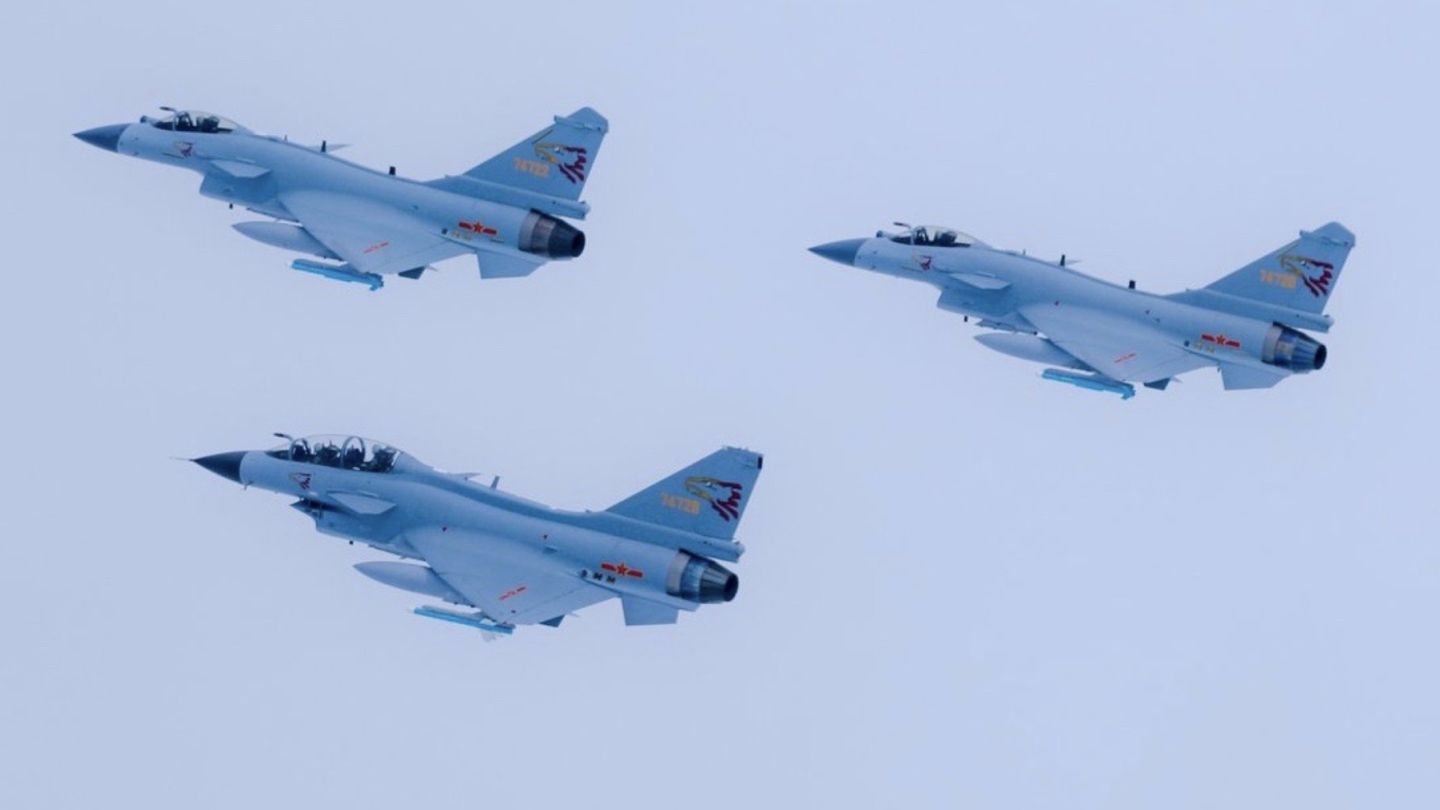
Ultimately despite coming from a much lower weight range, the J-10C has the considerable benefit of access to technologies from two of the world’s leading defence sectors - China’s own as well as that of Russia. This allows it to benefit from fields of Russian technological strength, such as three dimensional thrust vectoring engines, as well as Chinese strengths such as AESA radars, air to air missile and composite material technologies. The Su-35, by contrast, is forced to rely on Russia’s defence sector alone, which has access to considerably less funding for research and development than it’s Chinese counterpart. Moreover, the Su-35 design dates back to the late 1980s but due to problems with Russian military aviation after the Soviet collapse it only entered service in the Russian Air Force in 2014. Much like the American F-22 Raptor, it is a very late Cold War era design which due to post-Cold War budgetary issues entered service well behind schedule. Although it is a very formidable platform, and at the time of purchase it could boast several capabilities which China’s defence sector lacked, technologically the J-10C remains at a considerable advantage. China is set to induct its own analogue to the Su-35 into frontline service in the near future once the J-11D program is complete, and although Russia has sought to sell further Su-35s beyond the initial batch of 24 fighters such a deal is unlikely unless further technology transfers are provided alongside it.
The capabilities of China’s Su-35s are likely to be improved in future as they deploy either newer generations of Russian missiles which may be offered, or if they are modified to deploy PL-15 missiles which remains a significant possibility. With China’s defence sector having surpassed that of Russia in many fields, and with both countries announcing their interest in pursuing joint fighter programs in future, the possibility remains that future generations of both fleets with feature jointly developed Sino-Russian fighters. This would provide not only the benefits of economies of scale in production, but also ensure that fighters can benefit from the technological strengths of both defence sectors. With both countries seeking to develop vertical landing capable jets in the coming years, and building ships optimised to carry them for maritime operations, this is likely to be one field where at the very least a high degree of technology sharing is likely.
