
Highlights From North Korea’s Groundbreaking Military Parade: New High Resolution Images Show Nuclear Missiles, Battle Tanks and More
Military Watch Magazine Editorial Staff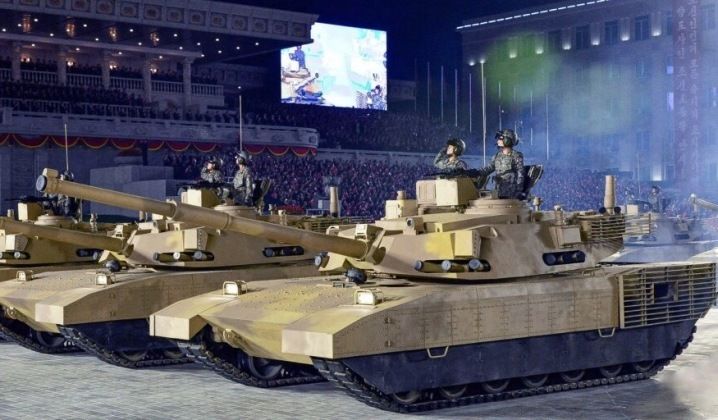
New North Korean Battle Tanks on Parade
Marking the 75 year rule of the Korean Workers’ Party (KWP), the oldest ruling party in the world today, North Korea held a major military parade in Kim Il Sung Square in central Pyongyang on October 10th. The event saw multiple advanced new weapons systems displayed to cover all aspects of the Korean People’s Army’s operations, from battle tanks and artillery for the Army to submarine launched ballistic missiles for the Navy and combat aircraft and anti aircraft missiles systems for air defence - to name but a few examples. Indeed, not only has the Korean People’s Army (KPA) managed to modernise considerably, but the rate of modernisation appears to have also increased rapidly meaning the content of the military parade, with the exception of combat aircraft flying overhead, are totally unrecognisable from just nine years ago when the final parade under the leadership of Marshal Kim Jong Il was held in 2011. A look at some of the most prolific weapons systems on display is given below.
Battle Tanks
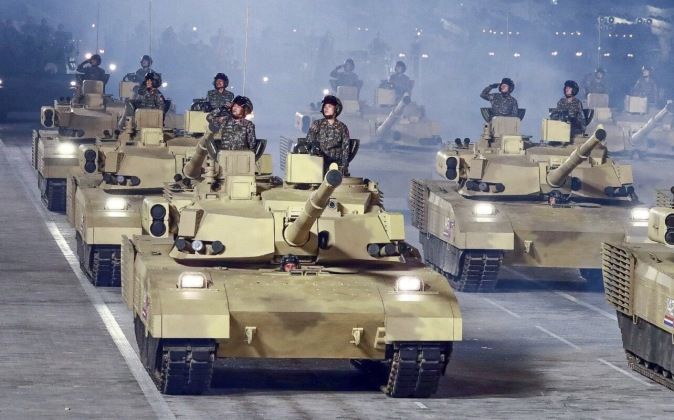
One of the most prolific additions to the Korean People’s Army's inventory first unveiled at the KWP's 75th anniversary parade was an unnamed new class of battle tank. The tank is the third major design after the Chonma Ho of the late Cold War years and Pokpung Ho of the early 2000s, and differs significantly from prior designs with a new much more angular turret and new active protection systems.
Guam Killers
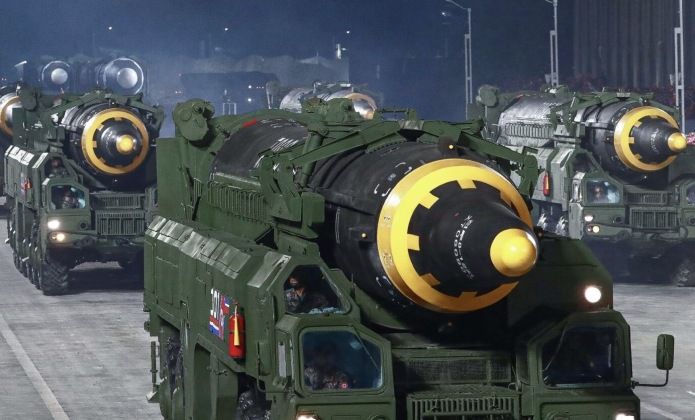
The Hwasong-12 'Guam Killer' ballistic missile made its second ever appearance on parade after three successful launches in 2017, when it demonstrated the range needed to comfortably target vital U.S. military facilities on Guam including Andersen Air Force Base and Naval Base Guam - two key hubs of American operations in the region. The missile, with an estimated 4,500km range, played a key role in Korean efforts to place pressure on the United States three years ago, and despite being little over three years old it was the oldest missile on display at the event.
Cavalry
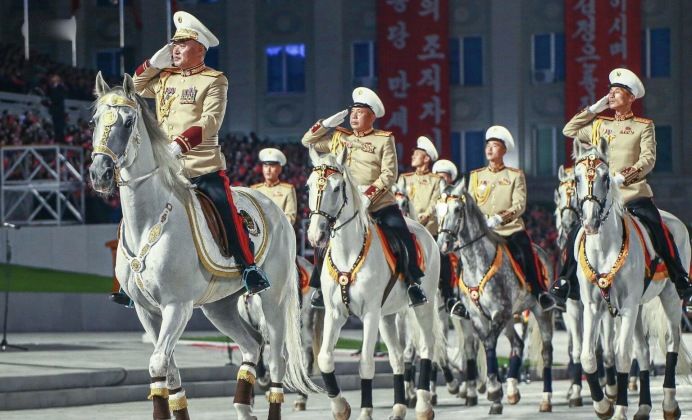
The Korean People' Army has a long equestrian tradition, with the military leadership and the leaders of the Workers' Party often seen astride tall white horses which are reportedly sourced from Russia. These types of horses are even made available for leisure at the Mirim Riding Club, and have become as much of a trait of North Korean equitation as the White Lipizzaner is to Vienna, having featured in multiple military parades.
Submarine Launched Nuclear Missiles
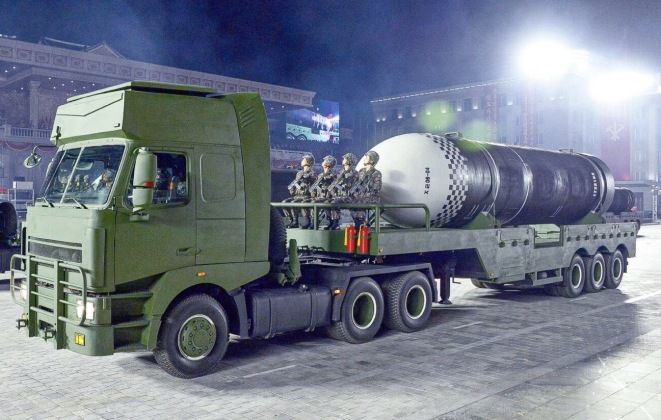
Following a test launch in 2019, North Korea's third class of submarine launched ballistic missile was the primary piece of hardware from the KPA Navy put on display. Previously termed Pukkuksong-3 by analysts, the missile carried the obvious marking 'Pukkuksong-4' indicating there may have been a missile in the Pukkuksong series not yet unveiled - possibly because it was terminated at prototype stage in favour of other designs. The missile provides a valuable second stage deterrent to complement the KPA's considerable arsenal of ground based nuclear-capable missiles.
Army Uniforms
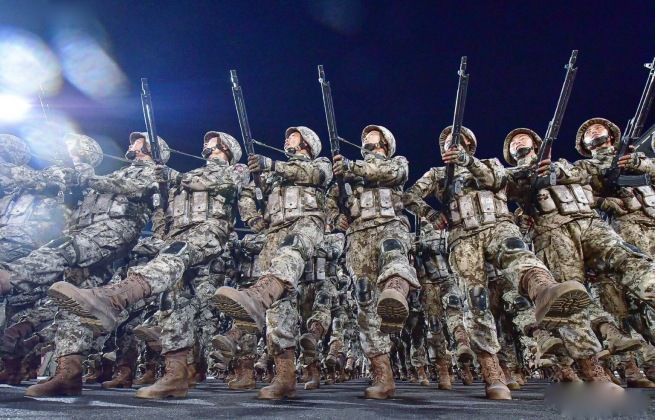
The KPA has modernised the uniforms of its personnel a number of times, but new uniforms introduced for the ground forces' regular troops may well be the most striking and prolific change - with the possible exception of new special forces uniforms introduced in 2017. The new uniforms and boots are a far cry from the Soviet style green suits which were worn ten years ago, and if widely adopted with give the KPA's ground forces a very distinct new look.
Light Tactical Ballistic Missiles
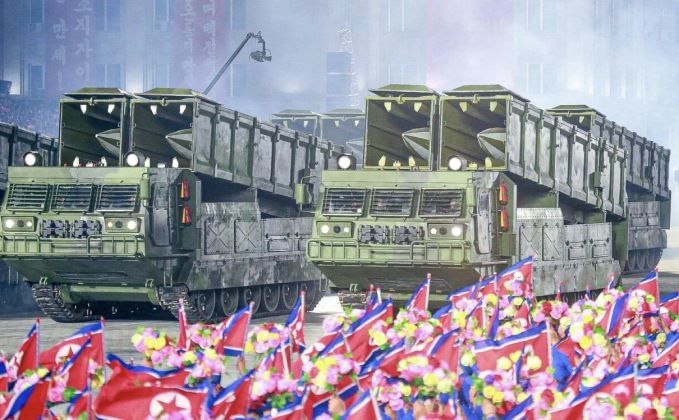
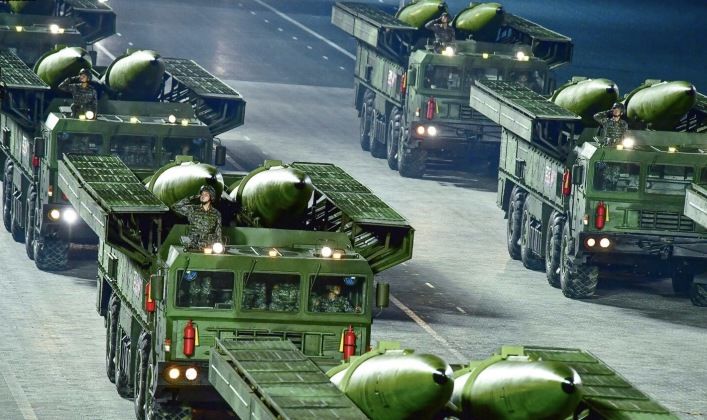
This new light tactical ballistic missile system, termed KN-24 in the West with its Korean name still unknown, was one of two new ballistic missile classes unveiled in 2019 alongside the slightly heavier hypersonic KN-23. The missile has a very unique design and deploys from a tracked launcher vehicle. It is thought to be filling the role of the older KN-02 Toksa which entered service in the early 2000s as a much more sophisticated replacement.
Every Kind of Rocket Artillery
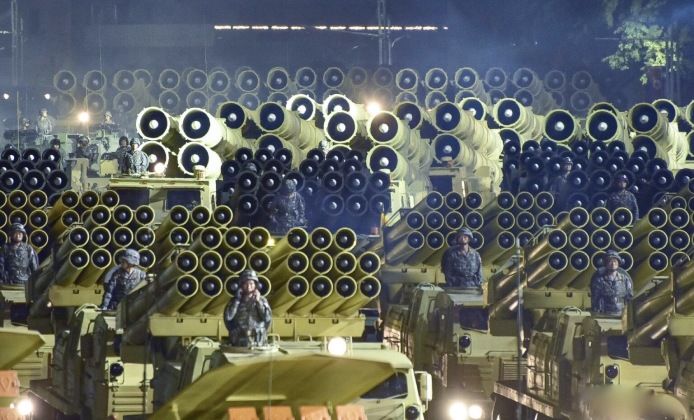
North Korea's KN-09 rocket artillery system previously set a world record in 2013 with a 200km range, which was later eclipsed by the KN-25 which holds the world record for rocket artillery today with a range of over 400km. The KN-25 took centre stage in the KWP 75 military parade, but was accompanied by multiple unknown platforms which appear to be lighter variants of a similar design. North Korea fields the largest artillery forces in the world, and these assets are prized for their ability to take out key targets across South Korea including airfields operated by the U.S. and southern air forces. Their ability to target population centres deep into southern territory also provides something of a low cost strategic deterrent.
KN-23
Although the KN-23 was first unveiled in February 2018 during a major military parade, the last before this one to feature ballistic missiles, this is the first time the platform was displayed after its intensive testing in 2019 and early 2020. The KN-23 has similar capabilities to the Russian Iskander which it closely resembles, and has proven impossible to track during test launches for South Korean and Japanese air defence systems including the South Korean-operated American AEGIS system which is considered the most advanced in the Western world. This combined with its extreme manoeuvrability and hypersonic speed make the missile almost impossible to intercept for existing air defence systems, and provides a potentially game-changing tactical strike capability for the KPA which can replace the older Hwasong-5 and Hwasong-6 missiles in service.
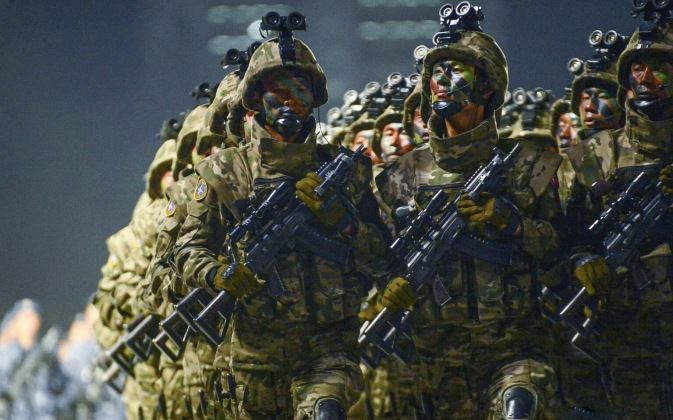
Special Forces
North Korea fields the largest special forces in the world, with an estimated 180,000 to 200,000 personnel, and these units are trained for a wide range of operations from infiltration by air to surveillance, city-fighting, sabotage and stealth operations. New uniforms first revealed in 2017 give these units a much more modern and sharper appearance, and equipment ranging from support aircraft to grenade launchers have been modernised considerably. Korean special forces have proven highly capable in combat in the past, and have taken part in a number of prolific military exercises in recent years.
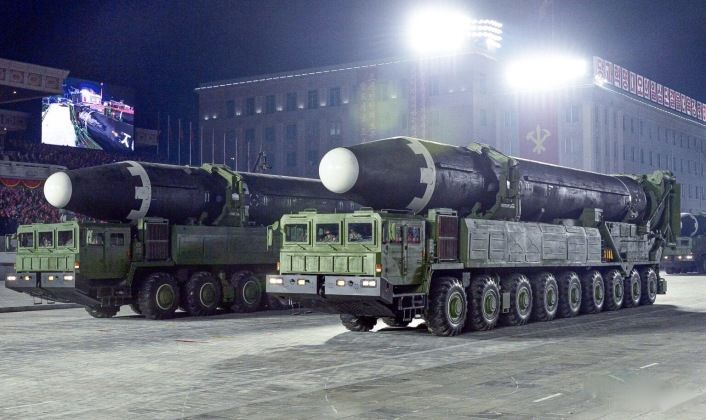
Hwasong-15 - Korea's First Missile That Could Hit New York
First tested in November 2017, the Hwasong-15 was North Korea's first ballistic missile which demonstrated the capability to strike the entire United States mainland, and its second capable of striking the American mainland at all after the Hwasong-14 which first flew four months earlier. This capability was later confirmed by U.S. intelligence. The missile is thought to have seen over two years of serial production meaning the Korean arsenal is likely already quite large, with the bulk of it stored deep underground to eliminate the possibility of an enemy 'first strike' to eliminate the KPA's strategic deterrent.
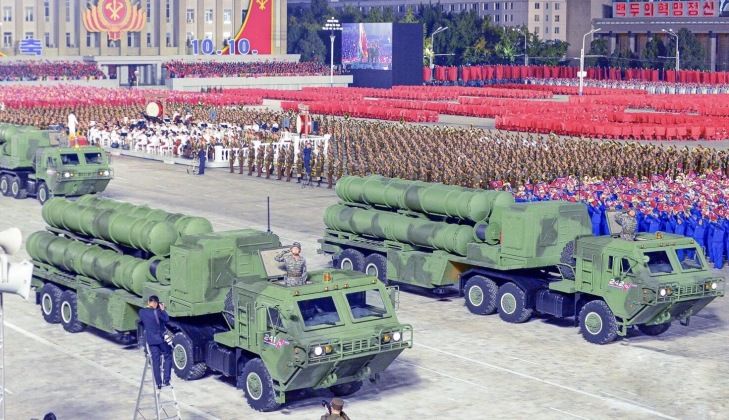
Long Range Air Defences
The Korean People's Army began to operate the country's first indigenous long range surface to air missile system sometime between 2016 and 2017, the Pyongae-5 (KN-06), which used a relatively small launch vehicle carrying two missiles at a time. A new Korean air defence system was displayed at KWP 75 alongside mobile radar systems, and is an apparent successor to the Pyongae-5. The system is thought based on its appearance, and the general rate of progress in the country's defence sector, to have significantly superior capabilities ranging from greater situational awareness to a much longer engagement range.
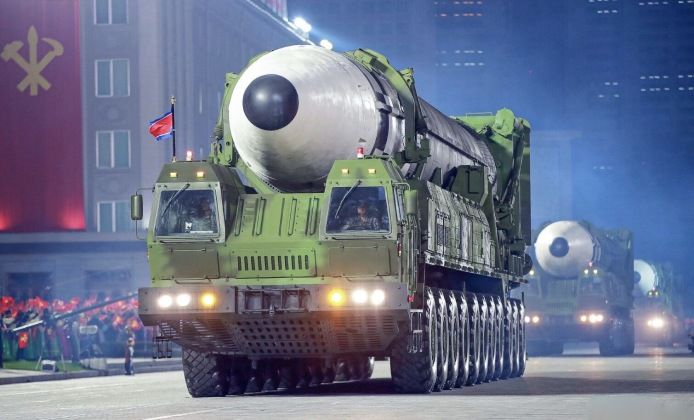
New Intercontinental Range Ballistic Missile
An apparent successor to the Hwasong-15, the KPA unveiled what may be the world's largest ballistic missile deployed from a transporter-erector launcher, with the massive 22 wheel vehicle itself being something of a spectacle. The missile is speculated to benefit from a range of new features including a solid fuel composite for a much shorter launch time, which will allow the missiles to be stored fully fuelled, and a multiple warhead reentry vehicle allowing a single missile to destroy a large population center many times over by detonating multiple thermonuclear bombs. The threat of a test of the new missile is likely to be used to press for concessions from the United States, with negotiations expected to take place shortly after the U.S. election in November should the Donald Trump administration retain power. The new missile is expected to replace the Hwasong-15 in serial production, possibly after the first flight test.
All images belong to the Korean Central News Agency and were provided courtesy of DPRK 360
