
Designed to Evade American Air Defences: U.S. Cites North Korea’s Three New Strike Platforms as Major Threat
Military Watch Magazine Editorial Staff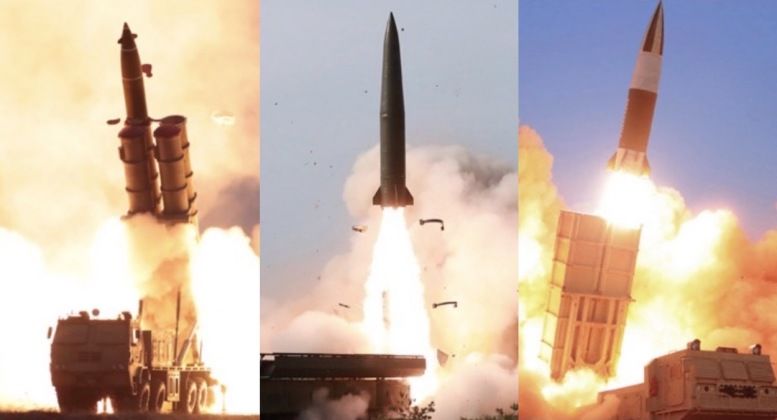
KN-25, KN-23 and KN-24 Korean Missile and Artillery Systems (from left)
After North Korea conducted the first test launches of three new tactical weapons systems in 2019, testing each multiple times that year and continuing into 2020, the U.S. Congressional Research Service has called attention to the potentially very serious challenge the platforms pose to American forces operating in Northeast Asia. The first of the new Korean platforms unveiled, the KN-23, notably closely resembles the Russian Iskander ballistic missile and has a hypersonic speed and estimated range of 700km. The missile can perform complex manoeuvres and follows an irregular trajectory which makes it almost impossible to intercept, and each is thought to be able to deploy a variety of specialised warheads much like their Russian counterparts. The second platform unveiled, the shorter ranged KN-24 ballistic missile, notably closely resembles the American MGM-140 system but is thought to have a longer range, be more manoeuvrable and impact at higher speeds. The third platform, a very unique system with no analogues overseas, is the KN-25 which is a rocket artillery system rather than a ballistic missile. The platform broke the world record previously set by the North Korean KN-09 rocket artillery system and has a range of 440km.
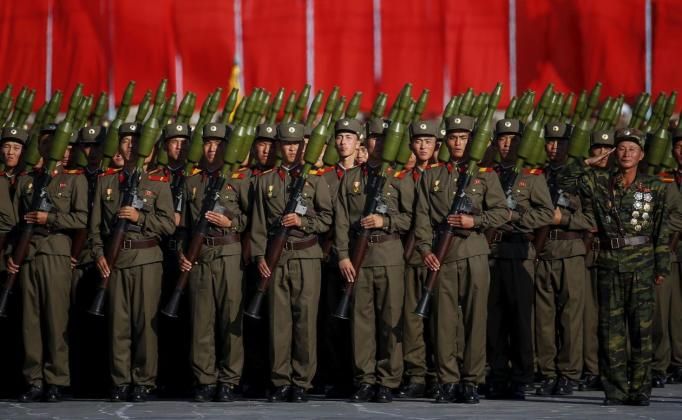
The U.S. report stated regarding the capabilities of the new Korean missile and artillery systems and their ability to threaten targets defended by the latest American air defence systems: “The recent advances in North Korea’s ballistic missile test program appear to be directed at developing capabilities to defeat or degrade the effectiveness of missile defenses deployed in the region: Patriot, Aegis Ballistic Missile Defense (BMD), and Terminal High Altitude Air Defence (THAAD).” The report further noted that the KN-23 “exemplifies the most notable advance” for the DPRK in the field of tactical weapons, with the missile observed conducting a complex “pull-up” manoeuvres intended to confuse enemy air defence systems. Regarding the KN-24 the report notes that the lighter missile “demonstrates the guidance system and in-flight manoeuvrability to achieve precision strikes.” The two new ballistic missiles are expected to replace older platforms including the solid fuelled KN-02 and liquid fuelled Hwasong-6 in frontline service. South Korean and Japanese air defence systems have notably struggled to track North Korean missile systems, and considering the very poor performance record of U.S. made air defence systems against targets several decades older such as the Scud B and Burkan missiles in the Middle East, the chances of intercepting the new North Korean tactical weapons will be very low.
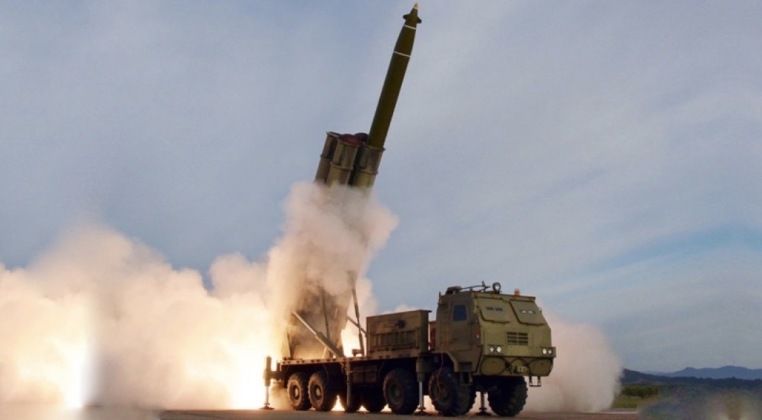
Regarding the KN-25 rocket artillery system, the American report noted that the system “blurs the line between rocket and missile,” sporting “advanced avionics, inertial and satellite guidance systems, and aerodynamic structures.” The system’s extreme range is longer than that of many ballistic missiles such as the Hwasong-5 and KN-02, and allows North Korean forces to engage U.S. and South Korean targets across much of the Korean Peninsula. The platform has strategic value, placing Seoul and other population centres at greater risk, but its tactical value is arguably greater for its ability to bombard airfields, command centres and other vital facilities. Targeting airfields in South Korea has emerged as a important part of North Korea’s military strategy, particularly since F-35A and F-22 stealth jets began to be deployed to the peninsula which require a very high amount of maintenance and spend a great deal of time on the ground - making them particularly vulnerable to such attacks. Airfields are considered leading targets for all three weapons systems, which alongside growing investments by North Korea in ground based anti aircraft missile systems is expected to undermine the air superiority advantage the U.S. and its allies would otherwise have had in the event of a potential war.
