
North Korea’s New Iskander-Like Ballistic Missiles Bad News for U.S. and Allies - Proliferation Likely
Military Watch Magazine Editorial Staff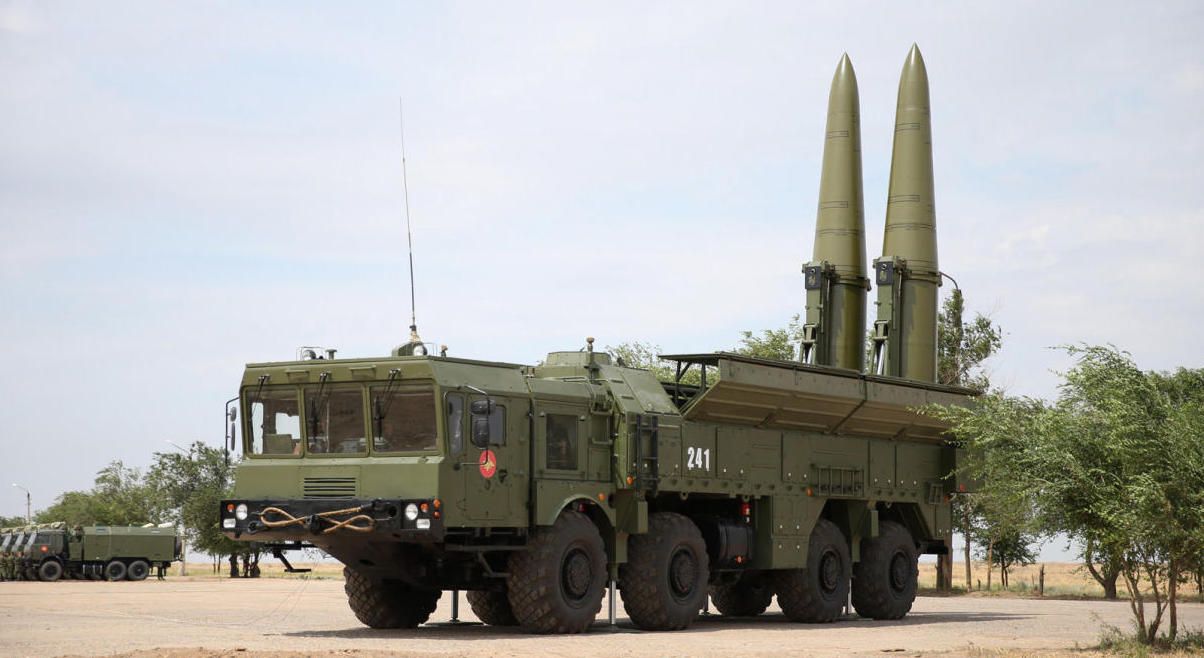
Iskander Tactical Missile System
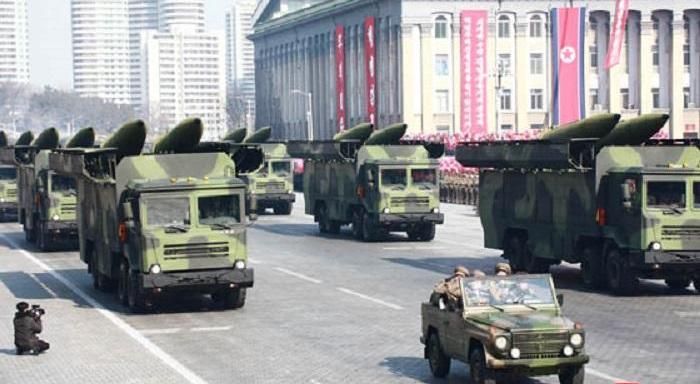
During a military parade on February 8th 2018 celebrating the 70th anniversary of the the Korean People’s Army, North Korea’s armed forces displayed a some of the most sophisticated indigenous hardware available in Kim Il Sung square in central Pyongyang. Alongside a number of systems previously seen during testing such as the Hwasong-15 and Hwasong-14 intercontinental range ballistic missiles, the KN-06 long range air defence system, the Kumsong-3 ship hunting cruise missile system and the latest variant of the Pokpung Ho main battle tank, a never before seen new weapons platform was displayed - one with potentially serious implications for the country’s potential adversaries. This was an unnamed tactical short ranged solid fuelled ballistic missile, displayed ahead of the heavier intercontinental range platforms in place of the KN-02 Toksa and Hwasong-6 tactical missiles which commonly featured at previous Korean parades.
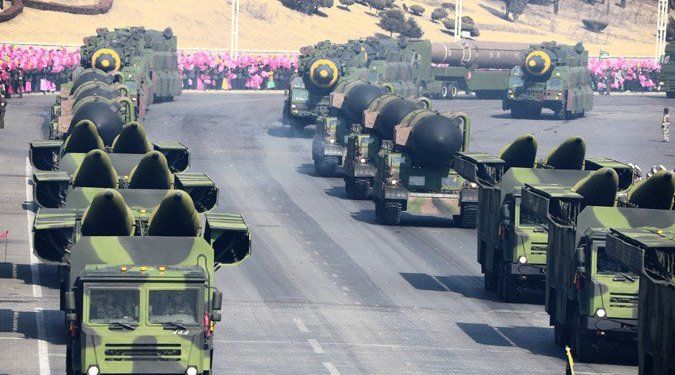
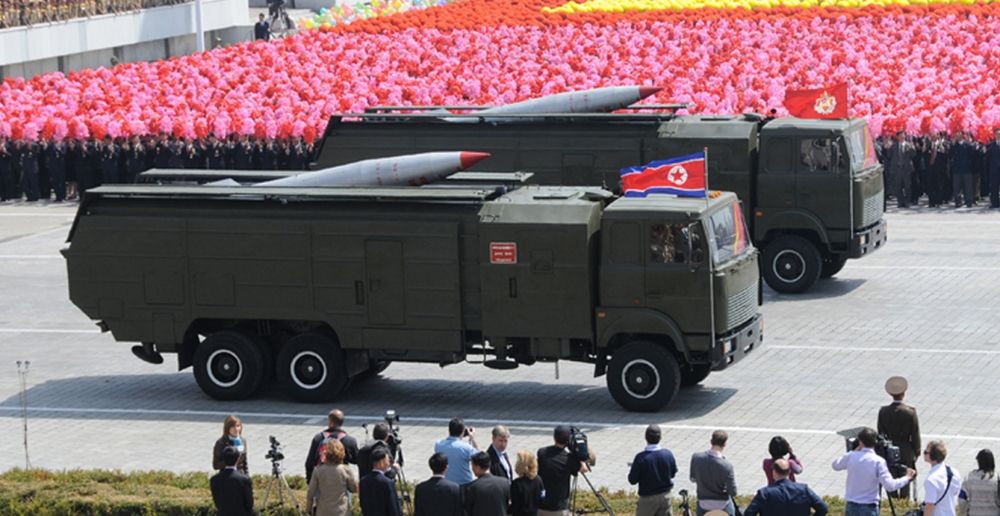
The new missile platform is larger than previous short range tactical missiles deployed by North Korea’s armed forces, and bears a very close resemblance to the Russian 9K720 Iskander-M which entered service in 2006. North Korea’s tactical missile forces previously relied on indigenous variants of two generations of Soviet tactical ballistic missiles, the Scud-B and Scud-C reverse engineered and fielded as the Hwasong-5 and Hwasong-6 and the solid fuelled OTR-21 Tochka fielded as the KN-02 Toksa. Access to the Scud was gained through Egypt, when went on to acquire the Hwasong-5 and 6 in large numbers, while the next generation solid fuelled platform was acquired from Syria which became a leading client for the Toksa. Much as Russia has moved towards a third generation of short range tactical missiles with the Iskander therefore, phasing out the Tochka, so too has North Korea apparently done the same. The entry into service of this tactical missile is likely to bring an end to production of older tactical missiles for the Korean People’s Army, though manufacture for export and under licence abroad in Egypt and Iran may well continue.
There remain a number of possibilities for how North Korea gained access to the Iskander design, including direct technology transfers or sales from Russia. This remains possible based on recent U.S. claims that Moscow was aiding North Korean missile development, and can potentially be interpreted as a non-violation of the U.S. drafted UN Security Council restrictions banning arms sales to the DPRK if technologies were sold rather than the weapons systems themselves. Alternatively, North Korea may have gained access to the Iskander through Algeria or Armenia, the platform’s only known foreign operators, the former which retains close ties to Pyongyang. Whatever the case, based on the precedents set by the Hwasong-5 and 6 and the Toksa, the new missile is expected to field capabilities closely resembling those of the Iskander - which will represent a game changer for the Korean People’s Army’s tactical strike capabilities.
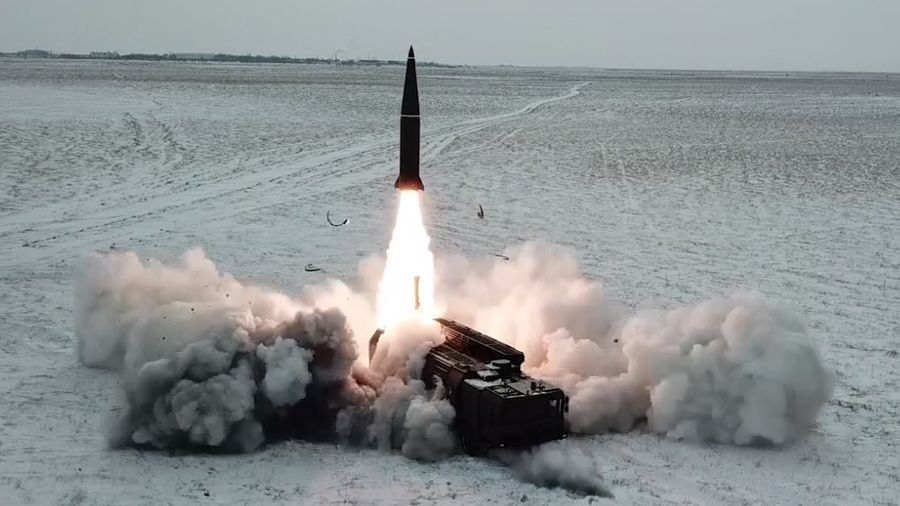
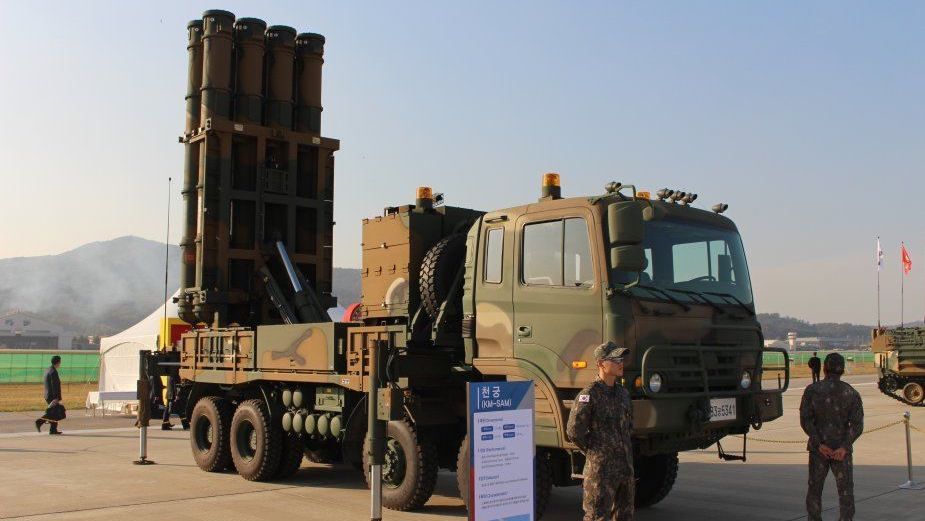
The new missile’s use of solid fuel makes it considerably easier to maintain, reducing the time needed for deployment deploy to approximately 15 minutes - a 75% reduction on the Scud series’ launch time. Based on the capabilities of the Iskander, and the effectiveness with which North Korea has precisely reverse engineered Soviet tactical missile designs, the platform’s capabilities can be estimated. The missile’s guidance systems and evasion capabilities are also speculated to be considerably more advanced than anything previously deployed by the Koran People’s Army, ensuring not only that they are better able to penetrate enemy air defences such as the Patriot and KM-SAM batteries protecting U.S. military facilities in South Korea, but also that a smaller number of munitions are needed for a successful strike due to high precision. Like the Iskander, missiles are expected to be controlled along every stage of their flight path to maximise precision - also allowing them to be retargeted during flight to engage mobile targets. Should the missiles inherit the Iskander’s ability to deploy a wide variety of conventional warheads, including cluster munitions, bunker busters and earth penetrators, they will leave even heavily fortified high value U.S. targets in South Korea vulnerable.
North Korea’s Iskander derivative is likely to differ from its Russian counterparts in two key ways. The first is that the range of the Iskander has been artificially restricted by the INF treaty until Russia’s withdraws in early 2019, meaning that the missiles could only engage targets up to 500km away, and as North Korea has never been party to any such treaties it is unlikely to impose similar restrictions on its indigenous variant. A longer range would allow the missile to strike targets both at the southern tip of the Korean Peninsula such as U.S. naval facilities on Cheju island, as well as potentially placing parts of Japan within range. The second major difference comes as a result of the differing nuclear doctrines of Russia and North Korea, the former subscribing to a highly offensive maximum deterrence strategy under which use of battlefield tactical nuclear weapons is condoned while the latter’s existential deterrence allows only for strategic nuclear weapons use. This means that while Russia deploys tactical nuclear warheads from some of its Iskander missiles, North Korea is highly unlikely to do so - much as it did not nuclearise its predecessor the Toksa.
North Korea’s acquisition of an advanced tactical ballistic missile closely resembling the Russian Iskander has serious implications for the United States and its allies - both on the Korean Peninsula and beyond. While the missile’s deployment on the Korean Peninsula is highly unlikely, with all parties deterred from potential military action by one another’s nuclear assets, North Korea is likely to proliferate these ballistic missiles to third parties - particularly those in the Middle East which have been longstanding clients for previous tactical systems. Iran and Syria are two of the most obvious clients for the platform, with both continuing to receive newer and more capable Korean weapons systems such as the Musudan ballistic missile which was deployed by Iran from 2017 as the Khorramshahr - the most capable ballistic missile in its inventory. The missile forces of both these countries rely overwhelmingly on Korean technologies, and a platform with capabilities comparable to the Iskander - a system Russia is unlikely to supply either party - could be a game changer for their strike capabilities. Deployed to Syria, or by the Iranian armed and Korean trained Hezbollah militia in Southern Lebanon, the missiles would pose a major threat to Israeli military facilities such as airbases and command centres. With a minimal range extension over the original Iskander, the missile in Iranian hands could also pose a major threat to U.S. and other Western military facilities in Arab gulf states - while also placing oil fields and high value Arab targets such as oil fields and desalination plants in the firing line. U.S. efforts to restrict Egyptian access to advanced arms, most recently through threats of economic sanctions, could also be undermined through potential purchases of the new Iskander-like missile - which could also see Cairo attempt to set up licensed production lines domestically as it did in the 1990s for the Rodong-1 and Hwasong-6 platforms. The result of North Korea's acquisition of this missile, therefore, is likely to be the empowerment of U.S. adversaries both on the Korean Peninsula and beyond by serious enhancement to their strike capabilities.
