
Israel Seeks Swift Assassination of Hezbollah Leader Hassan Nasrallah for a Decisive Victory in a Future War
Military Watch Magazine Editorial Staff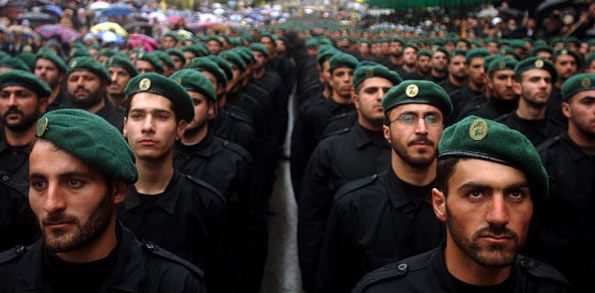
Hezbollah Militiamen
Tensions between the Lebanese militia Hezbollah and Israel have continued grow as the two have escalated their involvement in the Syrian war in support of opposing sides of the conflict. The Israel Defence Force suffered its first and only defeat in its 70 year history in 2006 at the hands of Hezbollah, which combined sophisticated tactics and training with cutting edge Russian and North Korean weapons systems and fortifications to wage an effective ground war against a far larger force. Israel has ever since taken extensive measures to prepare for a future conflict with Hezbollah, which is today viewed as its most dangerous potential adversary - particularly considering the weakening of the Syrian Army after seven years of war and the vast distances separating the Jewish state from its primary adversary Iran.
According to Israeli Major General Yaakov Barak, Hezbollah's leader Hassan Nasrallah would be a primary target in a future Israeli war against Hezbollah. The General stated regarding the importance of eliminating the head of the organisation: "If we manage to kill Nasrallah in the next war, I would see that as reaching a decisive victory." He stated with near certainly that a future war in Lebanon would differ significantly from that of 2006, with Israeli forces today "ready and prepared" to penetrate deeper and more quickly into Lebanese territory and overcome Hezbollah's defences. "The next war will not be a war of several days, but it won't last several months either," Barak further noted.
The outcome of a future Israeli-Hezbollah conflict remains highly uncertain, with both sides having significantly enhanced their capabilities over the last twelve years. Hezbollah for its part has vastly expanded its missile arsenal and tunnel networks, and can potentially devastate Israeli cities and nuclear sites and cause catastrophic damage. Its has also reportedly acquired stealth drones via Iran, as well as sophisticated surface to air missiles from a number of sources. Its ground forces have also gained significant combat experience fighting heavily armed Islamist insurgents, including Islamic State and Al Qaeda, in a number of different environments from deserts to mountains - the same which cannot be said for Israel's ground forces which since 2006 have had negligible experience on the ground. Israel has however increased its levels of combat readiness leaving both its military and its civilian population far better prepared for a new conflict. A lack of proper training and severely underestimating Hezbollah's capabilities were cited as key reasons for Israel's previous defeat, and these are not mistakes the Jewish state is likely to make a second time. Both sides thus remain highly cautious of a future war with the other, and a future Israeli-Hezbollah war is likely to be the most testing in the history of both parties.
