
U.S. Intelligence Confirms: North Korean Hwasong-15 Nuclear Tipped Missile Can Target Entire American Mainland
Military Watch Magazine Editorial Staff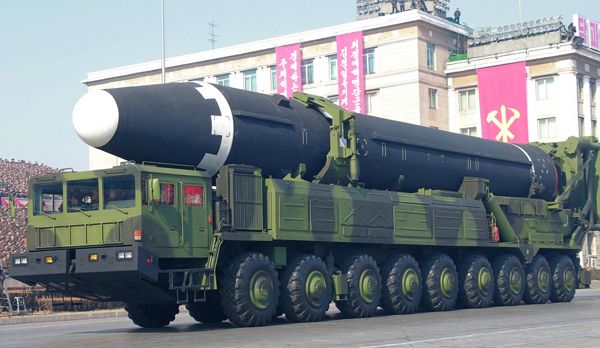
North Korean Hwasong-15 Intercontinental Range Ballistic Missile
The North Korean Hwasong-15 was the second intercontinental range ballistic missile (ICBM) design tested in 2017 when it was launched in late November of that year. This test was the third that year of an ICBM capable of striking the United States mainland, following two tests of the lighter Hwasong-14 on July 4th and 28th of 2017 which was capable of striking the American West Coast and approximately half of the mainland. The testing of the Hwasong-15 concluded two years of intensive missile testing which saw North Korea make rapid progress in enhancing its nuclear deterrence capabilities, and the platform was reportedly placed into mass production the following year. Despite the missile’s considerable performance, a number of Western analysts doubted both the range of the platform and the capabilities of its reentry vehicle - with claims widespread in Europe and the United States that the missile could not strike the entire American mainland and that, even if it had this range, its warhead would burn up during atmospheric reentry. The latter claim was debunked by U.S. intelligence in 2017, when it was confirmed that North Korea has successfully developed a reentry vehicle for its ICBMs. The latter claim persisted however, and was debunked by official sources only in July 2019.
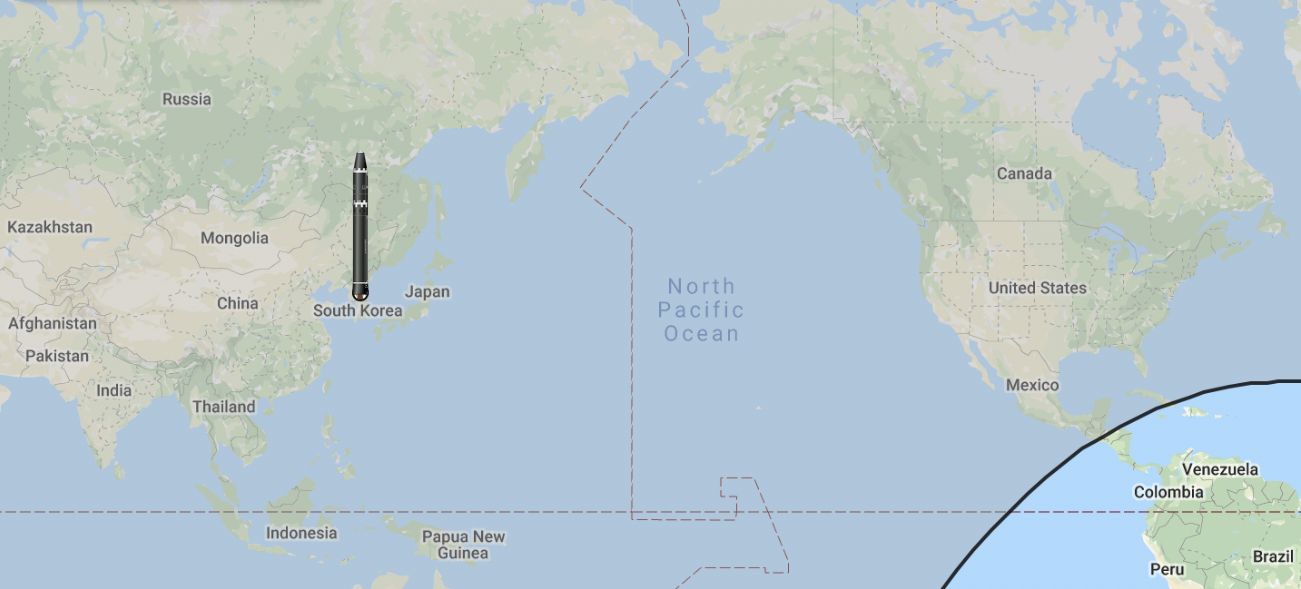
An official publication by U.S. Forces Korea (USFK), the 2019 Strategic Digest, stated regarding the development of the Hwasong-15 citing American intelligence sources: “The missile, test-fired by the North Korean military in November 2017, is said to have an estimated striking range of 12,875 km (8,000 miles), giving it the theoretical ability to strike the U.S. from coast to coast. An unnamed military source told Chosun Ilbo that the U.S. Forces Korea estimate was based on a ‘comprehensive analysis of intelligence data collected from satellite, aircraft and radar surveillance’ of North Korea's recent missile testing efforts.” The report thus confirms claims by North Korean sources that the Hwasong-15 was capable of striking targets across the continental United States. The state media outlet Korea Central News Agency reported following the test in 2017 that the missile could deliver nuclear warheads to "the whole of the mainland of the U.S.,” and could be "tipped with a super-large heavy warhead" - presumably the thermonuclear bomb reported to have been successfully tested in miniaturised form earlier in the year.
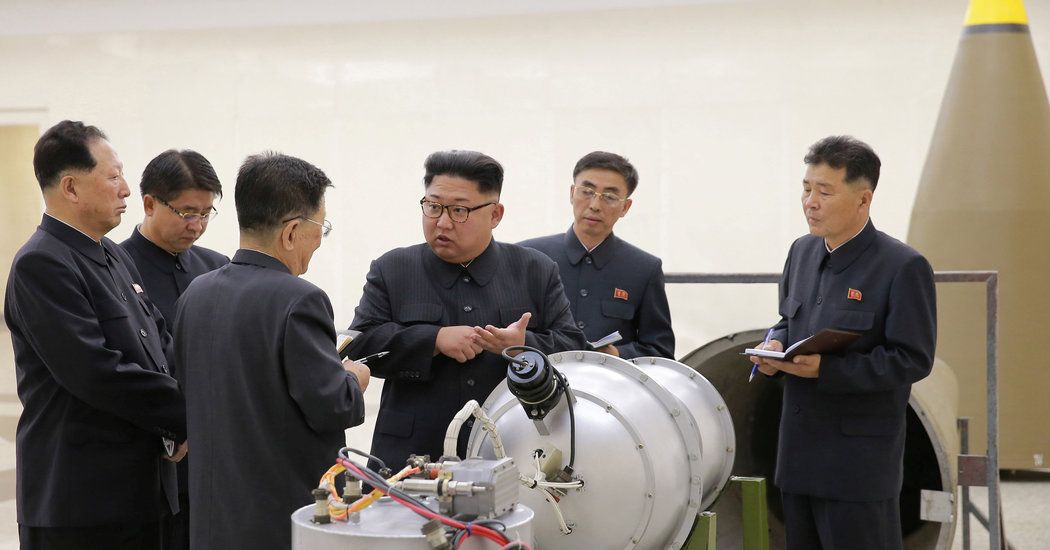
With a number of key figures in the U.S. civilian and military leadership, from lawmakers to generals, until late 2017 advocating attacks on North Korea despite its nuclear weapons capability - citing its inability to deliver nuclear warheads to the continental United States - the testing of the Hwasong-15 which demonstrated this capability beyond reasonable doubt was key to preventing extraregional actors from initiating a major war in northeast Asia. With the military option effectively off the table once the Hwasong-15’s capabilities were demonstrated, the United States moved to begin negotiations with Pyongyang which have since resulted in a considerable reduction in tensions and three meetings between Leader Kim Jong Un and President Donald Trump. The importance of the Hwasong-15 in particular to North Korean security, and by extension the security of all of northeast Asia, thus cannot be overstated.
