
Radar Evading Ballistic Missiles from North Korea? AEGIS Air Defence System Fails to Track New Projectiles
Military Watch Magazine Editorial Staff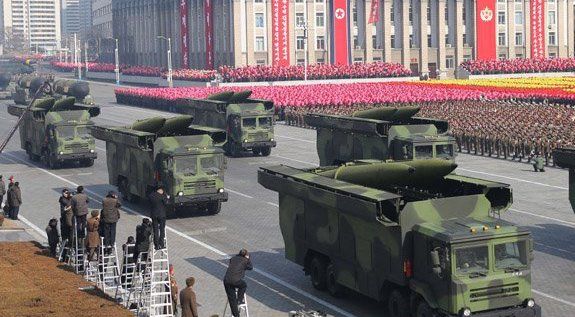
New North Korean Solid Fuelled Tactical Ballistic Missile on Parade
South Korea has since the 1990s deployed a vast network of long range radars, among the most sophistication in the world, to provide early warning of a potential North Korean strike and queuing information to air defence systems for effective interception. These have included both ground based systems such as the EL/M-2080 Green Pine, and the ship based AEGIS system deployed on the country’s sizeable destroyer fleet. In part as a response to this, North Korea has invested in electronic warfare systems capable of jamming enemy radars and integrated these systems onto a number of its assets. North Korea’s armed forces have also invested heavily in improving the survivability of ballistic missiles, both through the integration of electronic warfare countermeasures and more sophisticated decoys but also by providing some radar evading and spoofing capabilities to make tracking and successful interception far more difficult. These technologies have been integrated not only onto Korean missiles, but also onto those of a number of its defence partners including Iran and Yemen - both of which rely heavily on Korean technology transfers for their own respective missile programs. Indeed, Korean radar evading and spoofing technologies were according to some reports responsible for the success of Yemeni ballistic missiles in evading Saudi Arabia’s advanced U.S. manufactured air defence network in late 2017 - and are a source of major concern for potential Iranian targets such as Israel and the United Arab Emirates which also rely on the Patriot among other American systems.
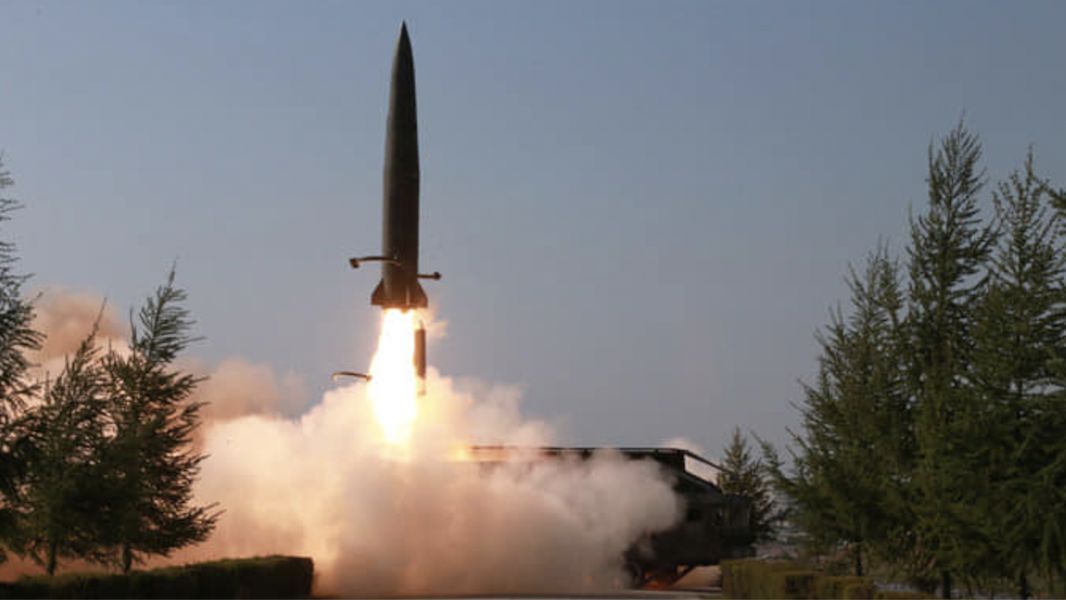
North Korea’s missile tests in early May 2019 saw a new tactical ballistic platform, yet unnamed but currently known as Hwasong-X, demonstrate its potential for the first time since its unveiling during a military parade in February 2018. The missile appears to be considerably more sophisticated than preceding short ranged tactical platforms such as the Hwasong-6, widely deployed in the Middle East and developed in the 1980s, or the newer KN-02 Toksa. A cause for significant concern in South Korea, the missile reportedly could not be tracked at all by the U.S. developed AEGIS ballistic missile defence systems integrated onto its destroyers which made an effective interception near impossible had the Hwasong-X been directed against targets in the country or at the warships themselves. Where the AEGIS failed however, the Israeli Green Pine ground based radar system reportedly proved somewhat more successful. The AEGIS system is designed to track several dozen missiles simultaneously, and its failure to track the Korean platform during a recent test bodes ill for the security of U.S. and South Korean targets - both on land and at sea - in the event of a potential conflict. Neighbouring Japan, which also integrates the AEGIS onto several dozen of its surface warships and is set to deploy a ground based variant known as AEGIS Ashore, is also at risk. It is likely that many of the new technologies integrated onto the Hwasong-X will proliferate to Korean defence partners in the Middle East - namely Iran and Syria - with such sales providing much of the funding needed to develop more modern missile systems.
