
North Korea Carries Out Second Test of Advanced Tactical Missile; Western Analysts Increasingly Suspect Iskander Links
Military Watch Magazine Editorial Staff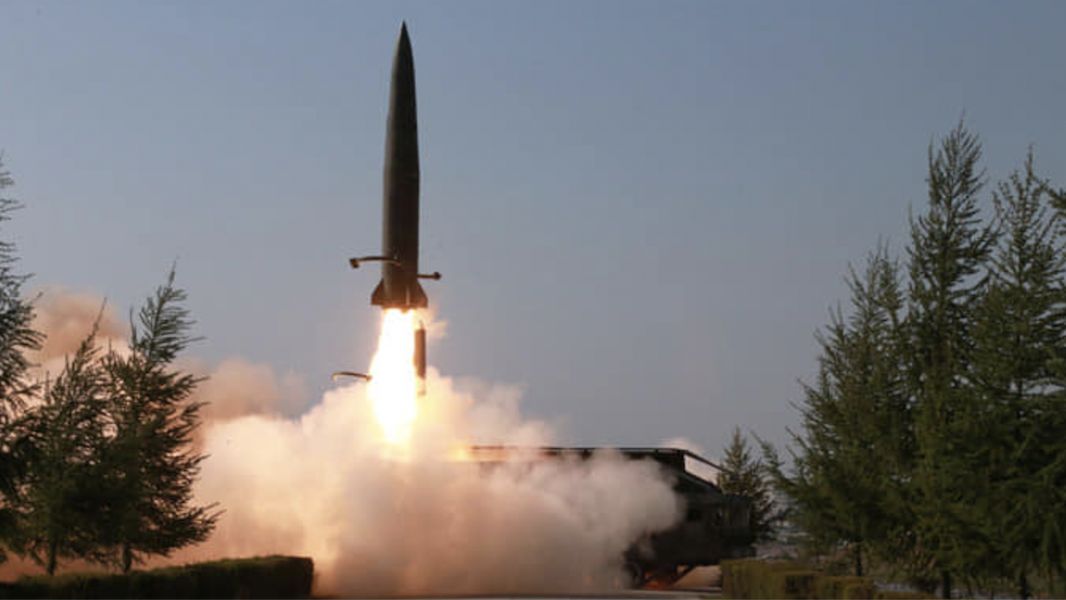
Second Test Launch of North Korean Iskander-Like Tactical Ballistic Missile
On May 9th North Korea’s armed forces carried out their second ballistic missile test in less than a week, firing a solid fuelled tactical ballistic missile from the northern city of Kusong demonstrating a range of between 500km and 550km. The missile used (temporarily termed Hwasong-X) is as of yet unnamed, but was first revealed in February 2018 during the 70th anniversary celebrations of the Korean People’s Army. The platform’s first confirmed test took place on May 4th alongside the testing of long range rocket artillery. The test does not violate North Korea’s commitments to cease testing of strategic assets such as nuclear warheads and intercontinental range ballistic missiles, and the Hwasong-X is intended for battlefield use against targets such as airbases and command centres. The tests come amid stalling peace talks between North Korea and the United States, the latter which surprised analysts in February by refusing a proposition for the partial lifting of UN economy sanctions on the East Asian state in exchange for access to some of its nuclear facilities. Pyongyang has given Washington a deadline of January 2020 to return to the negotiating table before it resumes the testing of its strategic assets. While the North Korean economy has proven far more resilient to sanctions than other Western targets such as Iraq, Iran and Russia - the addition of sanctions through the United Nations has had a far grater impact on the country’s economy wellbeing than the unilateral sanctions imposed by Western states and their allies. The missile test came just hours after the unilateral seizure by the United States of a North Korean coal ship, the Wise Honest, which was one of the largest in the country’s merchant fleet.
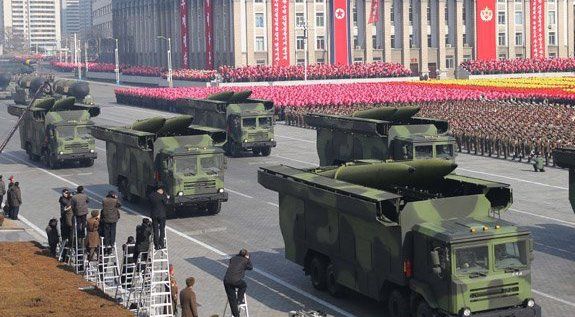
Western analysts have increasingly drawn attention to the close similarity of the Hwasong-X to the Russian Iskander tactical ballistic missile, leading to allegations that the country’s armed forces somehow obtained key missile technologies either through Russia or a third party operator such as Algeria. The missile represents a third generation of North Korean short ranged tactical missiles, following on from the Hwasong-5 and Hwasong-6 - derived from the Soviet Scud, and the KN-02 Toksa - a derivative of the Soviet OTR-21 Tochka. The missile’s in flight guidance, high precision and ability to deploy specialised penetrative warheads allows it to pose a major threat to U.S. military facilities in South Korea - and possibly parts of Japan depending on its exact range. The Hwasong-X's use of a solid fuel composite, and resulting short launch time and high mobility, are key to providing addition survivability. The Hwasong-X is the fourth solid fuelled missile design to be widely deployed by North Korea’s armed forces, and further investment in longer ranged systems of a similar level of sophistication is expected.
