
North Korea Sets Ultimatum for U.S. to Return to Negotiating Table; Continues to Modernise Military
Military Watch Magazine Editorial Staff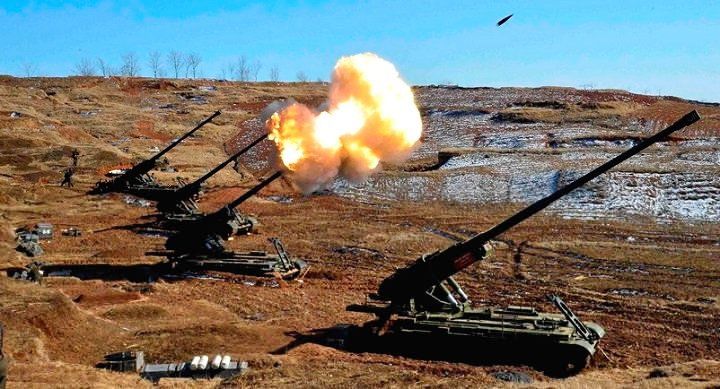
North Korean Koksan Heavy Artillery
Despite a reduction in tensions from early 2018, North Korea has continued to invest heavily in the modernisation of its armed forces and urged the United States to return to the negotiating table. Pyongyang has since the conclusion of the Korean War 1953 been highly wary of the potential for a second U.S. invasion, the first which resulted in the deaths of an estimated 20-30% in a period of three years - with its military overwhelmingly oriented towards preparing for and if possible deterring an American attack. At the same time, North Korea has stated its willingness to negotiate concessions to its nuclear weapons program in exchange for a partial lifting of Western drafted economic sanctions at the United Nations - which have seriously undermined economic growth since a new series were instated in 2016 and 2017. The United States’ unwillingness to even partially lift sanctions short of anything but total denuclearisation was reportedly the cause for the collapse of the Hanoi summit in February, as the U.S. demanded not only intrusive inspections of Korean nuclear facilities but also that North Korea’s entire nuclear arsenal, a the prime guarantor of its security built up over more than a decade, be transferred to the American mainland. This was a demand no Korean leader could accept without facing a serious backlash to their credibility domestically both among the general public and in the ruling Korean Workers Party and Korean People’s Army.
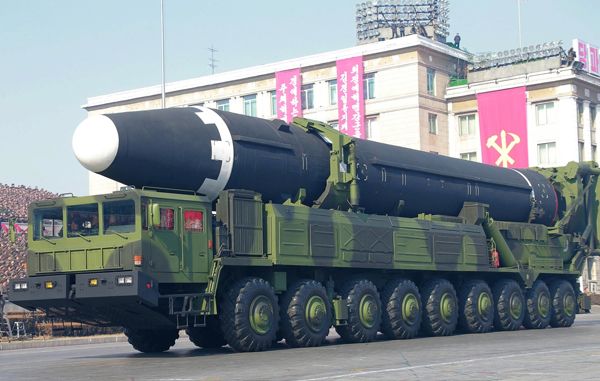
North Korean leader Kim Jong Un stated that the hardline American position raised the risk of a return to high tensions - previously indicating that his country could resume weapons testing if necessary. "What is needed is for the US to stop its current way of calculation, and come to us with a new calculation," he stated. He further set an ultimatum, stating that he was willing to engage in talks "until the end of this year." Exactly what path Pyongyang would pursue should the U.S. fail to reopen negotiations with better terms remains to be seen, but a resumption in the testing of strategic assets remains likely. While North Korea successfully tested intercontinental range ballistic missiles on three occasions - leading U.S. intelligence to confirm that the country had obtained the capability to strike the United States mainland - the country’s freeze in testing has since stalled its development of a second stage deterrent. This was reportedly set to take the form of an intercontinental or upper-intermediate range missile deployed from an indigenous ballistic missile submarine - of which at least one was confirmed as being under production. While North Korean ballistic missiles submarines such as the Gorae (Sinpo) Class and Golf Class have previously tested solid fuelled tactical missiles with lower intermediate ranges of the Pukkuksong design, a strategic nuclear capable ICBM would be a game changer for North Korea’s nuclear deterrent forces.
