
How North Korea Plans To Revolutionise Its Military Capabilities Over Five Years: Hypersonics, Nuclear Submarines, Stealth Drones and More
Military Watch Magazine Editorial Staff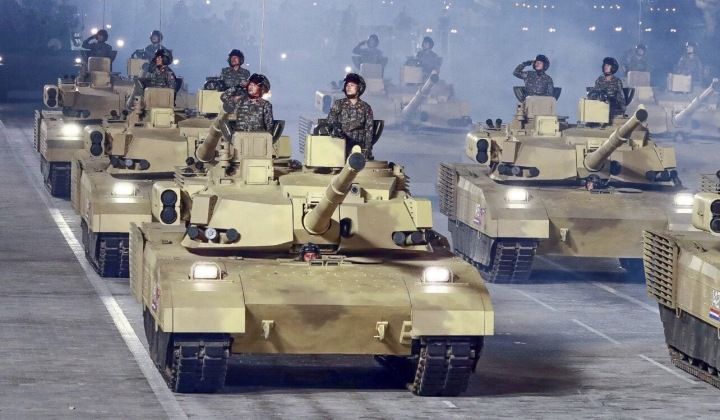
North Korean Next Generation Battle Tanks
Following the eighth congress of the Korean Workers’ Party, during which pledges were made to improve the country’s deterrent capabilities against its ‘greatest enemy’ the United States, the country staged a minor military parade on January 14th where two new classes of ballistic missile took centre stage. The first was an unnamed new class of tactical ballistic missile launched from a transporter erector launcher which is thought to be hypersonic, and follows on from the recently unveiled KN-23 and KN-24 platforms which have very similar roles and capabilities. The second was a new class of submarine launched strategic ballistic missile - the third of its kind unveiled in the past 15 months. The missile follows on from the Pukkuksong-3 which was test launched at sea in October 2019, and the Pukkuksong-4 which was unveiled on parade in October 2020. The newer missile could well leave its two predecessors obsolete very quickly, and is expected to be deployed from new ballistic missile submarines currently under construction. The missile is expected to have a high intermediate range, allowing it to threaten the U.S. mainland if the launching submarine is far enough out to sea.
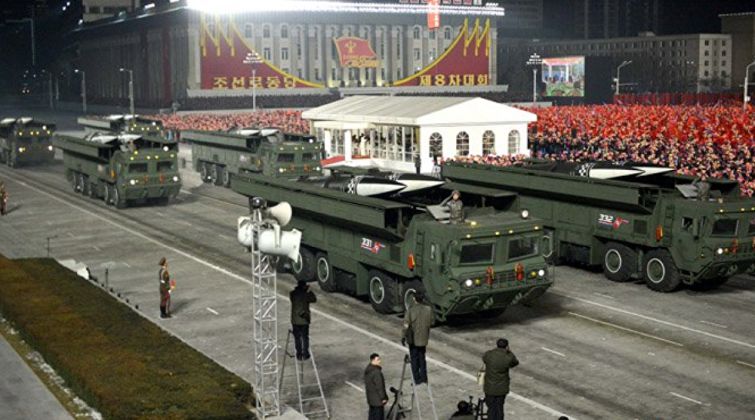
Alongside the unveiling of the two new missiles, indicators of some of the future weapons programs the country's defence sector is expected to pursue were given at the party congress. Among these is a hypersonic glide vehicle which will provide a more effective strike capability against targets beyond the Korean Peninsula - placing targets in Japan and possibly as far as Guam within range. Existing tactical hypersonic weapons have notably proven nearly impossible for the American AEGIS air defence system, the most advanced in the Western world, to detect - much less engage. China currently leads the world in deployment of ground based hypersonic missiles, with the U.S. and Russian investing in means to bridge the gap and Russia already deploying such weapons for purely strategic purposes.
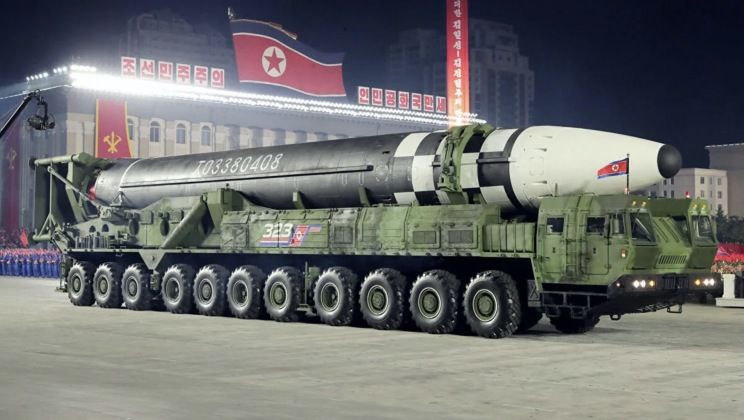
North Korea is also developing a multi warhead reentry vehicle for its intercontinental range ballistic missiles - which is expected to be deployed by an unnamed new missile which was unveiled in October 2020. This would multiply the firepower each missile can carry, and make nuclear strikes much more difficult for the U.S. and other adversaries to intercept. Another potential force multiplier for the country’s nuclear deterrent is the development of a nuclear powered strategic ballistic missile submarine. North Korea currently deploys the largest submarine fleet in the world including strategic ballistic missile ships, but these are primarily deployed near the country’s waters and lack a high endurance for global operations. A nuclear powered strategic ballistic missile submarine would allow the country to strike the U.S. mainland from any direction due to its high endurance, and will make it much more difficult for potential adversaries to attempt to neutralise its nuclear deterrent on the ground.
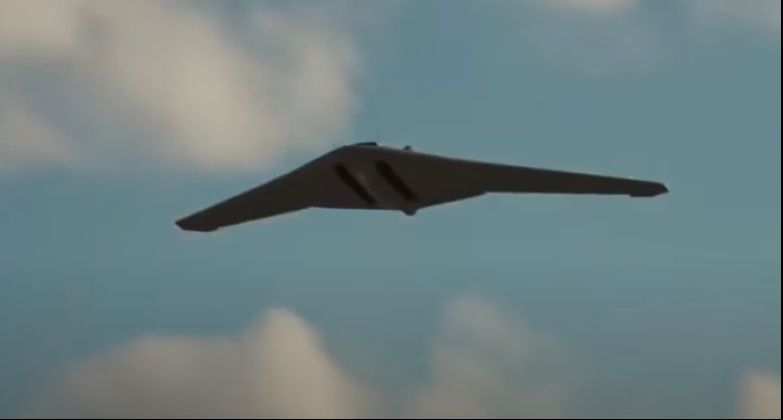
Another notable asset under development are surveillance satellites, which could provide greater precision to the country's missile arsenal as well as key intelligence on the movements of U.S. and allied forces. North Korea has previously placed a number of satellites in orbit, but has yet to launch any with military applications. Military drones are another area highlighted where the country is developing major new armaments. North Korea’s close defence ties with Iran are expected to help in this regard, as while the transfer of technology between the two has generally been one way, drone technologies are one of the very few fields where Iran is in fact more advanced. It has deployed and combat tested multiple highly effective stealth platforms, and is likely to share technology and experience. Ultimately while North Korea has truly revolutionised its military capabilities since 2016, the pace of modernisation is expected to if anything increase over the coming years. The only major field which has not been affected by this is the country’s fleet of manned fighter aircraft - the only area where the country’s defence sector is as of yet unable to provide for the military’s needs. Deployment of more advanced ground based air defence systems, and possibly of strike and surveillance drones, is expected to partially compensate for this.
