
Warning to the Biden Administration: North Korean Leadership Hints Resumption of Nuclear Arsenal Testing To Improve Deterrence
Military Watch Magazine Editorial Staff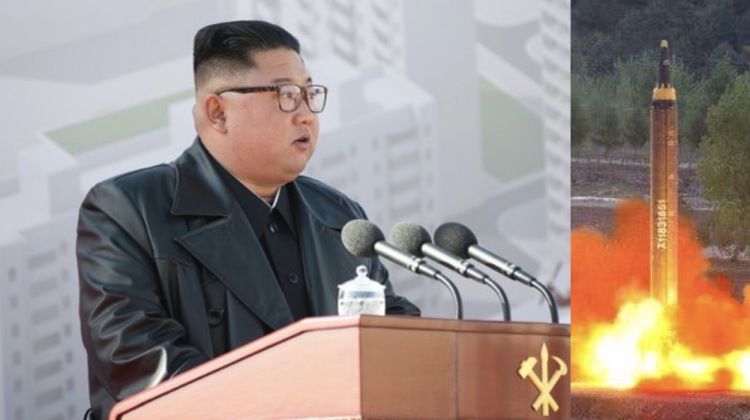
North Korean Leader Kim Jong Un and Hwasong-12 Ballistic Missile
As North Korea holds its eighth congress of the ruling Korean Workers’ Party - the world’s oldest ruling party which in 2021 will mark 72 years in power - the country’s leadership has shed light on the possible future course relations with the United States could take. During the conference the U.S. was referred to as the country’s “biggest enemy,” and the party stressed that an improvement in relations would rely on United States ending what it referred to as “hostile policies” towards the East Asian state. This followed failed negotiations in Hanoi in early 2019 during which the U.S. delegation led by President Donald Trump abruptly and unexpectedly placed unilateral demands on the Korean side - abandoning the perviously expected plans for mutual concessions to improve relations. While North Korea has refrained from testing nuclear weapons or intercontinental range ballistic missiles since November 2017, this could soon change as the country’s calls for a relief of Western drafted economic sanctions at the United Nations have not been heeded for over three years.
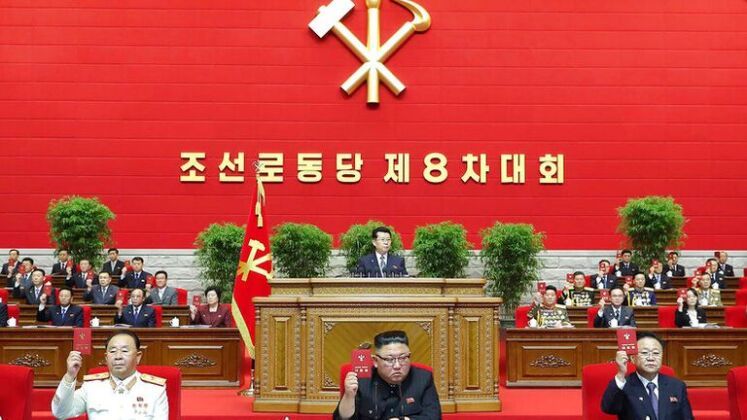
During the Workers’ Party Congress North Korean leader Kim Jong Un stated regarding the possibly of a resumption of testing of strategic weapons: “It is necessary to do so as to actively and fully deter and control the military threat that is forced on the Korean Peninsula, improving nuclear technologies, reducing the size and weight and increasing the strategic power of nuclear weapons.” He again emphasised the country’s no first use policy regarding its nuclear arsenal, stating that nuclear weapons would not be used “unless hostile forces try to use nuclear [weapons] targeting us.” The country is one of just three nuclear weapons states, alongside China and India, to adhere to such a policy.
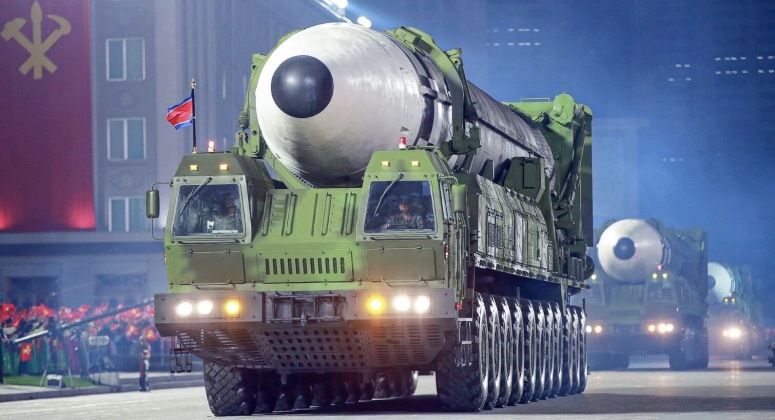
Elaborating on the kinds of armaments expected to be tested, and confirming that it was indeed very long ranged strategic nuclear weapons which were expected to be focused on, the Korean leader reportedly stated that it was necessary to develop strategic nuclear weapons that could be used in a variety of ways in a modern war, depending on the target and the operational task. The country notably unveiled the world’s largest road mobile ballistic missile in October 2020, which is expected to build on the capabilities of the Hwasong-15 missile tested in November 2017 and provide the capability to strike the U.S. with multiple independent reentry vehicles. A new submarine launched ballistic missile was also unveiled in 2019, with two new strategic submarines to accommodate them currently being built. Whether the upcoming Joe Biden administration will oversee a resumption of maximum pressure against Pyongyang, or will accommodate some of Pyongyang's demands for sanctions relief to prevent further tests of strategic weaponry, remains to be seen.
