
Target Washington: North Korea Marks Three Years Since Demonstrating Nuclear Strike Capability Across U.S. Mainland
Military Watch Magazine Editorial Staff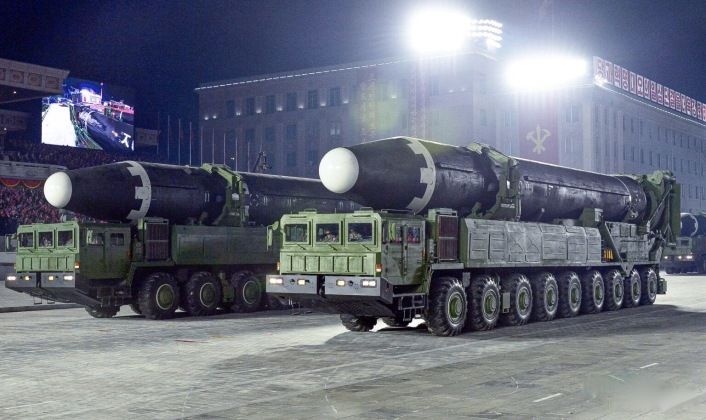
North Korean Hwasong-15 ICBMs
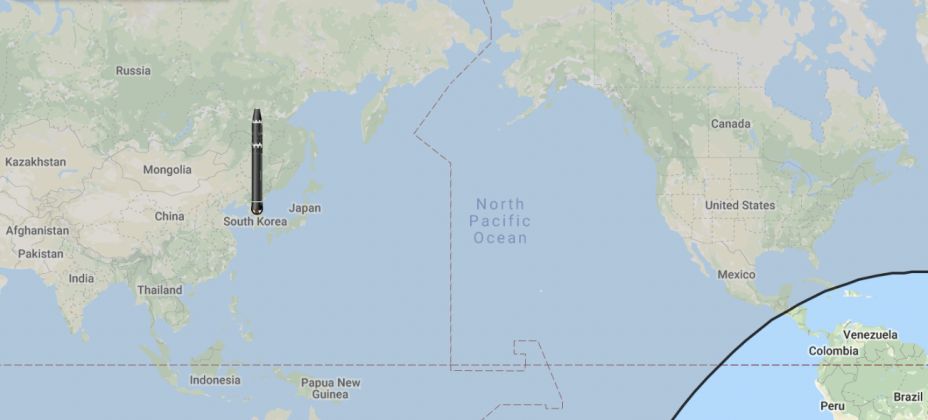
On November 28th, 2017, North Korea conducted its first and only test firing of the Hwasong-15 intercontinental range ballistic missile (ICBM), demonstrating for the first time the country’s ability to delivery nuclear strikes across the entire American mainland including targets on the east coast. The Hwasong-15 was one of the longest ranged missiles ever tested, and followed on from two successful tests of the smaller Hwasong-14 missile in July which had the capability to strike targets across much but not all of America. The newer missile led the U.S. intelligence community to quickly conclude that the country had a fully viable nuclear deterrent which held cities across America in its crosshairs - a major game changer for a country which had been technically at war with the United States since 1950.
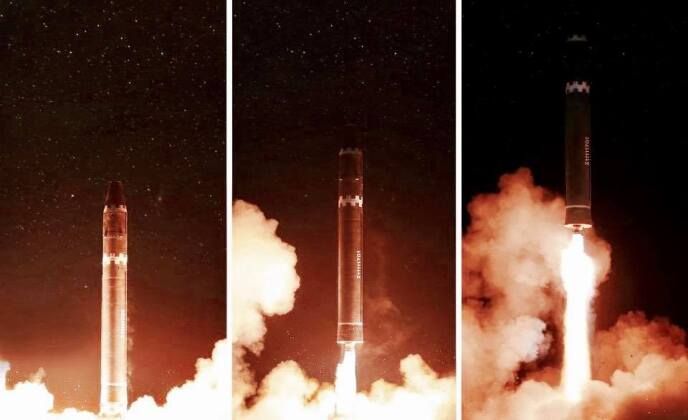
The Hwasong-15 was the last North Korean ballistic missile tested for almost 18 months, and while discourse in the U.S. leadership had previously strongly pointed towards a potential attack on the small East Asian state, the missile test and a test of a miniaturised thermonuclear warhead shortly prior shifted the calculus against such a course of action. Despite North Korea having previously tested a number of missiles capable of striking Japan, Guam and Hawaii, the country’s inability to launch attacks on the U.S. mainland was highlighted on multiple occasions by figures in the American leadership such as Senator Lindsey Graham and the outspoken Colonel Ralph Peters as a reason for the U.S. to take military action - with advocates of attacks stressing that protection of the U.S. mainland had to be a first priority. The Hwasong-15 test was thus key to forcing the U.S. to deescalate and accept Pyongyang’s diplomatic overtures, which resulted in a reduction of tensions and multiple high level meetings between the leaderships of both countries.
With tensions again beginning to simmer from late 2019, North Korea displayed the Hwasong-15 during a military parade in October 2020, marking the first time it had shown one of its intercontinental range ballistic missile in 18 months. The missile was displayed alongside a range of new hardware, including tactical hypersonic ballistic missiles, battle tanks, long range air defence systems and many other yet unseen Korean technologies. This was the second display of the Hwasong-15 on parade, following a display in February 2018 to mark the 70th anniversary of the country’s armed forces, shortly after which the mass production of the missile was confirmed.
The October 2020 parade notably also saw North Korea display two other classes of newer strategic missiles, including the Pukkuksong-4 submarine launched ballistic missile and a yet unnamed class of ICBM which was even larger than the Hwasong-15. The latter new missile is the largest in the world deployed from a transporter erector launcher - a highly mobile launch vehicle used by all of North Korea’s ground launched ballistic missiles to ensure survivability through mobility. The missile is speculated to have a similar range to the Hwasong-15, but to use multiple warheads allowing each to destroy a much larger area. North Korea has yet to test its latest missile, and the date of its first launch will likely depend heavily on the state of its relations with the United States.
