
North Korea to Double Nuclear Missile Submarine Fleet Size With Two New Ships - Revolutionising its Second Stage Deterrent
Military Watch Magazine Editorial Staff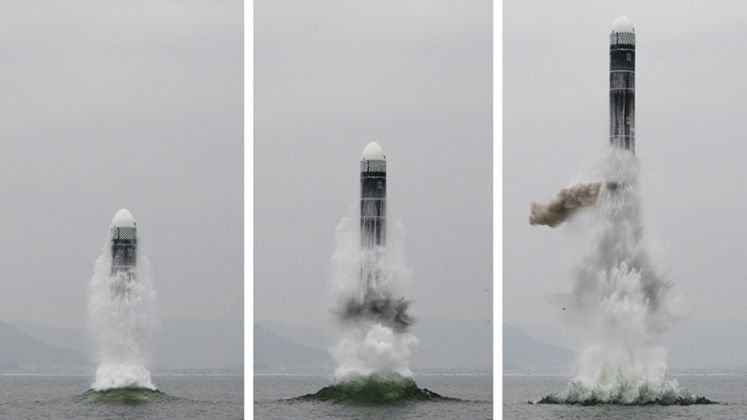
Launch of Pukkuksong-4 Submarine Launched Ballistic Missile
Following the unveiling of a new intercontinental range ballistic missile - the largest in the world which is thought to be able to delver multiple nuclear warheads across thee United States mainland - North Korea is reportedly planning to commission new ballistic missile submarines to further strengthen its nuclear deterrent. Korean state media unveiled a new submarine design in 2019, which is an improvement on the older Gorae Class ballistic missile submarine design and can reportedly carry three nuclear tipped missiles. One of the unnamed new submarines is thought to already be in service, alongside a single Gorae Class ship, meaning the commissioning of two new ships will more than double the size of the Korean strategic submarine fleet - since the newly designs ships are larger than the Gorae Class. A second stage deterrent is considered vital for states which could see adversaries attempt to destroy their ground based nuclear deterrents in a first strike - making an enemy’s calculations regarding whether to launch such a strike far more complex as, even if all ground based launchers are destroyed, the country will still be able to retaliate with attacks from submarine launched nuclear warheads.
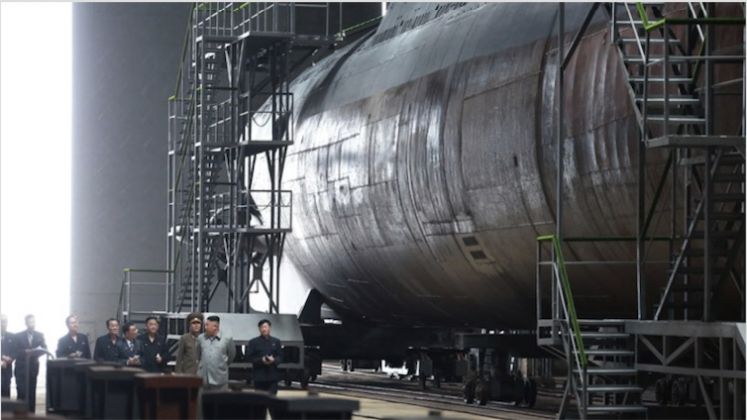
In 2019 North Korea notably unveiled a new class of submarine launched ballistic missile - the Pukkuksong-4 - which has a considerably longer range than the Pukkuksong-1 launched from its Gorae Class ship and will make it considerably easier for its submarines to strike targets on the U.S. mainland. North Korea has been building and exporting submarines for several decades, and is one of the few countries to have developed air independent propulsion systems domestically which is a key but very complex technology needed for an effective submarine program. Although its second stage deterrent is far less sophisticated than those of neighbouring China and Russia, which deploy longer raged submarines with more missiles, more nuclear warheads, and longer engagements ranges, Korean submarines are nevertheless very quiet and difficult to detect which his a key trait of an effective second stage deterrent.
