
Why the United States is Worried About North Korea’s New Ballistic Missile Submarine
Military Watch Magazine Editorial Staff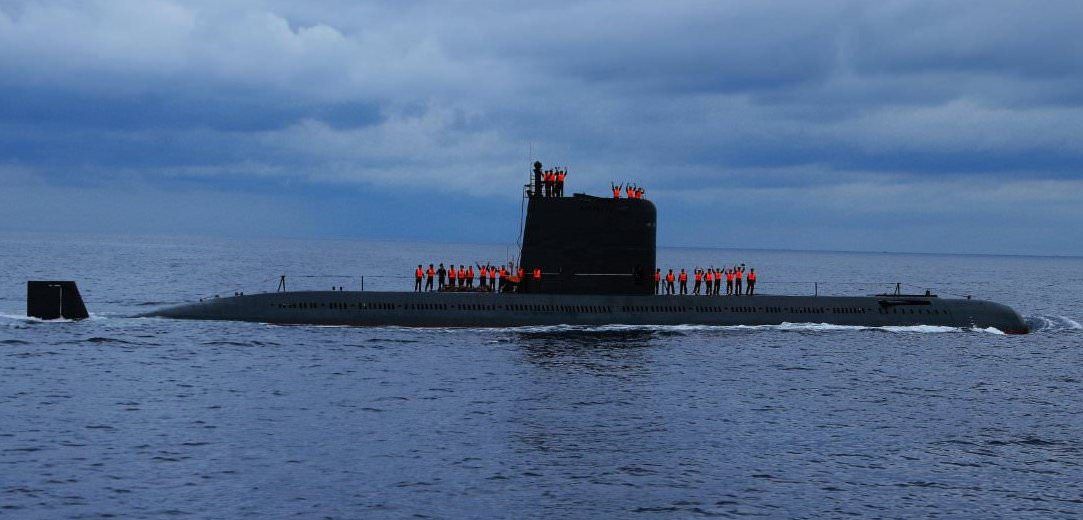
Korean People's Army Navy Submarine Drills
On July 23rd the North Koran state media outlet Korean Central News Agency unveiled a new ballistic missile submarine under inspection by the country’s military leadership, which was reportedly set to be deployed off the waters of the country’s east coast. North Korean Leader Kim Jong Un, who took part in the inspection and has reportedly taken a personal interest in the submarine program, reportedly “expressed great satisfaction over the fact that the submarine was designed and built to be capable of fully implementing the military strategic intention of the party under various circumstances.” North Korea’s Navy currently fields at least one indigenous ballistic missile submarine, the Gorae Class (also known as Sinpo Class), although the capabilities in terms of range, speed and weapons carriage are limited for this platform which has led to widespread speculation that it was intended primarily as a testbed for technologies which would be integrated onto future warships. The Gorae Class has been used to carry out 12 suspected tests of an indigenous submarine launched ballistic missiles between late 2014 and early 2017, the Pukkuksong-1, which retains a range of up to 2,500km. The missile was the first in the Korean arsenal with such a long range to use a solid fuel composite, and was later developed into a land based derivative known as Pukkuksong-2. North Korea’s new submarine could potentially deploy a larger arsenal of Pukkuksong-1 missiles, although it remains somewhat more plausible that a more capable and longer ranged munition is being planned to allow the warship to strike targets from greater distances.
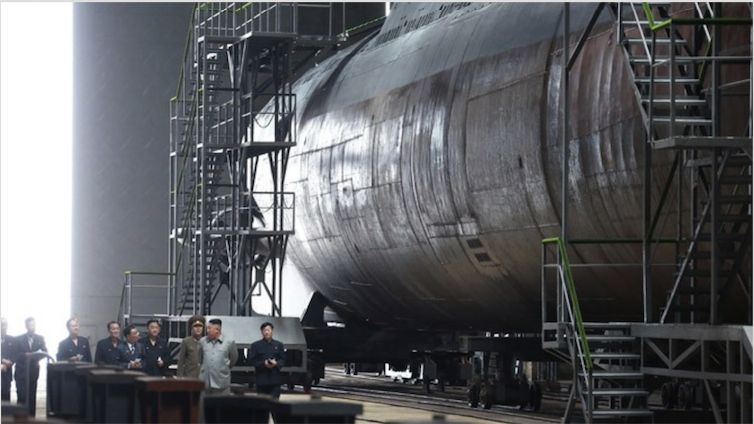
The importance of a submarine launched nuclear delivery capability for North Korea’s defence is considerable. The survivability of the military’s nuclear delivery systems is vital to ensuring the viability of its deterrent, as it may otherwise be vulnerable to a massive nuclear ’first strike’ by the United States intended to neutralise its systems before it can retaliate. As such, North Korea’s armed forces have made parallel investments in both the survivability of their land based missile systems and in developing more sophisticated submarine based systems. For the former, the Hwasong-15 and Hwasong-14 ICBMs designed to strike the United States mainland were developed to deploy from transporter erector launchers allowing them to remain mobile and very quickly redeploy - which U.S. military sources have repeatedly admitted makes targets extremely difficult to track down. The ability to hide these assets in a dense and deep network of underground fortifications further enhances their survivability, as does their ability to operate from North Korea’s mountainous terrain. A submarine launched missile will further ensure a high degree of survivability for a second stage deterrent, reducing prospects of a successful first strike.
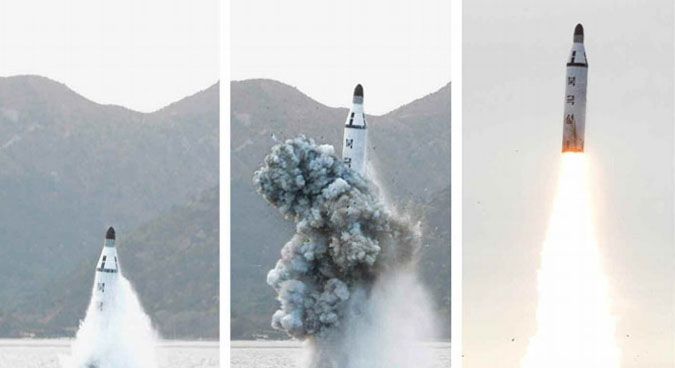
A Korean sate newspaper in 2017 indicated that North Korea was developing a new longer range submarine launched missile, the Pukkuksong-3, which is speculated to have an intercontinental range far exceeding that of its predecessor. Whether the new Korean submarine is designed to accommodate larger missiles remains uncertain, but it is near certain that it will have a considerably larger arsenal, a higher endurance and a higher speed than the Gorae Class. While the Gorae Class was theoretically able to strike the United States mainland, the need to operate in relatively close proximity to the U.S. coast to carry out such strikes seriously limited its survivability - meaning it was at best going to be able to strike Guam or Hawaii. Thus the new submarine may well be the first in the Korean arsenal capable of holding the American mainland at risk - complementing the capabilities of the Hwasong-15 and Hwasong-14 ICBMs currently in service. Pyongyang has repeatedly warned the United States that if it refuses to return to the negotiating table and promptly lift economic sanctions, it will promptly return to testing of technologies for its intercontinental range deterrent. Leader Kim Jong Un gave U.S. President Donald Trump until the end of the year 2019 to seriously consider an agreement before this would happen. Should North Korea resume testing of new strategic missile systems, testing of new missiles from the new submarine are likely to be among the first tests conducted.
