
Africa’s Most Dangerous Fighter Unit? Egyptian Air Force Already Has 17 New Su-35s
Military Watch Magazine Editorial Staff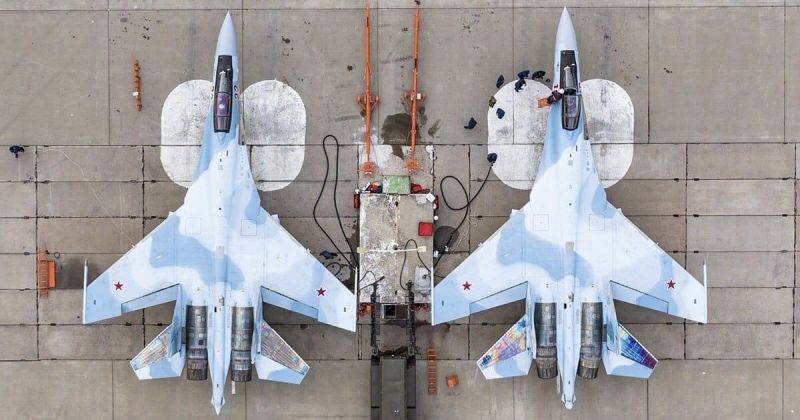
Su-35 Heavyweight Fighters
A number of Egyptian sources have reported that the country has already received 17 Su-35 ‘4++ generation’ heavyweight fighters, of which twelve are currently in Russia and have yet to be transferred to bases in Egypt. The African state placed orders for an estimated 24-26 fighters near the end of 2018, with the deal announced in March the following year, which made Egypt only the second export client for the jet after China. The Su-35 was designed primarily for air superiority missions, and is derived from the leading air superiority fighter of the Cold War era the Su-27. Entering service from 2014, the aircraft is prized for the high degree of situational awareness provided by its radar, the Irbis-E, as well as its very long range, excellent flight performance and access to multiple advanced munition types. The Su-35 is one of three derivatives of the Su-27 currently in production in Russia, and Russian sources have expressed confidence in its ability to counter fifth generation stealth fighters such as the American F-22 Raptor.
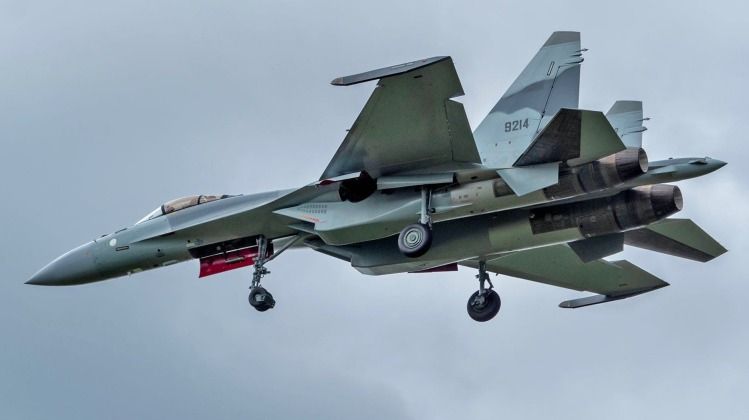
Egypt notably made multiple attempts to procure high performance heavyweight fighter jets from the United Sates since the 1970s, but was repeatedly denied not only high end fighters, but even modern munitions for its lower end and cheaper F-16 jets. The overthrow of a Western-aligned Islamist government in the country in 2013 resulted in a shift away from reliance on U.S. armaments, and fighter jets in particular, with Egypt quickly investing in acquiring advanced MiG-29M fighters and S-300V4 and BuK-M2 air defence systems from Russia. The Su-35 represents the latest of these acquisitions, and is not expected to be the last, with further orders for additional MiG-29M or MiG-35 jets expected. The Su-35 is considered the most capable in Africa or the Arab world in terms of air to air performance, although Egypt’s neighbour Algeria is reportedly expected to receive more capable Su-57 aircraft later in the decade. With the Su-57 having yet to enter full scale production, deliveries are expected to take considerably longer than those to meet Su-35 orders.
