
Egypt Never Ordered MiG-35 Fighters From Russia - But it Might Buy Some Very Soon
Military Watch Magazine Editorial Staff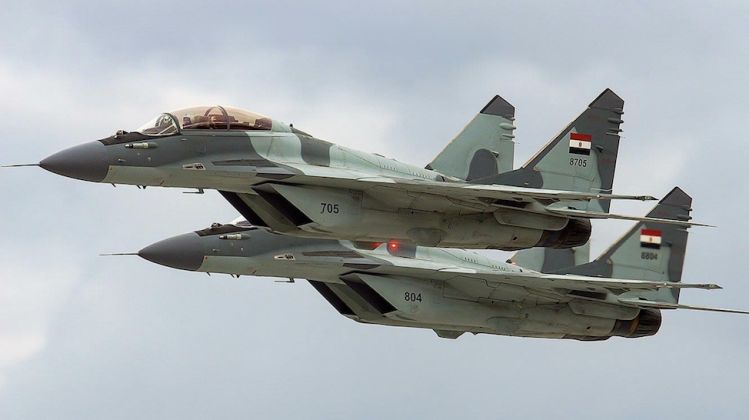
Egyptian MiG-29M Medium Fighters
Following the signing of a number of major arms contracts by Egypt and Russia, in the immediate aftermath of the overthrow of a strongly Western-aligned Islamist government and the coming to power of a military-led one in the African state, it was widely reported by both Egyptian and Western media that the Egyptian Defence Ministry had placed an order for an estimated 50 Russian ‘4++ generation’ fighter. Indeed, even in early 2020, the Wikipedia page of the MiG-35 fighter listed Egypt as the jet’s only export client, as did sources ranging from Daily News Egypt to the National Interest often accompanied by images of Russian medium weight fighter jets in Egyptian colours. What was particularly interesting about these claims was that the MiG-35 fighter did not enter service in the Russian Air Force itself until July 2019, and at the time the orders and first deliveries of Russian fighters were to Egypt made the aircraft was very far from combat ready. What the Egyptian Air Force had in fact ordered was 46 of a new variant of MiG-29 fighter - the MiG-35’s direct predecessor from the same weight range but from an older generation - which was designated the MiG-29M.
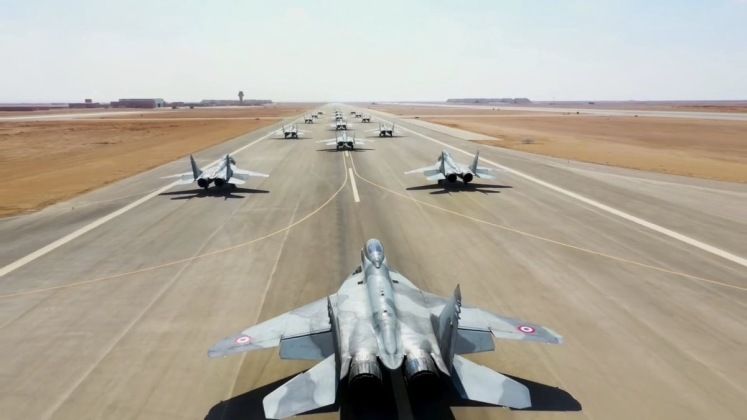
The MiG-29M was considerably cheaper than the MiG-35, and was considered excellent value for money at an estimated $43 million dollars per aircraft including training, maintenance infrastructure, spare parts and a wide range of advanced standoff weapons such as Kh-35 cruise missiles and R-77 active radar guided air to air missiles. Upon entering service the jets were the only ones in Egyptian service with air to air missiles able to engage targets over 80km away, with a 110-130km engagement range depending on the missiles used, and had by far the highest speed, climb rate and operational altitude of any Egyptian fighter. The jets lacked many of the MiG-35’s key technologies, however, including its more powerful engines with three dimensional thrust vectoring capabilities, its artificial intelligence and new generation of electronic warfare systems, an AESA radar, or access to new weapons such as the R-37M air to air missile or Kh-58 cruse missile. While there is a significant resemblance between the MiG-29M and the MiG-35, the differences in performance remain very significant.
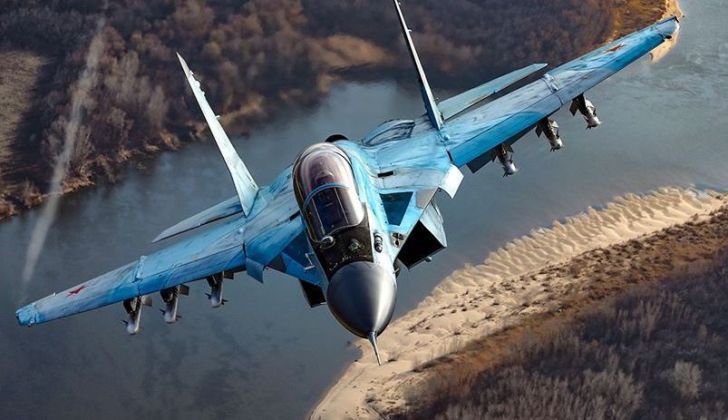
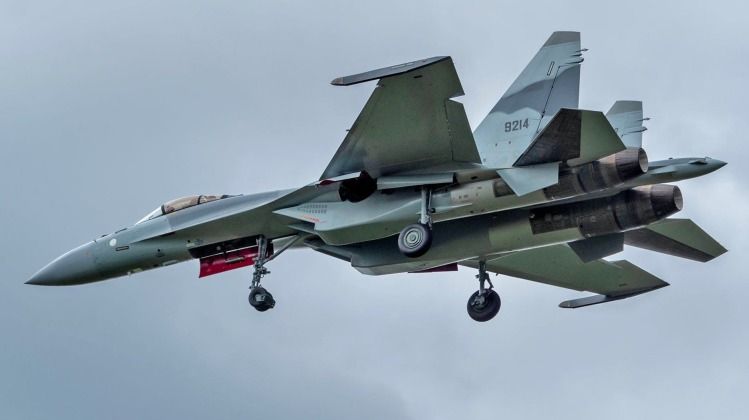
Although Egypt did not purchase the MiG-35, and like most new fighter classes it is expected to be some years before exports of the Russian jets begin, the Egyptian Air Force is very likely to acquire the aircraft some time in the coming decade. The bulk of the Egyptian fleet remains comprised of increasingly obsolete fighters including heavily downgraded F-16 variants, which have no modern weapons due to export restrictions by the United States, as well as Mirage 2000, Mirage 5, J-7 and MiG-21 jets which between them make up around 85% of the fleet. While Egypt has invested in acquiring some very high end heavyweight Su-35 fighters, with an order for an estimated 26 jets having been placed and followup orders for similar numbers expected, the far greater cost of these fighters both to operate and to acquire means that the Egyptian Defence Ministry is expected to look to lighter fighters from the medium and light weight ranges to replace its hundreds of obsolete older jets. The MiG-35, although more costly than competing platforms of its generation such as the Chinese J-10C or lighter JF-17 Block 3, provides robust capabilities which are highly complementary to other Russian weapons systems Egypt already fields.
The MiG-35 is notably compatible with much of the same maintenance infrastructure as the MiG-29M and can integrate many of the same weapons, while it is well suited to network centric operations with Russian aerial warfare systems already in Egyptian service such as the Su-35, the S-300V4 air defence system and the country’s large fleet of Ka-52 attack helicopters. These factors, combined with close and continuously improving defence ties with Russia, mean Egypt is likely to invest in the MiG-35 - possibly alongside both heavier and lighter fighter classes including more Su-35 jets and possibly JF-17 Block 3 jets which are technologically on a similar level but are extremely cheap to operate due to their much smaller size and more limited flight performances. It remains to be seen which party will be the MiG-35’s first export client, with India, Iran, Azerbaijan, Malaysia and several others showing an interest in the jets, but Egypt is expected to be a leading client for the fighters and could potentially even seek to contribute to production of the jets with manufacturing licenses should a large order be placed. Until then, however, the MiG-29M will continue to provide a robust medium weight fighter which until the delivery of the Su-35 was considered the most capable in Egyptian service.
