
Africa’s Top Ten Most Powerful Fighter Jets: From Angola’s Su-30 to Egypt’s Rafale
Military Watch Magazine Editorial Staff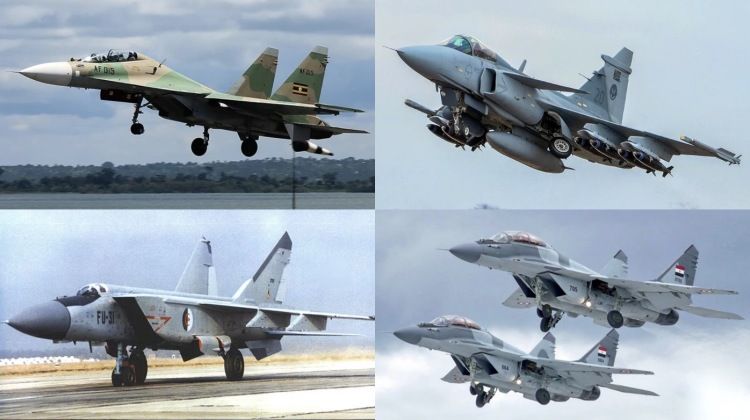
Ugandan Su-30MK2, S. African Gripen, Egyptian MiG-29M, Algerian MiG-25 (clockwise from top left)
Although generally receiving less coverage than other regions such as Europe and the Middle East, a number of African countries have built up very formidable fleets of fighter aircraft over the past two decades which in many cases boast some of the world’s most capable heavyweight designs. Although the majority of countries on the African continent do not field fighter units with anything more than a couple of ageing jets - if any at all - a number of countries have invested in advanced fighter jets for a number of reasons. These have ranged from deterrence against aggression, Algeria being a notably example after investing heavily in aerial warfare capabilities following a European-led military campaign against its neighbour Libya, to ongoing tensions against neighbouring states as was the case with Ethiopia and Eritrea's fleet modernisation efforts. As Africa as a whole has come to comprise a larger proportion of the world economy, more countries have been able to invest in higher end combat aircraft. A look at the ten most capable fighter jets in Africa is given below, with the aircraft ranked in order of their positions.
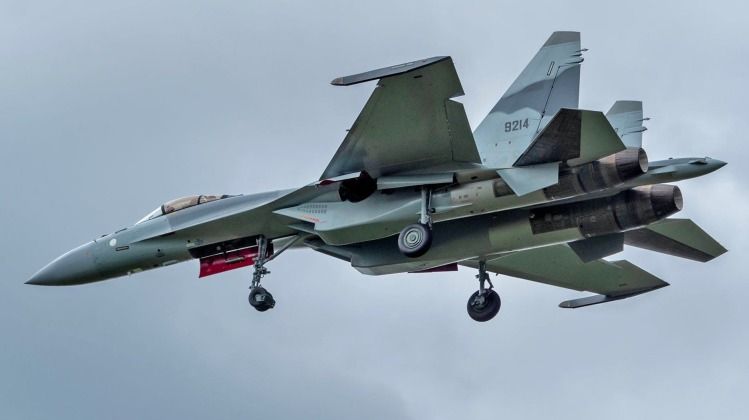
Su-35 - Egypt
The Egyptian Air Force placed an order for an estimated 26 Su-35 fighters in 2018, providing the country with its first high end heavyweight combat jets after decades of relying on low end lightweight fighters armed with effectively obsolete weaponry. The Su-35 is the only ‘4++ generation’ fighter in Africa, and is the heaviest fighter on the continent designed with an air to air combat capability. The aircraft s arguably the most capable in the world made available for export, and benefits from a wide range of next generation technologies from powerful engines and a high composite airframe to extremely long ranged R-37M missiles for air to air engagements and electronic warfare and sensor suites with few rivals worldwide. It remains to be seen how many Su-35 fighters Egypt will acquire, with the country widely expected to place followup orders once the first contract is concluded.
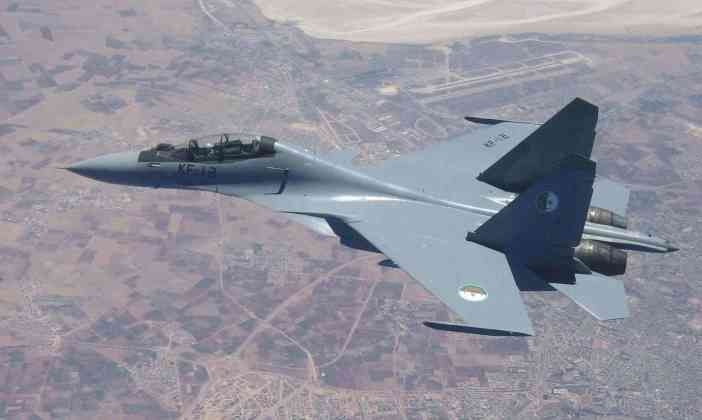
Su-30MKA - Algeria
The Su-30MKA began to be deployed as Algeria’s primary frontline fighter in the 2000s to replace the third generation MiG-23, and is a fourth generation heavyweight platform which integrates a range of next generation technologies from its state of the are electronic warfare suite and high composite airframe to thrust vectoring engines. The fighter is based loosely on the Su-30MKI ‘4+ generation’ design developed for the Indian Air Force, and although inferior to the recently introduced Egyptian Su-35 in air to air combat, it is a more versatile design with superior air to ground capabilities while still being able to hold its own against most adversaries in air to air combat. The fighter is particularly prized for its anti shipping and anti radiation capabilities using multiple variants of the Kh-31 cruise missile, and also deploys the R-77 active radar guided long range missile for air to air combat. The Su-30MKA has an excellent flight performance typical for jets from the Flanker family, including a long range, high speed, high manoeuvrability and a high operational altitude. An estimated 58 of the aircraft are currently in service, with some reports indicating that the Algerian Air Force is considering upgrading the jets to a '4++ generation' standard using Su-35 technologies.
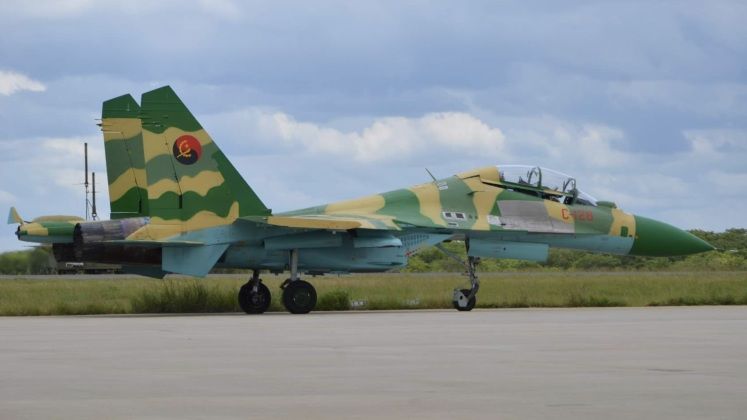
Su-30MK2 - Uganda and Su-30KN - Angola
The Ugandan Air Force acquired the Su-30MK2 in the 2010s which provided it with a successor to the ageing MiG-21 Fishbed - an obsolete lightweight design still in service in limited numbers. Only eight Su-30MK2 jets are currently in service, but their long range, powerful sensor suite and access to long range air to air missiles allows them to cover a much wider range than the MiG-21 ever could - easily enough to cover the country’s entire airspace. Another major Su-30 operator located further south on the continent is Angola, which has more recently acquired a dozen Su-30KN jets. While the Su-30K is one of the least capable Su-30 variants, and operated very briefly in the Indian Air Force before being returned in favour of the Su-30MKI, the fighters were heavily enhanced in Belarus and brought up to the far superior Su-30KN standard. The Su-30KN currently forms the backbone of the Angolan Air Force, and it is thought that upgrades in Belarus could have brought it up to a similar standard as newer Su-30 models such as the Su-30MK2 with the program particularly focusing on improving their electronic warfare capabilities.
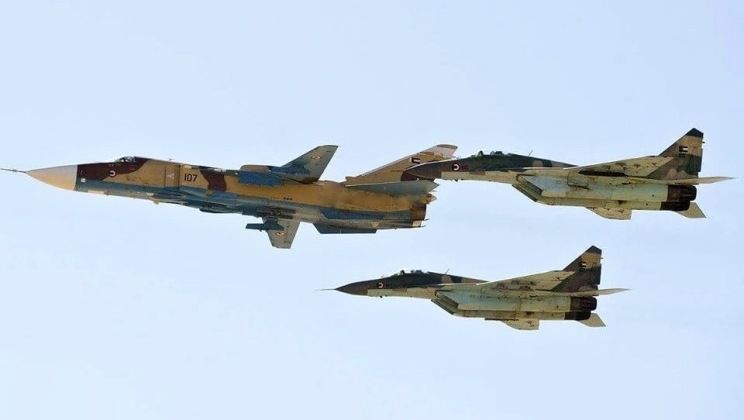
Su-24M/MR - Sudan, Angola and Algeria
The Su-24M is considered one of the world’s foremost strike fighters, and is the most capable aircraft in Africa in terms of air to ground capabilities. The aircraft is prized for its ability to penetrate enemy airspace at a range of altitudes including very low ones, its ground mapping radar, its long range and its compatibility with a number of advanced air to ground weapons including laser and TV guided munitions and standoff cruise missiles such as the Kh-58, Kh-59 and Kh-59M. The strike fighters have formidable electronic warfare capabilities, and have been extensively tested in combat in theatres from Sudan’s Darfur province to Syria - with both Russian and Syrian forces relying on them heavily in a nine year long war in the latter case. Algeria deploys Africa’s largest fleet of dedicated strike fighters with 36 Su-24M jets in service, with an estimated twelve in Sudan and around four in service in Angola.
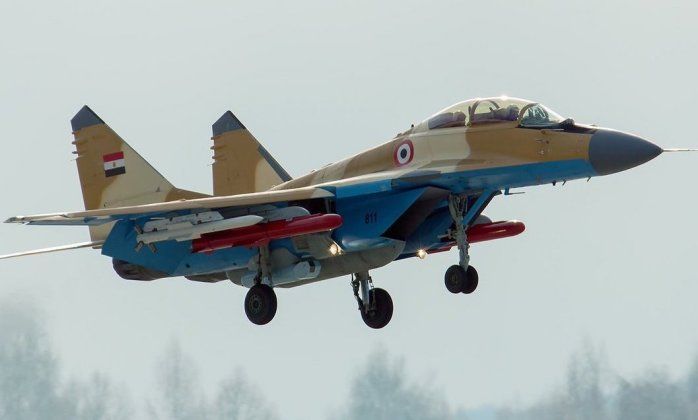
MiG-29M - Egypt
The MiG-29M is one of the most capable variants of the medium weight Russian fighter developed, rivalled only by the latest MiG-29UPG and carrier compatible MiG-29K jets, and the fighters were until 2020 considered the most capable in the Egyptian Air Force. The fighters provided Egypt with its first viable beyond visual range air to air capability for modern combat with the R-77 and enhanced variants of the R-27 missiles, and the jets have also been equipped with Kh-35 long range anti ship missiles. The fighters not only have a better flight performance, but also far superior avionics, electronic warfare systems and sensors than the original MiG-29 as well as a much longer range. Egypt currently deploys over 45 of the jets, which were one of the first weapons systems ordered by the country’s new military government after it took power in 2013 and displaced a prior western-aligned islamist government. It is expected that the order will be followed by one for MiG-35 jets, which use much of the same maintenance infrastructure and weapons but are considerably more advanced.
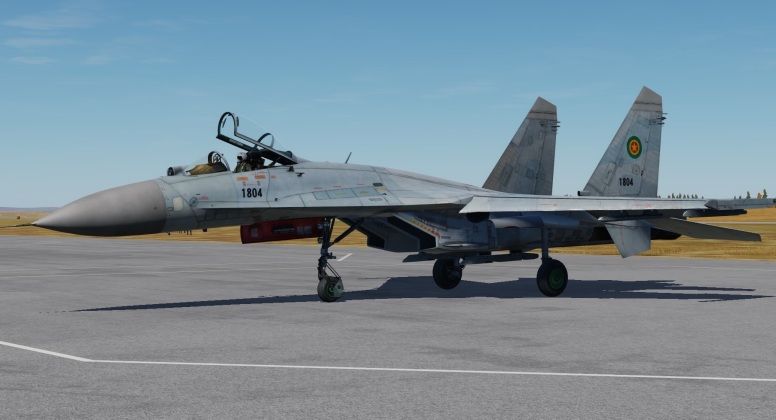
Su-27 - Angola, Ethiopia and Eritrea
The Su-27 was previously considered by far the most capable fighter in Africa, and in the Cold War years it was second only to the U.S. Navy’s F-14D Tomcat fighters in terms of its air to air capabilities. Although the Soviet Union never exported these elite aircraft, they were widely sold abroad by Russia which relied on the jets to form the bulk of its fleet and continued to produce them on a considerable scale despite economic crisis in the 1990s. While China was the first foreign client for Russian Flankers, Ethiopia emerged as an unexpected second client after neighbouring Eritrea acquired MiG-29A medium fighters. Other than the American F-15C, the Su-27 was the only fighter in the world available for export at the time which could reliably outperform the MiG-29. The fighters would shoot down four Eritrean MiG-29s for no losses, and today form the bulk of the Ethiopian fleet with over a dozen in service. Eritrea also deploys the Su-27, purchasing it after the war’s conclusion, but only two are in service due to the constraints on the country’s defence budget. While the fighters were very capable for their time, the aircraft have not received significant upgrades since the 1990s meaning they have increasingly fallen behind other jets deployed by African states particularly in terms of beyond visual range capabilities, sensors and electronic warfare. The aircraft are still very formidable and have some of the best flight performances of any heavyweight combat aircraft as well as a very high endurance. The Su-27 is also deployed by the Angolan Air Force in significant numbers, although Angolan models have received more recent upgrades and are considerably more modern.
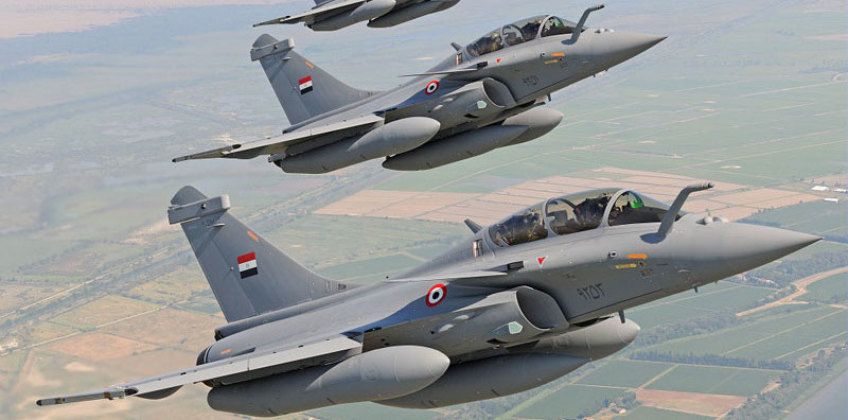
Rafale DM/EM - Egypt
The first fighters on the African continent to deploy active electronically scanned array radars, Egypt fields 24 Rafale jets which straddle the divide between medium and lightweight aircraft. The Rafale is the slowest fighter in the Egyptian Air Force and has the lowest altitude ceiling and a mediocre range and manoeuvrability. The fighters have not received modern Meteor air to air missiles or SCALP cruise missiles, which seriously restrict their viability in standoff missions - although this could change of Egypt acquires such missiles in future. Despite this, the Rafale is still a formidable aircraft namely because of its electronic warfare systems and powerful radar - although the very small size of its radar undermines the benefits of its sophistication and reduces its power substantially .
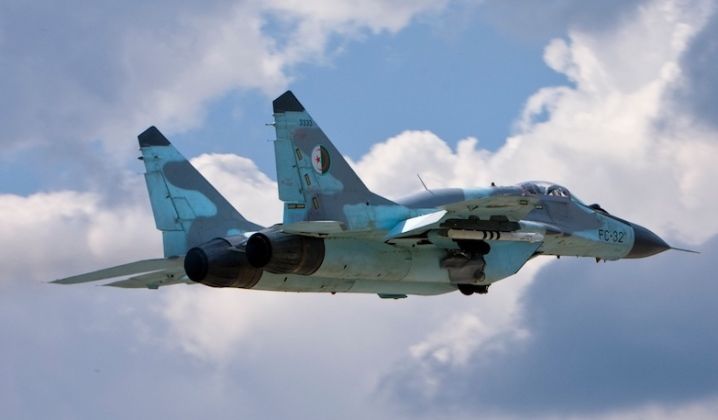
MiG-29SE - Sudan and MiG-29S - Algeria
The MiG-29 has been one of the most popular Russian combat aircraft for export, and is a medium weight multirole jet with a formidable fight performance including very high manoeuvrability and a high speed and altitude ceiling. While not as capable as the MiG-29M deployed by Egypt, those in Sudanese and Algerian service are still much more capable than the original MiG-29A and are equipped with modern R-77 active radar guided missiles with 110km engagement ranges against enemy aircraft. Both countries rely on other aircraft classes for a strike role such as the Su-24M and Su-25, and in Algeria’s case the Su-30 as well, meaning the MiGs are primarily relied on for air superiority in both cases. This contrasts to the Egyptian MiG-29 fleet which appeared to be largely equipped for anti shipping roles.
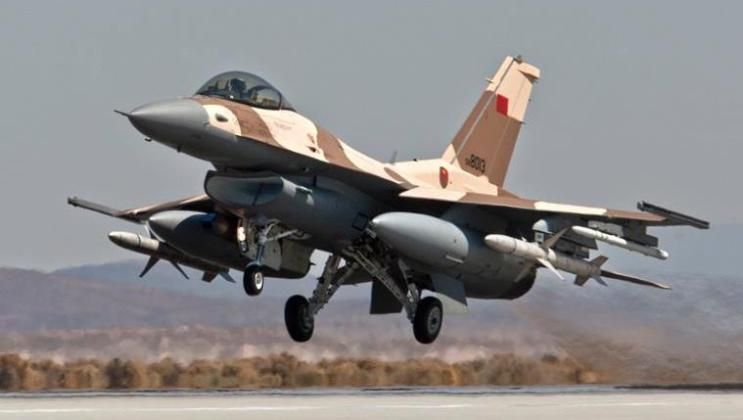
F-16C - Morocco
Although the F-16 Fighting Falcon has been produced on a larger scale than any other fourth generation combat jet, and its the cheapest and lightest American fighter available for export, only two countries in Africa currently operate the aircraft. The Moroccan Air Force deploys advanced variants of the F-16C Fighting Falcon, which are equipped with modern AIM-120C air to air missiles and a range of advanced air to ground weapons. Although they are very light and far from high end jets, the F-16 is relied on as the most capable fighter in the Moroccan fleet with the country otherwise relying on cheaper and lighter F-5E and Mirage F1 third generation platforms. Egypt also operates the F-16C with close to 200 in service, but these are heavily downgraded with inferior avionics. Due to political reasons, the U.S. has refused to supply Egypt with any modern standoff weapons for its F-16s, with the jets relying on obsolete AIM-7 Sparrow air to air missiles and fielding no standoff air to ground weapons whatsoever. Therefore, only the Moroccan Air Force's F-16s are considered to have a ninth place in the ranking.
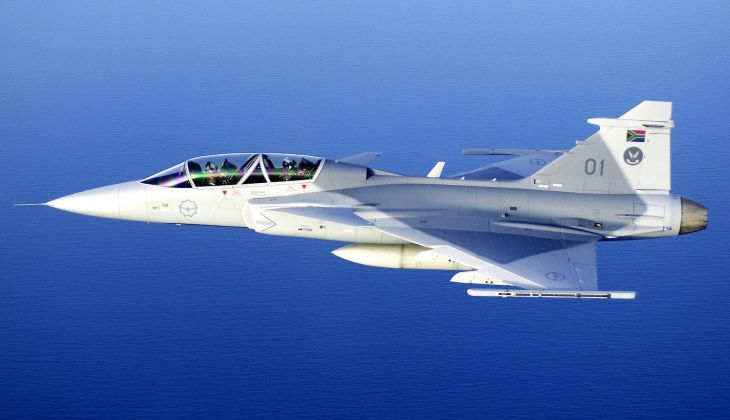
Gripen C - South Africa
The only Western fourth generation fighter which is lighter than the F-16, the Swedish Gripen uses a much weaker engine and has an inferior thrust/weight ratio and flight performance to the Fighting Falcon. The fighter has been a popular export due to its very low operational cost and fuel consumption, with the aircraft requiring little maintenance to operate. The Gripen is also able to operate from makeshift runways as well as roads, much like the MiG-29, which makes it one of the few Western aircraft capable of doing so. Despite its flight performance limitations, the Gripen C still has a formidable sensor suite, reasonably modern electronic warfare systems, and access to capable AIIM-120C air to air missiles - the same as those used by Moroccan F-16s. While the fighters are far from a match for the Su-30 jets in neighbouring Angola, the change in government in Cape Town and emergence of much more positive relations with its neighbours has led the country to prioritise cheaper jets due to the much more peaceful regional situation.
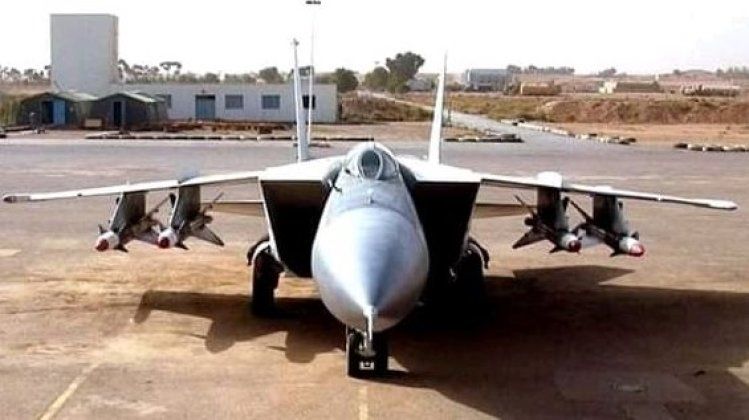
Honourable Mention MiG-25PDS - Algeria
The MiG-25 is the fastest combat jet in Africa and the heaviest jet with an air to air combat capability. Although the enhanced variants in Algerian service are extremely potent they are not mentioned in the listing here because they are not technically fighters - but dedicated interceptors. The aircraft are in many ways more dangerous than the Su-27SK jets fielded by Ethiopia and Eritrea, and have proven extremely survivable against all manner of threats when older variants were deployed for a number of missions in the past. The MiG-25s in the Algerian fleet can exceed speeds of Mach 3.2 and carry missiles with massive 100kg warheads and formidable ranges of 80-100km. This combined with the aircraft’s very high operational altitude and advanced sensor suite, including a look down-shoot down radar not found on the original MiG-25 design, makes it a challenging adversary for any potential violator of Algerian airspace.
