
Africa’s Five Most Powerful Air Forces: Protecting the Skies From From Algiers to Addis Ababa
Military Watch Magazine Editorial Staff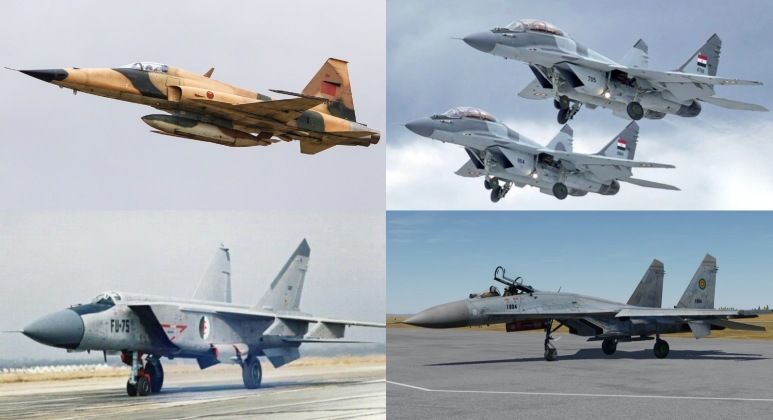
Moroccan F-5E, Egyptian MiG-29Ms, Ethiopian Su-27, Algerian MiG-25(clockwise from top left)
While the majority of countries on the African continent do not field fighter units with more than a couple of ageing jets, if any at all, several African states do field cutting edge forces with high end weaponry and highly professional training. Whether built up as a deterrent to aggression as in the case of Algeria and Libya, or due to the pressing needs of war on their borders as with Angola, Eritrea and Ethiopia, African states have for a number of reasons seen fit to invest in capable combat aircraft - with the Russian Su-27 and Su-30 Flanker and MiG-29 Fulcrum designs proving particularly popular and fielded by almost all major air forces on the continent. An assessment of the five African states with the most modern and potent aerial warfare capabilities and their most prominent assets are given below.
1. Algeria
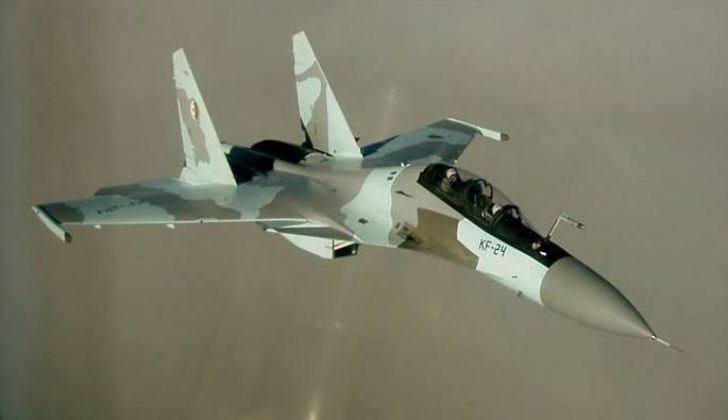
Fielding one of the largest fleets in Africa, the Algerian Air Force combines quantities of armaments with modernity and a high level of personnel training in a way no other service on the continent does. The backbone of the fleet is comprised of approximately 45 Su-30MKA heavyweight fighters - an advanced ‘4+ generation’ derivative of the Su-30 Flanker design boasting powerful sensors, an impressive flight performance and the ability to engage all manner of targets with a diverse arsenal of weapons. The Su-30 is supported by four small tactical squadrons of medium weight MiG-29S fighters. The aircraft are all equipped with state of the art weaponry including R-27ER and R-77 long range air to air missiles, with the Su-30s able to deploy Kh-31 Mach 3 cruise missiles. Algeria also deploys Africa’s largest fleet of dedicated strike fighters with 36 Su-24M jets in service. For a dedicated air superiority role it also deploys squadron of 15 MiG-25PDS Foxbat interceptors, which are considered the most modern variants of the third generation platform with advanced fourth generation sensors, avionics and electronic warfare systems.
The MiG-25 is the heaviest combat jet in Africa and the fastest in the world, and is capable of operating at extreme altitudes and at Mach 3.2 speeds. Algeria has consistently retired older generations of aircraft much faster than any other African fleet, making it one of the few Air Forces alongside Sudan, Uganda and South Africa, and the only large Air Force on the continent, to field a fleet entirely comprised of fourth generation combat aircraft. The country’s only notable weakness in terms of aerial warfare capabilities is a lack of airborne early warning aircraft, something which could be alleviated with purchases of the KJ-500 or some similar modern platform. Combined with a formidable helicopter fleet and the continent's densest and most modern air defence network, Algeria’s Air Force is second to none on the African continent.
2. Egypt
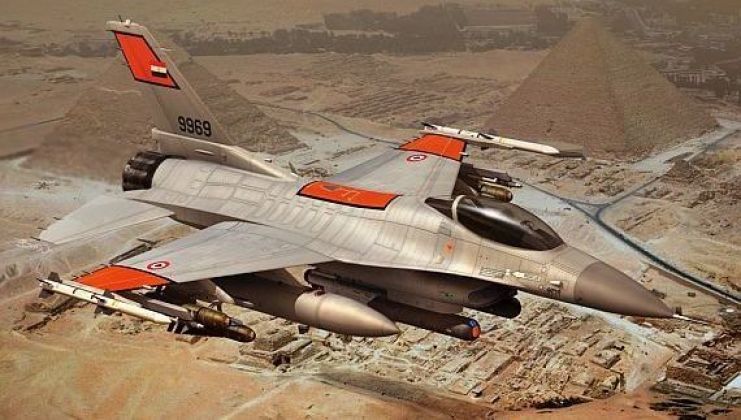
With by far the largest air force in Africa, Egypt has invested heavily in modernising its armed forces since the coming to power of a new military government in 2013 although qualitatively it still lags behind several of its competitors. The Egyptian Air Force currently fields an estimated 18 fighter squadrons, although of these only one is equipped with modern beyond visual range air to air missiles - this being a single unit of recently ordered MiG-29M jets. Nine squadrons are comprised of F-16 Fighting Falcons from the older A and C variants, but what is perhaps most notable about these is their lack of any kind of modern weaponry. Due to political restrictions imposed by the United States, the F-16s have no modern standoff weapons for air to ground or anti shipping roles and no modern air to air missiles - relying instead on the obsolete AIM-7 Sparrow which lacks active radar guidance and has a very limited range by modern standards. Seven further squadrons are comprised of MiG-21 and J-7 fighters, which have had avionics upgraded to an early third generation standard but are still effectively obsolete today. These fighters are not of the latest MiG-21BiS or J-7G variants, but are much older models.
Aside from the MiG-29M, the most capable fighters Egypt deploys are 17 Mirage 2000 and 24 Rafale jets. Although the Rafale boasts powerful sensors, it has not been equipped with modern Meteor or SCALP missiles which seriously restricts its performance in all roles. Egypt otherwise relies on Mirage 5 attack jets from the 1960s for an air to ground role, and overall its fleet is very far from modern. Egypt’s capabilities are expected to improve significantly over the coming decade, with the F-16 beginning to be phased out of service from 2018 following on from the F-4E the year prior and both expected to be replaced by modern light or medium weight jets such as the JF-17 Block 3 or MiG-35. Egypt has also placed an order for a single squadron of Su-35 heavyweight fighters, which when delivered will provide it with the most capable jets on the continent. Looking at capabilities other than fighters, Egypt does deploy a formidable air defence network built around the S-300V4 system and one of the world’s foremost attack helicopter fleets - relying on both the AH-64 Apache and the Ka-52 Alligator. Egypt is also the only country in Africa to deploy modern airborne early warning aircraft, relying on the E-2 Hawkeye for this purpose.
3. Angola
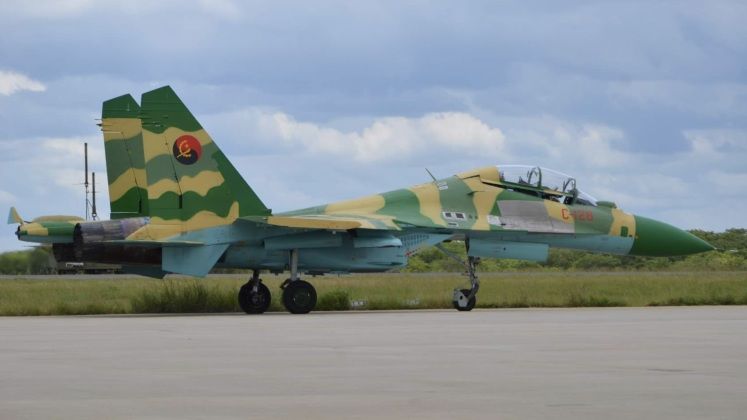
The Angolan Air Force has long been considered the most capable in sub-saharan Africa, and was built up as a formidable force in the 1980s with Cuban, North Korean, Soviet and East German support to fight the U.S. aligned and strongly Israeli backed South African apartheid state. The MiG-23 swept wing fighters formerly formed the bulk of the fleet and were piloted by Cuban volunteers. Their performance against South African air units was arguably the best in the MiG-23’s history. A single MiG-23 squadron of approximately 28 fighters remains in service, alongside one MiG-21BiS and one Su-22 squadron, providing three units of modernised third generation aircraft. The elite of the Angolan Air Force is provided by 12 Su-30 fighters which have recently been upgraded in Belarus to a ‘4+ generation’ standard. Theses are backed by approximately half a dozen Su-27 heavyweight air superiority fighters. Angola is speculated to have equipped its Su-30 fighters and possibly its Su-27s with R-77 active radar guided missiles, although this has not yet been confirmed. It otherwise deploys an unknown number of heavier Su-24 strike fighters, a single squadron of Su-25 attack jets, and two squadrons of Mi-24/Mi-35 attack helicopters providing it with more firepower than any other fleet in southern Africa.
4. Ethiopia
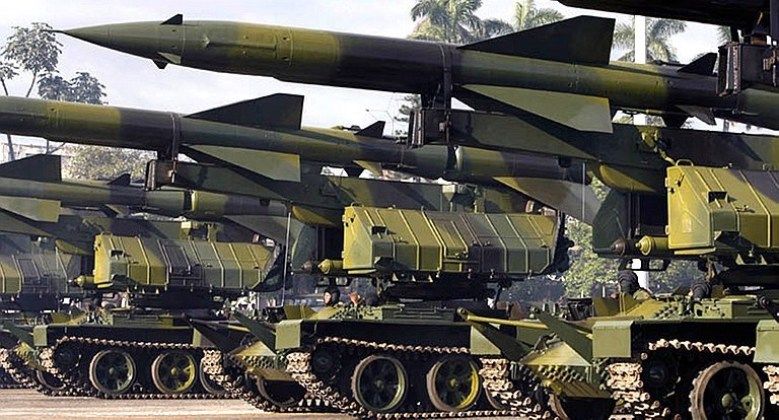
Like the Angolan Air Force, the Ethiopian Air Force was built up rapidly at a time of war, in this case with Eritrea in the 1990s, to provide air strikes and reconnaissance over its smaller neighbour and to engage enemy fighters if needed. Also like Angola, Ethiopian aircraft were initially flown by foreign pilots, contractors from the former Soviet Union, although they have since been phased out in favour of local pilots. Ethiopia previously relied on Soviet MiG-23 jets to form the bulk of its fleet, and a single squadron of around eight fighters is currently in service. The MiG-23 is primarily allocated an air to ground role today and serves alongside an unknown number of Su-25 attack jets. The bulk of the Ethiopian fleet is comprised of Su-27 heavyweight air superiority fighters, of which an estimated 12-16 are in service. The fighters were by far the most capable in Africa when first purchased to counter Eritrea’s MiG-29s, and shot down four MiGs for no losses during the war between the two countries. This makes the Ethiopian Air Force the only one to operate the Su-27 in air to air combat. Some Ethiopian sources have indicated that the country’s Su-27 fleet has recently been upgraded with new electronic warfare systems and R-27ER missiles for a longer engagement range. Ethiopia also deploys 18 Mi-24/35 attack helicopters, and its air defences have continued to be modernised with new Russian armaments.
5.Morocco
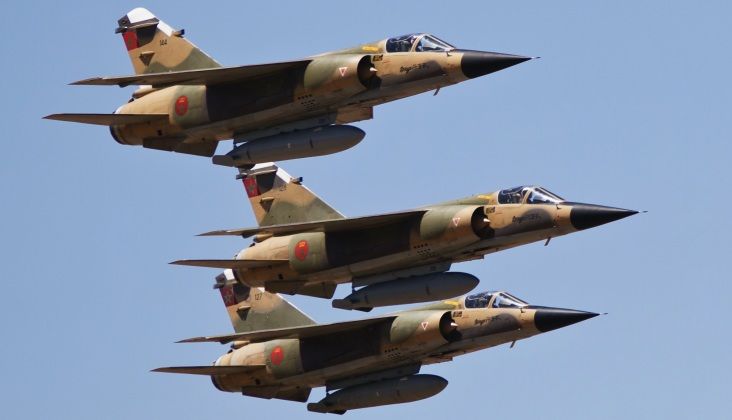
The Moroccan Air Force’s inventory is primarily based on the requirements of ongoing conflict in Western Sahara and the need to provide basic defence against the much larger forces of neighbouring Algeria. Morocco is the only African state provided access to modern American air launched weaponry, and the backbone of its fighter fleet its formed by around 23 F-16C Fighting Falcon lightweight fighters equipped with AIM-120C7 air to air missiles. The difference in weaponry and subsystems makes Moroccan F-16s far more capable than their counterparts in Egyptian service, and other than Egypt’s recently acquired Rafale jets the Moroccan Fighting Falcons are the most capable Western fighters in Africa. The AIM-120C7’s capabilities are still beneath those of Algeria’s R-77 and R-27ER however, both of which outrange them and carry heavier payloads. The F-16s can also notably deploy AGM-88B HARM standoff air to ground missiles which are quite potent against air defence and radar sites. The remainder of the Moroccan fleet is comprised of ageing third generation designs including the F-5E Tiger II, of which 22 are in service, and 26 Mirage F1 jets. Morocco’s Mirages are considered the most capable in the world, and have been enhanced to deploy MICA missiles providing a limited beyond visual range air to air capability - still far superior to that of Egypt’s F-16s or to any of the MiG-23 variants on the continent. Ground based air defence remains a notable weakness of Moroccan forces, as does close air support, and while the country has considered acquiring S-400 air defence systems from Russia Western political pressure is likely to prevent such a deal.
