
The War Where the MiG-23 Demonstrated its High Potential: Legacy of the Soviet Swept Wing Fighter
Military Watch Magazine Editorial Staff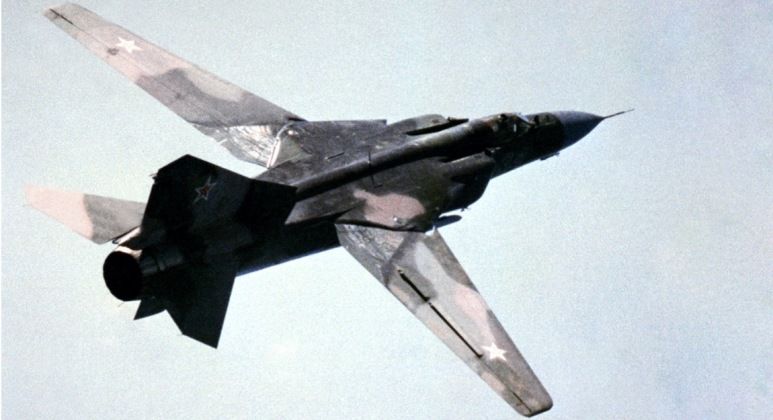
MiG-23 Swept Wing Fighter
Entering service in 1970, the MiG-23 Flogger was the Soviet Union’s first third generation combat jet made available for export and was the primary multirole frontline fighter of the Warsaw Pact for over a decade. The aircraft was still in service when the USSR collapsed in 1991, and had a number of advanced characteristics including an extremely high operational altitude and speed, advanced sensors and avionics and one of the highest thrust/weight ratios in the world. Compared to the American F-16 Fighting Falcon, which was a generation ahead and entered service eight years later, the MiG-23 has a similarly powerful engine but was considerably lighter, although early variants were impeded by a smaller weapons payload and poorer visibility. The swept wing design was particularly prized for its high turn rate and its ability to take off from very short runways, although a major drawback was that its maintenance requirements were relatively high for a jet from its weight range and it was reportedly very difficult to fly meaning it required more experienced pilots to use effectively.
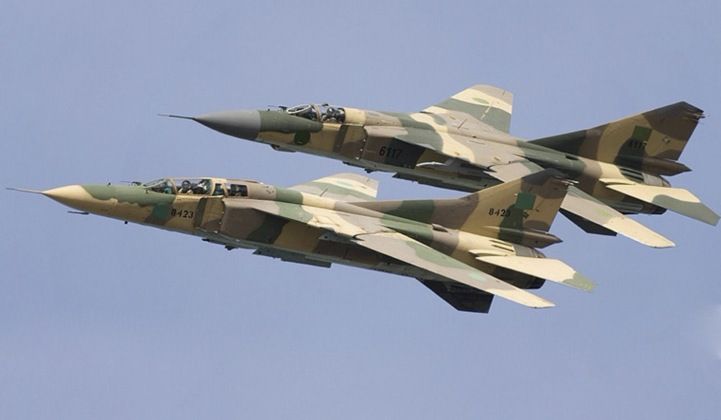
On paper the MiG-23 had an impressive performance, and when in the hands of experienced pilots in the 1980s it could outperform Soviet fourth generation fighters in mock engagements. A number of drawbacks with the design, including those relating to visibility, manoeuvrability and above all to firepower were fixed on later variants. Nevertheless, it was primarily early variants of the fighter which saw combat most notably in Syrian service in the Lebanon War and in Iraqi service during both the Iran-Iraq War and the Gulf War. While Iraqi MiG-23s were reportedly able to more than hold their own against American third generation fighters in the Iranian fleet such as the F-4E and F-5E, the performance of Syrian MiG-23s would give the fighter a bad name which has lasted until today due to their overwhelming losses against the Israeli Air Force. These defeats were caused by a number of factors, including Israel’s access to very detailed intelligence on the MiG-23, with fully operational fighters provided by Egypt to its ally the United States for testing in the 1970s, the superior quality of Israeli pilots, and the fact that the U.S. made jets they were fighting were not only a full generation ahead - but also twice as heavy.
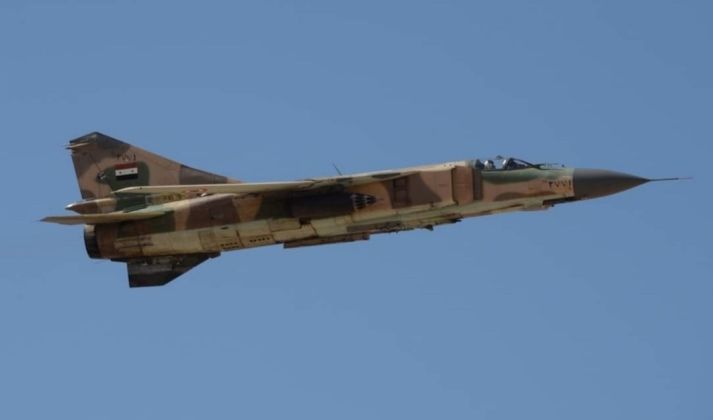
Where the Syrian Arab Air Force led the MiG-23 into disrepute, and the fighter’s performance against Israeli F-15s has been repeatedly highlighted by Western analysts since as a sign that the Soviet design was a poor one, the swept wing fighter’s performance in southern Africa gave a very different impression. Operated by Cuban pilots to engage South African forces, Angola was the primary theatre outside the Middle East where the MiG-23 saw combat during the Cold War and the only time communist flown MiG-23s were deployed in combat. It was also one of the few conflicts where MiG-23s engaged aircraft of their own generation rather than trying to fight fighters a generation ahead. Angola had gained independence from Portuguese colonial rule in November 1975, and saw its first batch of Soviet fighter jets delivered the following month. The country’s armed forces were largely trained by Cuban forces, which also provided experienced pilots, and after operating the older and lighter MiG-21 for several years the first MiG-23 jets were delivered in 1984 to improve their capabilities to engage third generation South African operated Mirage F1 fighters.
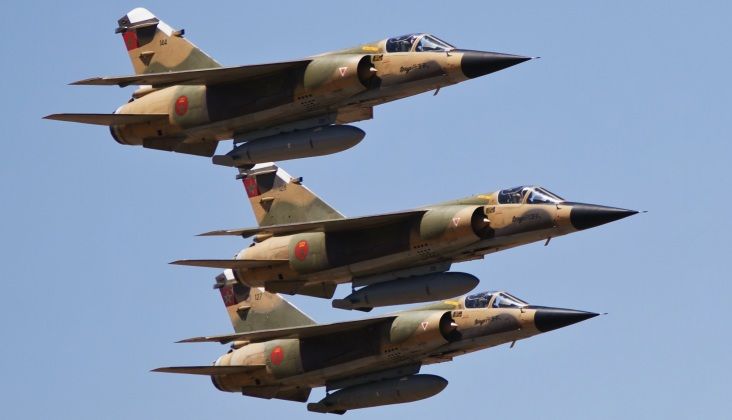
The Mirage F1 was considered the leading fighter of its time outside the U.S. and USSR, and proved more than a match for American F-4E and F-5E jets during the Iran-Iraq war and even scoring some kills against fourth generation F-14s. Comparing its capabilities to the MiG-23, the Soviet fighter not only had a superior air to air armament, but was also faster, more manoeuvrable and had much better acceleration - although the Mirage fighter had a higher flight ceiling. The first encounter between the two fighters occurred on September 10, 1987, with South African jets firing multiple missiles on the MiGs but missing their targets. The Cuban-flown jets comfortably out accelerated them and retreated. On September 27th six Mirages were deployed over southern Angola, with Cuban-flown MiG-23s intercepting them, firing R-60MK missiles and damaging one South African fighter - causing it to crash and seriously injuring the pilot. The South African Air Force would subsequently admit that its adversary was now in possession of air superiority, introducing emergency measures foremost of which was avoiding air to air combat and going to greater lengths to order to minimise chances of detection including flying sorties at night. This too proved to be risky, with Mirage fighters subsequently taking losses to Soviet built short range air defences optimised for engaging low flying targets.
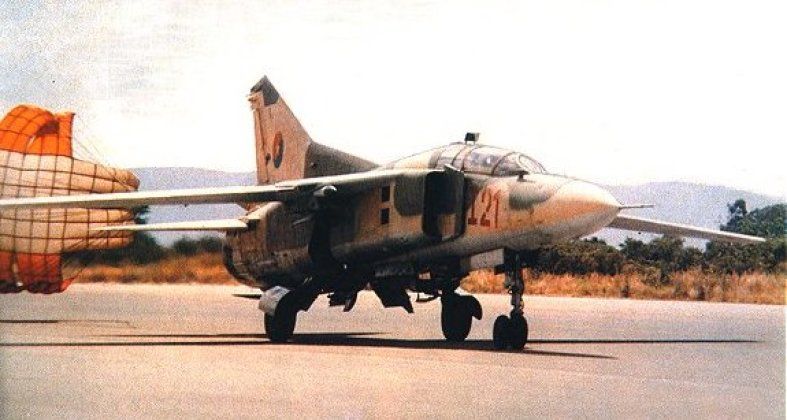
Subsequent engagements would continue to place the MiG-23 on the frontline of the conflict, with South African fighters themselves bolstered by Israeli avionics and missiles, but still coming up far short of parity in the air. The MiG-23’s acceleration proved to be its strong point since most engagements occurred within visual range, with the fighter able to evade multiple missile attacks due to this. The MiG-23 remains Cuba’s primary fighter jet today, although Angola has since deployed the more advanced Su-27 and Su-30 heavyweight platforms relegating the Cold War era MiGs to a supporting role. The MiG-23 itself has been modernised considerably with better visibility, more powerful sensors, superior electronic warfare systems and better visibility. Perhaps the most important upgrade has been the integration of the R-27 air to air missile, which has a range of between 80 and 130km and much more powerful guidance systems and electronic warfare countermeasures. Angolan MiGs are today capable of deploying the R-27 and even the newer active radar guided R-77 after being upgraded to the 'MiG-23-98-2' standard in the 1990s, which also improved their ability to employ precision weapons, significantly increased situational awareness and extended the fighters' service lives.
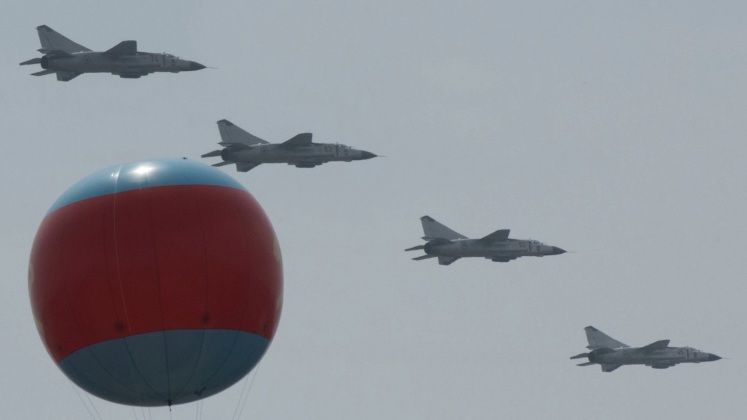
The MiG-23 is currently relied on heavily by North Korea, Syria and Cuba in particular, and those Korean service are thought to have integrated the R-27 as part of a wider upgrade program for its third generation jets. The fighter continues to have considerable potential, and like the F-16 it could have remained a widely used frontline jet for decades, but has been restricted by the Soviet collapse, which saw work on the design ended, by the emergence of the fourth generation MiG-29 which was widely considered a more cost effective platform, and by its high operational costs and maintenance requirements which have led many services to prefer either newer jets or the older but much simpler and easier to use MiG-21. India, Romania and Egypt have been prime examples of the last case, keeping the MIG-21 in service decades after the MiG-23 was completely retired due to the difficulties operating the newer jets. The aircraft may well remain in service past the year 2030, with Syria in particular fielding approximately 140 of the fighters for both ground attack and air to air roles and unlikely to be able to afford their replacement. Other operators which rely less heavily on the aircraft such as North Korea, Angola, Cuba and Ethiopia could phase the fighters out of service much sooner, with new designs ranging from the MiG-35 to the JF-17 Block 3 well suited to take their places.
