
Floggers Serving Into the 2020s: Leading Operators of the Soviet MiG-23 Swept Wing Fighter
Military Watch Magazine Editorial Staff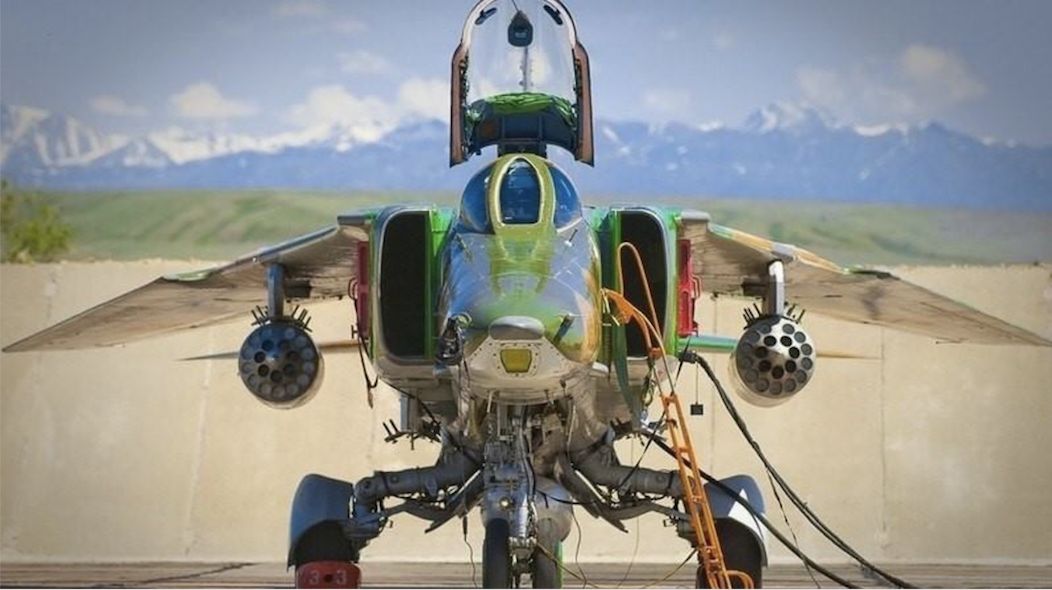
MiG-23 Swept Wing Fighter
The MiG-23 Flogger entered service in the Soviet Air Force in 1970, and was the first third generation Soviet fighter to be made available for export. Its entry into service coincided with the heavier MiG-25 Foxbat interceptor, and followed on from older third generation interceptor designs including the Su-15 and Tu-128. The platform’s R-35 turbojet engine was nothing short of revolutionary for its time, with a comparable thrust to the F110 which would later power American fourth generation F-16 and F-15 jets. The fighter was considerably heavier than the MiG-23 which previously formed the mainstay of the Soviet fighter fleet, and had a superior endurance, weapons payload and a capacity for heavier sensors and electronic warfare equipment. The fighter placed a heavy emphasis on beyond visual range combat from the outset, and was the first Soviet fighter exported with an advanced long range air to air capability.
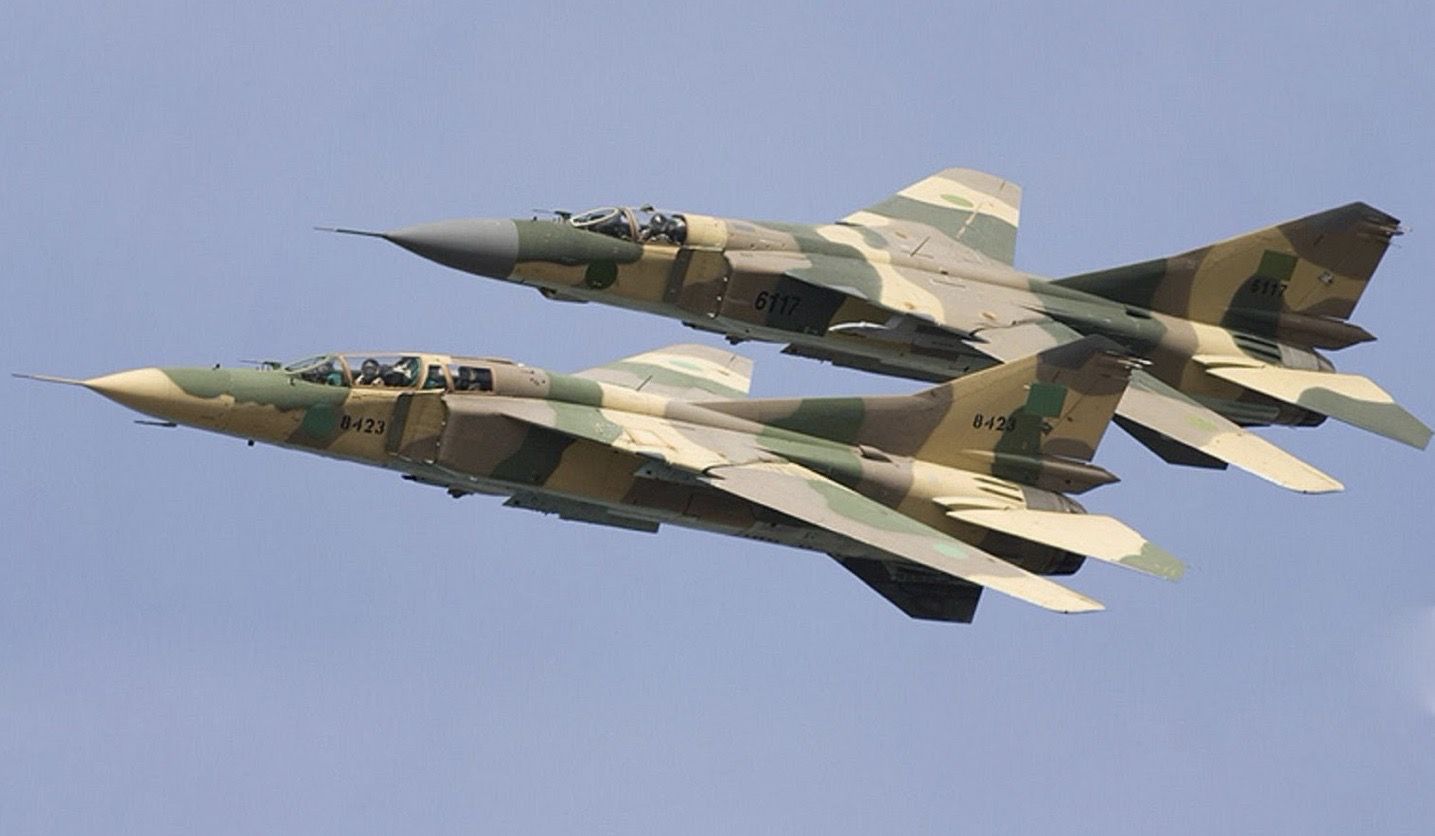
The MiG-23 was one of the first operational aircraft integrate a variable swept wing design, and was compatible with a new generation of air to air missiles including the R-23 and later the R-27. The fighter had a mixed record in air to air combat, and while it was considered more than match for its American analogue the F-4E Phantom it struggled to counter the new fourth generation of fighters such as the F-15 which it faced on multiple occasions in the Middle East. The aircraft proved highly effective in the Cuban Air Force when flown over Angolan skies against South African fighter units, and performed well against the Iranian Air Force’s fleet of third generation American made fighters. The fighter's popularity has nevertheless been undermined by a combination of its high maintenance requirements relative to the older MiG-21 and its lower performance relative to the newer MiG-29 and Su-27, leading most operators to favour alternative platforms. The Flogger is today fielded in relatively small numbers, and it remains uncertain whether it will continue to fly past the 2020s. The aircraft nevertheless had a respectable production run of approximately 5000 aircraft of which several hundred remain in service today. Details on the platform's primary operators are given below:
Syria
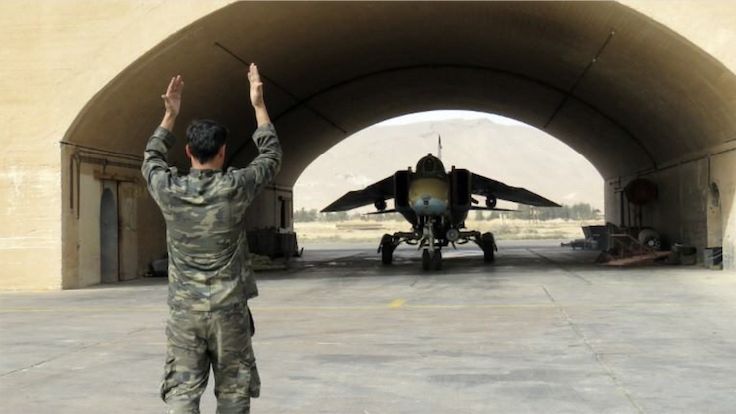
The Syrian Arab Air Force remains the world's leading operator of the MiG-23, and was supplied with these aircraft in their most advanced variants in the 1970s and 1980s by the Soviet Union. Emerging as the Soviet Union’s primary defence client in the Middle East, and facing off against the Israeli Air Force which was the first in the world to receive American fourth generation F-15 and F-16 fighters, Syria was provided with considerable military assistance and was the first to deploy both the MiG-23 from 1974 and the heavier MiG-25 from 1983 - the latter in smaller numbers due to its high cost. The collapse of the Soviet Union and withdrawal of Soviet aid limited Syria’s ability to modernise its fleet after the 1980s, meaning the MiG-23 would continue to form the mainstay of the country’s air superiority fleet alongside a smaller number of newer MiG-29s. Approximately 90 MiG-23 fighters are thought to be in service, although the lighter MiG-21 has reportedly been strongly favoured for operations against Islamist insurgents due to its ease of maintenance, lower fuel consumption and high sortie rate. While Syria has placed small orders for advanced variants of the MiG-29, the MiG-23 is likely to be heavily relied on for some years to come.
North Korea
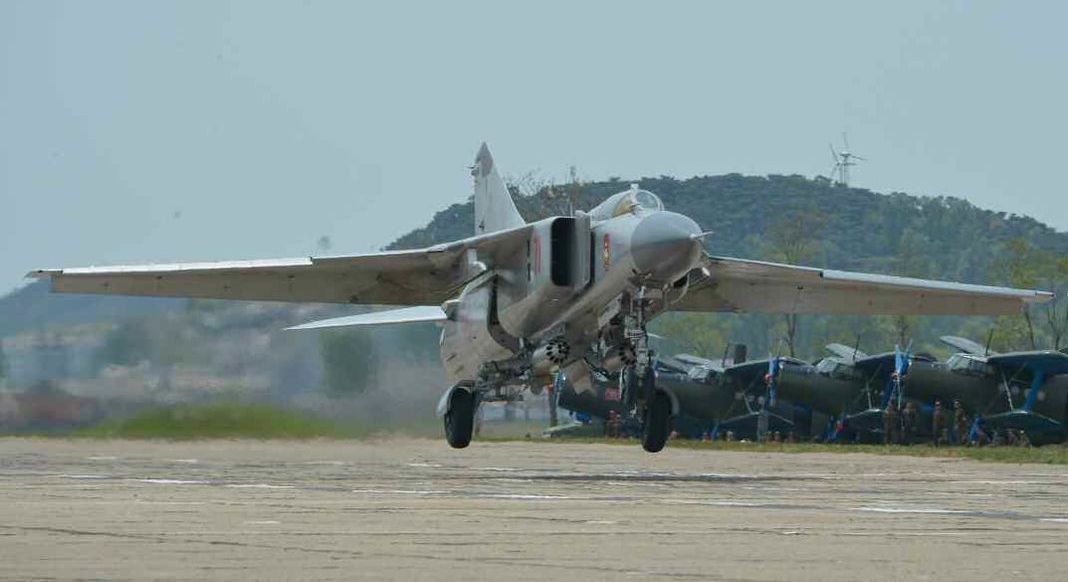
Due to tensions between Pyongyang and Moscow, the Korean People’s Army’s Air Force did not receive modern Soviet military aircraft throughout the 1970s meaning that the first deliveries of MiG-23 and MiG-29 fighters did not begin until the early 1980s - accompanied by modern R-27 missiles and other advanced hardware such as S-125 and S-200 air defence systems. Two squadrons of MiG-23 fighters are reportedly currently in service, and have repeatedly been allocated strike roles during military exercises to support Korean ground forces. The fighters have been modernised extensively in Korean service with enhanced radar and electronic warfare systems, and have been equipped with modern variants of the R-27 which has more than doubled their engagement range. These significant efforts to modernise the fighters’ capabilities came partly as a result of the country’s inability to purchase new classes of fighter jet due to an ongoing UN arms embargo, although inconspicuous acquisitions of newer systems as well as spare parts from Russia have reportedly continued to allow the country to both service and more effectively enhance the fleet.
Russia
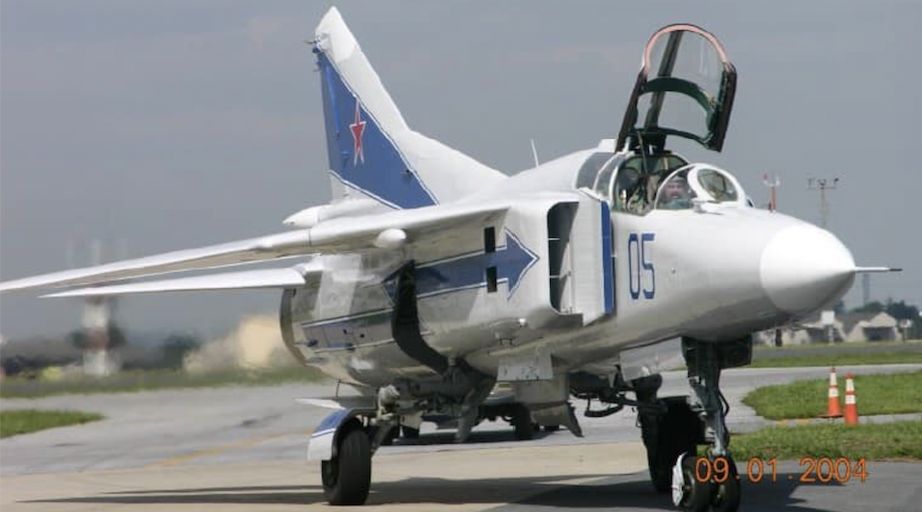
The Russian Air Force notably contracted sharply in size following the Soviet collapse, meaning many classes of fighters and interceptors were phased out of service in favour of the elite Su-27 and MiG-31 platforms - the heaviest and most sophisticated in service. While the Soviet Union relied on enhanced variants of the MiG-23 to go head to head with the Western Bloc’s F-16s, and these were considerably more advanced than those which saw service in the Middle East, the fighters were gradually phased out of frontline service with the last retired in the mid 2000s. The phasing out of the MiG-23 accompanied a sharp contraction in the MiG-29 fleet, although over 100 of these newer jets remain in frontline service today with several hundred more in storage. Approximately 500 MiG-23s are currently maintained in reserve, and alongside a sizeable reserve fleet of MiG-29 fighters they are ready to be reentered into service in the event of a major war.
India
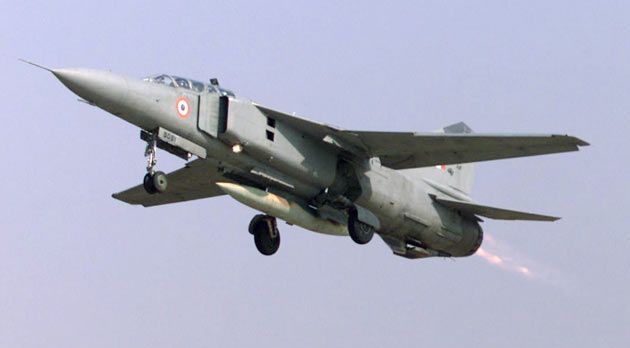
The Indian Air Force currently operates three mixed squadrons of MiG-23UB and MiG-27ML fighters - the latter a heavily modified variant of the Flogger designed for a dedicated strike role. The MiG-27 was developed as a shorter range analogue to the Soviet Su-22 and Su-24 strike fighters, and was manufactured in India under licence leading the country to become its largest foreign operator. An estimated 60 MiG-27 and 20 MiG-23 fighters are currently in frontline service, although more may be held in reserve. The MiG-23UB was one of the most capable variants of the fighter developed, and export variants were produced until 1985. It replaced the R-27 turbojet engine with the more modern R-29. The two fighters between the provide India with a robust strike fleet, although they are likely to be phased out of service in the 2020s in favour of a more modern platform such as the Su-30MKI - a ‘4+ generation’ multirole platform which can be outfitted for a strike role.
Angola
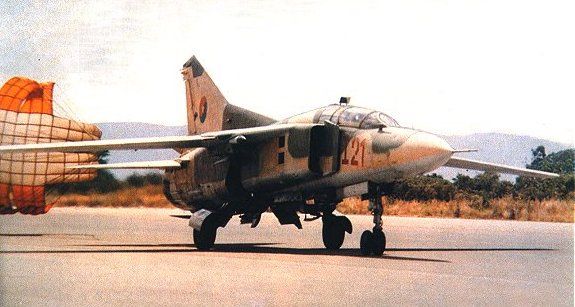
Angola was the primary theatre outside the Middle East where the MiG-23 saw combat during the Cold War, and the Angolan Air Force currently operates approximately 18 of the aircraft forming a single squadron. The aircraft serve in a complementary role to the heavier and more modern Su-27 and Su-30 heavyweight platforms which form a single elite squadron, and have been outfitted with new variants of the R-27 air to air missile. While the country continues to receive Su-30 fighters, it is unclear whether it will seek to acquire a lighter complement with a lower operational cost capable of replacing the MiG-23 in future. The improvement of relations with South Africa and reduction in tensions in the region mean that a comprehensive modernisation of the country’s secondary fighter squadron may not be prioritised in the near future.
Cuba
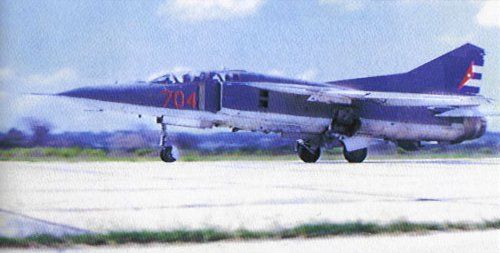
The Cuban Air Force’s fighting capacity has notably decayed considerably since the collapse of the Soviet Union and the loss of military aid, with the small state unable to finance the maintenance of multiple squadrons of modern aircraft or acquisitions of new platforms. Cuba was previously set to replace the bulk of its fighter inventory with MiG-29 fighters, although only seven were delivered meaning the MiG-23 continues to be relied on to form the bulk of the fleet. 36 MiG-23 fighters are currently in service, a third of which are in storage with the remainder in frontline service. The country continues to maintain close military cooperation with North Korea and Russia, and with Havana expressing a growing interest in modernising its armed forces since 2017 it is possible that one of these two allied powers could provide some assistance in modernising the Floggers in service.
