
Cuban Military Modernisation Underway - With Full Russian and North Korean Support
Military Watch Magazine Editorial Staff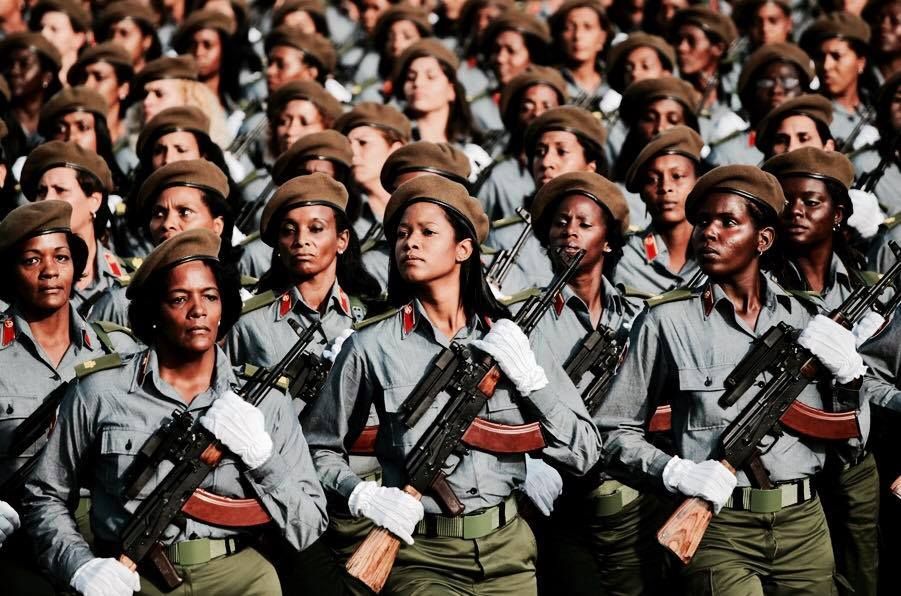
Cuban Soldiers on Parade
The Cuban military is reported carrying out the beginnings of a military modernisation program, with the country’s armed forces having changed little in their composition since the end of the Cold War - still relying heavily on ageing equipment such as the MiG-21 fighter and T-62 battle tank as the mainstay of their warfighting capabilities. With Cuba’s armed forces aimed primarily at deterring military action from the United States, their ability to do so today leaves much to be desired. Havana has reportedly turned to two of its oldest and closest partners, Moscow and Pyongyang, for assistance in pursuing the modernisation program. Both states are reportedly set to play key roles in improving the fighting capabilities of the Caribbean state’s armed forces, with hostility towards and high tensions with the United States unifying the three Cold War era allies.
Russia is reportedly set to lend Cuba over $50 million for the purchase of Russian military equipment on generous terms, which while a relatively small sum by international standards represents a considerable addition given the small size of the Cuban economy. A source familiar with the negotiations was quoted by Russian media stating: “This sum will go straight to military and technical cooperation. Along with this agreement, a set of general economic documents and agreements initiated by the Russian Ministry of Finance will be signed, but other sums will be allocated for that.” The source further noted: “Separately, they will buy spare parts, tools and equipment for the earlier purchased vehicles and to maintain, for instance, T-62 tanks or APC-60 armoured vehicles.” Cuba is reportedly planning to acquire Russian light helicopters, though whether it will also invest in more modern battle tanks or fighter jets remains to be seen.
With much Cuba's current inventory having been built due to a heavy reliance on massive Soviet aid, acquisition of new combat platforms such as T-72 battle tanks or MiG-29 fighter jets in sufficient numbers to impact the country’s overall warfighting capabilities remain unlikely. Reports have indicated the Havana is planning to purchase Russian industrial equipment, and embark on a joint project for the manufacture of light armaments with Russia. As Russia is reportedly considering reestablishing a military presence in the Caribbean, one it retained throughout much of the Cold War which provided an invaluable staging ground for monitoring communications in the United States, a show of good will through the increase of loans and possible even direct aid to Cuba could well be a means of facilitating closer ties which would enable it to reestablish a presence in the country.
North Korea is also set to play a key role in Cuban military modernisation efforts, with a visit by Korean Foreign Minister Ri Yong Ho to Havana in November 2017 reportedly including discussions regarding closer cooperation in the military as well as the cultural and economic spheres. The East Asian state has previously provided key maintenance and modernisation to the Cuban fighter fleet, with both countries operating many of the same types of combat aircraft, and the close Cold War era ties between the two have only grown stronger since the Soviet Union’s collapse. North Korea and Cuba established a barter trade system in January 2016 to reduce reliance on the U.S. dollar and better evade Western sanctions, while North Korean advisers are reportedly playing a major role in training Cuban forces. The wide array of advanced Korean defence products, from Kumsong-3 anti ship cruise missiles to KN-06 air defence systems and Pokpung Ho battle tanks, are all highly compatible with Cuba’s own Soviet made equipment and could well be ideal for the modernisation of the armed forces’ inventory.
