
When a MiG-21 is better than an F-22; Comparing Uses of Legacy Fighters with State of the Art Air Superiority Platforms
Military Watch Magazine Editorial Staff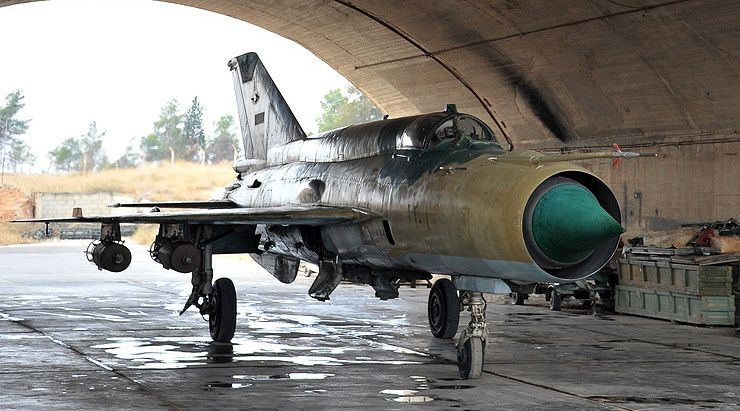
Syrian Arab Air Force MiG-21
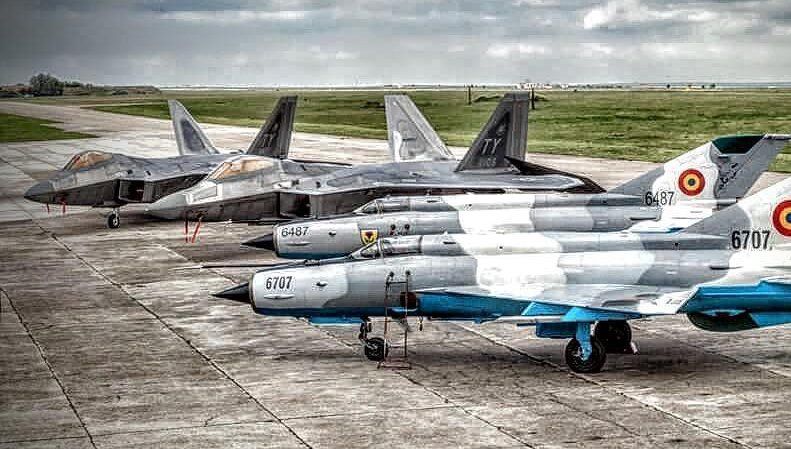
The Soviet MiG-21 and American F-22 today stand at opposite ends of the spectrum of fighters currently in service, the former among the lightest, least costly and oldest jets in service while the Raptor remains the most expensive and among the heaviest, newest and most sophisticated. The MiG-21 dates back to 1959 in its service and was in production until 1985 in the Soviet Union, having been extensively modernised since. The fighter's production run in China ended only in 2013. The Raptor was produced from 2005-2009, with the initial order for the fighters cut by 75% due to considerable operational and maintenance costs. While a small minority of heavily modernised variants of the MiG-21, such as the Chinese J-7G, can be considered modern fourth generation fighters in their capabilities, the vast majority of the fighter type currently in service are old legacy platforms which date back to the Cold War. The F-22 Raptor on the other hand represents one of the most advanced fighters in the world, with technologies unrivalled in their sophisticationuntil the induction of the F-35 and Chinese J-20 in 2014 and 2017 respectively. An analysis of the capabilities of both the Raptor and the MiG-21 can give insight into their vastly differing capabilities and the roles to which each platform is best suited in warfare today.
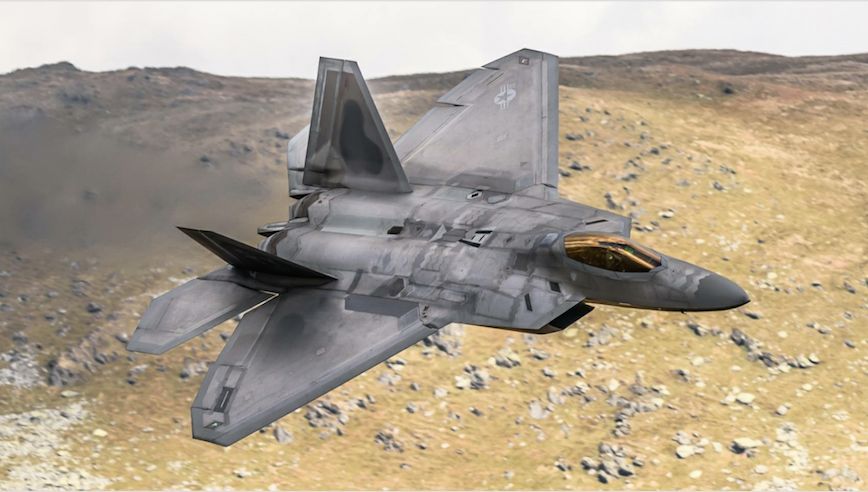
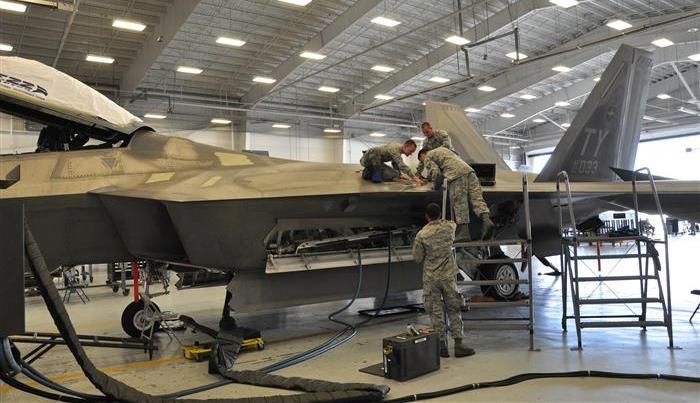
The F-22 was designed as an advanced air superiority platform with the Cold War European theatre in mind, built in response to the Soviet development of the Su-27 Flanker - the successors of which are today’s Russia Su-35 and Chinese J-11D ”˜4++ generation’ air superiority fighters. According to U.S. military analysts, the F-22 is the only American fighter which can be relied on to engage the Su-35 in the air, while other U.S. platforms such as the F-15 and light fighters such as the F-16 and F-35 are either too old or poorly suited to an air superiority role. This gives the Raptor a key advantage in engaging the elite of an enemy Air Force and as such no cost has been spared to optimise its combat capabilities - which are highly specialised and make little room for an air to ground role. The sheer combat prowess of the F-22 however does come at a steep price, as not only does the fighter cost hundreds of millions of dollars to acquire and maintain over its lifetime, but its delicate systems require extremely high levels of maintenance. The fighter has often been compared to a scalpel in its combination of precision and delicacy (as opposed to a sledgehammer), and while the Raptor is the most capable fighter in service today it also requires the most maintenance time per flight hour. Raptors have been prone to a number of breakdowns, and are hardly sturdy platforms like the F-4 Phantom or F-16. Maintenance requirements are so high that Raptors would do well to fly a single extended sortie per week, and in most cases would struggle to achieve even this sortie rate when flying long range missions. The F-22 is a precision instrument, one which when applied properly can be relied on to guarantee air superiority and engage any existing adversary - even when outnumbered. It will however spend the vast majority of the time on the ground.
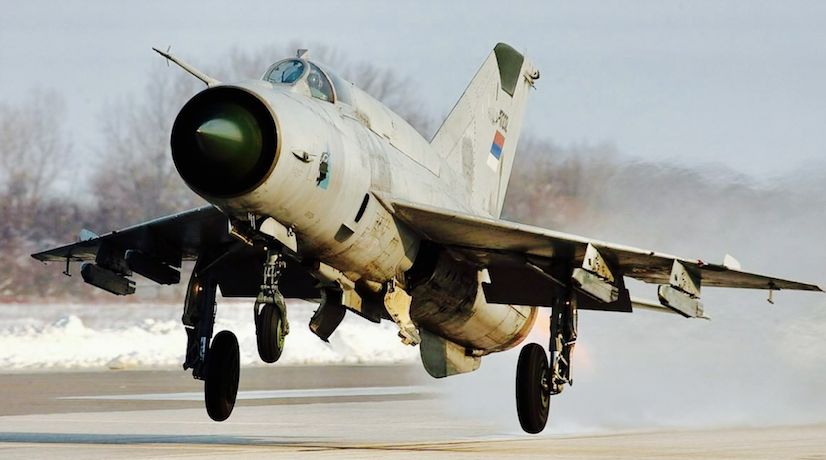
Where the F-22 can be compared to a scalpel, the MiG-21 is very much the sledgehammer. The fighter is extremely durable, and can fly multiple sorties per day with minimal maintenance - a stark contrast to the Raptor. Where the F-22 is vulnerable to rain and adverse weather conditions, and requires pristine runways to operate, the MiG-21 can operate in all manner of adverse conditions. The fighter’s combat capacities however leave much to be desired, with its speed, range, operational altitude, manoeuvrability, armament, radar, electronic warfare systems, combat survivability all vastly surpassed by those of the Raptor. It is poorly suited to an air superiority role today, and cannot be relied on to engage elite heavy fighters such as the F-15 or Su-27. Where the MiG excels however is in its sortie rate and reliability, which far exceed those of the F-22 and most other fighters in service to day and act as a significant force multiplier for the fighter. Flying several sorties a day allows the MiG-21 to deliver far more munitions in a protracted conflict than the Raptor ever could, flying more than 20 times as often to strike enemy aircraft or ground forces.
The benefit of the MiG-21 can be seen today in its service with the Syria Air Force, where the sturdy low maintenance platform has proven a far more useful asset than the higher maintenance and more complex MiG-23 and MiG-25, more sophisticated platforms which lack what the older MiG-21 has. With Syrian government forces at war with a number of Islamist insurgent groups for over seven years, the MiG-21 has been used to launch multiple sorties per day dropping basic air to ground munitions on hostile positions. The fighter’s high sortie rate makes it ideal for inflicting maximum damage with even a small contingent of fighters, while the fighter’s low maintenance needs also come invaluable considering the scarcity of supplies. While the F-22 may well cost over 100 times as much as the MiG, it would fare far less well in such a situation, and would likely remain grounded for weeks on end due to a lack of spare parts.
While the Raptor would no doubt be the favourable platform to protect a country’s airspace, the importance of the niche battlefield role filled by the MiG-21 is not to be underestimated. As the war between Nazi German and the Soviet Union demonstrated, simple reliable and low maintenance technology can often be far more valuable than the latest and most complex state of the art weapons system - particularly if the latter is delicate and poorly suited to operate in a warzone. The Israeli Air Force's performance in the Six Day War similarly proved how a smaller force of technologically inferior aircraft could overcome far more capable adversaries by maintaining a higher sortie rate and minimising maintenance requirements - combined on that occasion with superior training to defeat a combined Arab fleet many times its size. When grounded a fighter is little more than a ludicrous target, moreso for an irreplaceable one costing hundreds of millions of dollars such as the Raptor, and minimising time spent on the ground remains an important attribute for an aircraft in wartime. While the F-22 is no doubt the better fighter, and by a considerable margin, the cost at which this comes not only financially, but more importantly in terms of maintenance and durability, may well make older but more reliable and robust fighters more desirable in the event of a protracted war. Just as the MiG-21 is today the most valued fighter in the Syrian arsenal as a result of its simplicity, so too could complex fighters such as the Raptor find themselves disadvantaged in the event of a major protracted war.
