
China's J-7G; How a 50 Years of Modernisation Brought the PLA a Deadly Fighter for the 21st Century
Military Watch Magazine Editorial Staff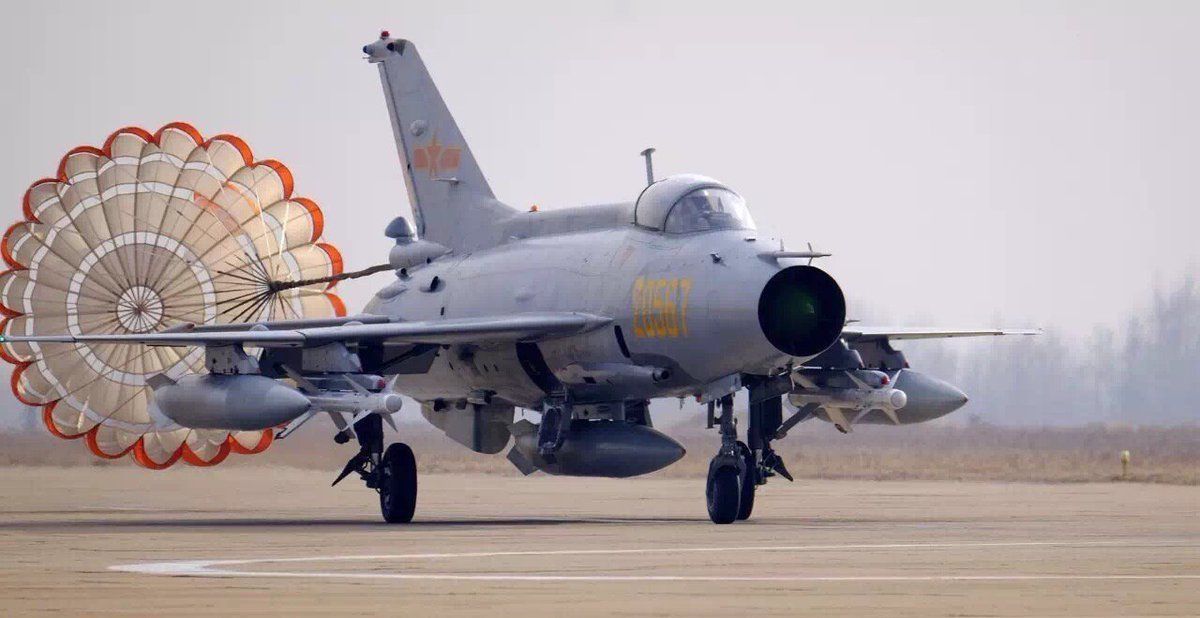
Chinese J-7G Single Engine Light Fighter
Entering production in 1965, the Chengdu J-7 was at the time China's most capable fighter - a simple single engine platform reverse engineered from the Soviet MiG-21 which would come to form the mainstay of Chinese aerial warfare capabilities for almost 30 years. The J-7's capabilities however initially left much to be desired, coming five years after the U.S. had inducted the elite next generation F-4 Phantom and lacking in their capabilities even compared to the earliest Russian built MiG-21 variants. With China's Air Force heavily reliant on the J-7 design, the last it was able to acquire from the Soviet Union until its collapse, the People's Liberation Army (PLA) invested heavily in modernising the aircraft to better contend with the latest U.S. and Soviet built platforms. While these upgrades initially aimed to close the gap between the J-7 and the MiG-21, as China's defence industries advanced in the 1980s, receiving far more generous funding as a result of the country's economic rise, the fighter began to be developed into something entirely new - a next generation platform eclipsing both the Soviet MiG-21 and the American F-4 which continues to serve in the PLA Air Force until today.
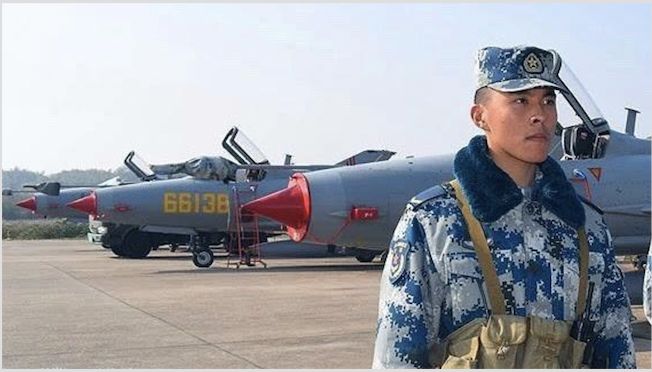
Advanced variants of the J-7 remained in production until 2013, almost 60 years after the first flight of the MiG-21 and just four years before China inducted its first fifth generation fighter. By this time Chinese military aviation had become second in the world only to that of the United States. With the PLA maintaining the largest budget of any military other than the United States, the fact that it has continued not only to operate these fighters but also to actively produce them is testament to the viability of advanced J-7 variants as modern combat platforms - which is itself a result of the extensive enhancements to the fighter's airframe. Upgrades have been extremely numerous and all encompassing, and as a result the modern J-7 capabilities are well beyond those of the Soviet built MiG-21. Some of the latest additions to the J-7 when built as the J-7G, the fighter's most advanced variant, included use of composite materials for a lighter and stronger airframe, a full glass cockpit, a new double delta wing, 3 Multi functional HUD displays and HOTAS, helmet mounted sights and a radar cross section reducing fuselage. Conformal fuel tanks meanwhile address the range limitations of both the MiG-21 and former J-7 variants, allowing the J-7G to better operate offensively. The fighter was designed in the 2000s, and strongly reflects the sophistication of China's technologies available at the time.
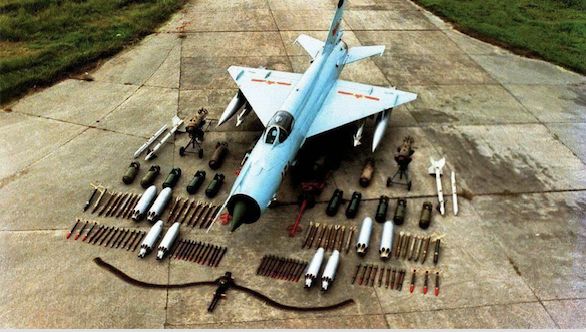
The upgrades incorporated onto the J-7G build on others applied over several decades, and have put the J-7G on par with advanced fourth generation platforms in their sophistication - far surpassing several early fourth generation fighters such as the F-16A in its sophistication. The J-7G beyond visual range combat capabilities in particular demonstrate its status as a fourth generation fighter on par with early variants of the American F-16. The fighter's sophisticated KLJ-6F fire control radar allows the J-7 to engage targets at well beyond visual range, while its cutting edge PL-12 long range air to air missiles make it lethal in long range air to air combat. These munitions allow the J-7G to far exceed the strike range of the AIM-120B relied on by most American fourth generation fighters. The ability fire advanced guided air to ground munitions allows the J-7 to also operate effectively as a light strike platform.
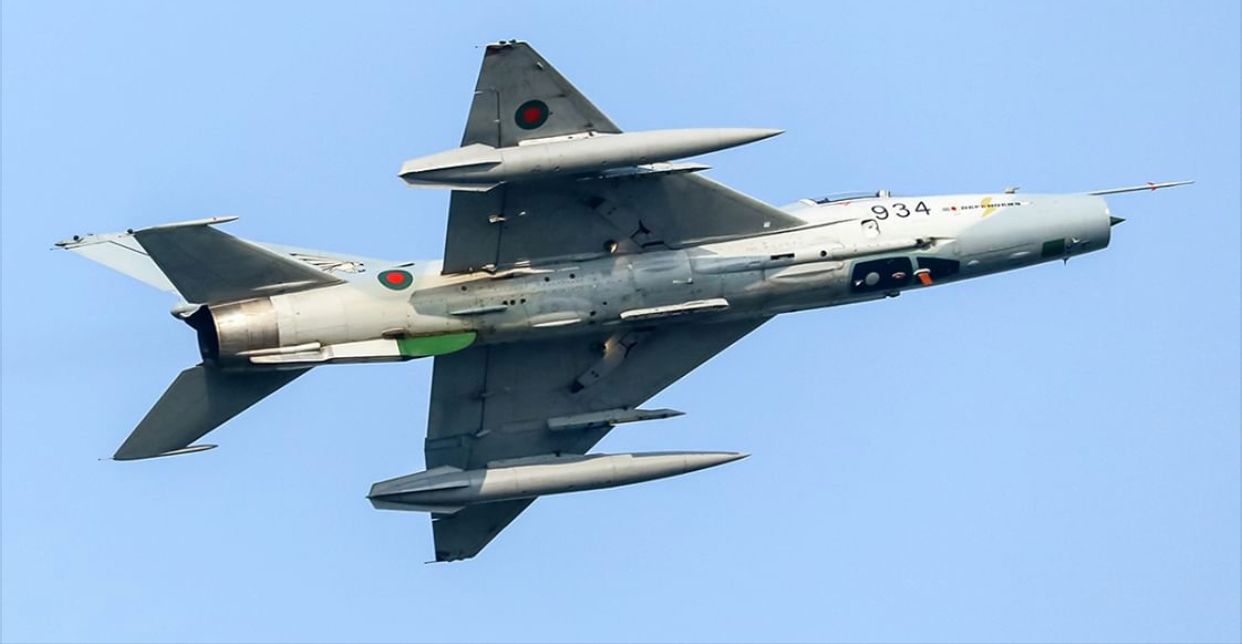
While its critics have derided it as an obsolete fighter based on the age of the MiG-21 on which it is based, the J-7G is capable of far surpassing early fourth generation fighters in its combat capabilities. The fighter can reach speeds of Mach 2.2, where the U.S. F-16C is restricted to just Mach 2, and the Chinese platform's formidable maximum altitude of 17.5km far surpasses that of the U.S. light fighter, which is restricted to under 15.5km. The J-7G fighter requires less maintenance, can deploy more air to air missiles, and ultimately remains in many ways superior to its American counterpart, the F-16A, despite being derived from a pre Vietnam War era design. The J-7G can thus be considered a combat jet for the 21st century, one which will continue to serve in the PLA Air Force alongside the new and more capable J-10 as a high end light fighter. Based on its advanced capabilities and modern weapons and avionics, China's potential adversaries would do well not to mistake the J-7G for the MiG-21 of the Vietnam War in terms of its capabilities based on their external similarities - with the new Chinese platform two generations ahead of its Soviet counterpart.
