
Why Egypt’s New MiG-29M Fighters Matter; A Game Changer for the Country’s Air Force
Military Watch Magazine Editorial Staff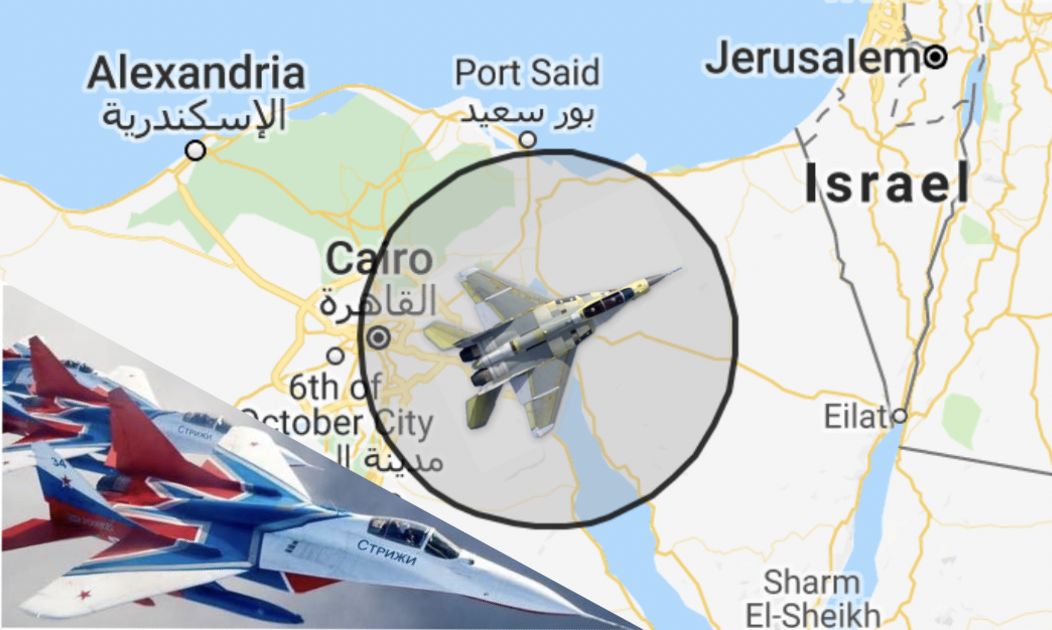
Engagement Radius of Egyptian Air Force MiG-29M Fighter
The Egyptian Air Force has begun to enter an elite new fighter class into service which is set to revolutionise its aerial warfare capabilities. Cairo reportedly placed an order for 40 MIG-29M ‘4+ generation’ twin engine multirole fighters in 2013, alongside S-300V4 long range surface to air missile batteries, Ka-52 attack helicopters and a number of other high end Russian assets intended to revolutionise its warfighting capabilities. While Egypt’s fighter fleet has long been among the most numerous in the world, with by far the most combat jets of any African or Middle Eastern country organised into approximately 20 squadrons, the MiG-29M is set to provide the country with capabilities which were previously sorely lacking and considerably enhance the country’s ability to contest air superiority against near peer adversaries.
While the Egyptian fleet is numerous, its aerial warfare capabilities have qualitatively left much to be desired - guaranteeing a considerable disadvantage in a clash with rival powers. The backbone of the Air Force’s fighter fleet is comprised of nine squadrons of F-16 Fighting Falcons - with over 200 of the single engine fourth generation light fighters in service. Cairo was not only unable to obtain heavier and more advanced F-15 air superiority fighters from the United States, but its F-16s are also seriously lacking in beyond visual range air to air capabilities. The Egyptian F-16 fleet relies heavily on the antiquated AIM-7M Sparrow air to air missile, and while the U.S. and many of its allies have fielded increasingly capable variants of the AIM-120 since the 1990s - with the fighter fleet of neighbouring Israel deploying the AIM-120C - Egypt has been unable to acquire even the most basic variants of the munition. This has left Egyptian Fighting Falcons with an engagement range of just 70km and poor accuracy and electronic warfare countermeasures insufficient to target modern combat jets. The Israeli Air Force’s F-16 fighters on the other hand, with a 105km engagement range, more precise munitions and more effective electronic warfare countermeasures, would thus enjoy an overwhelming advantage in air to air combat.
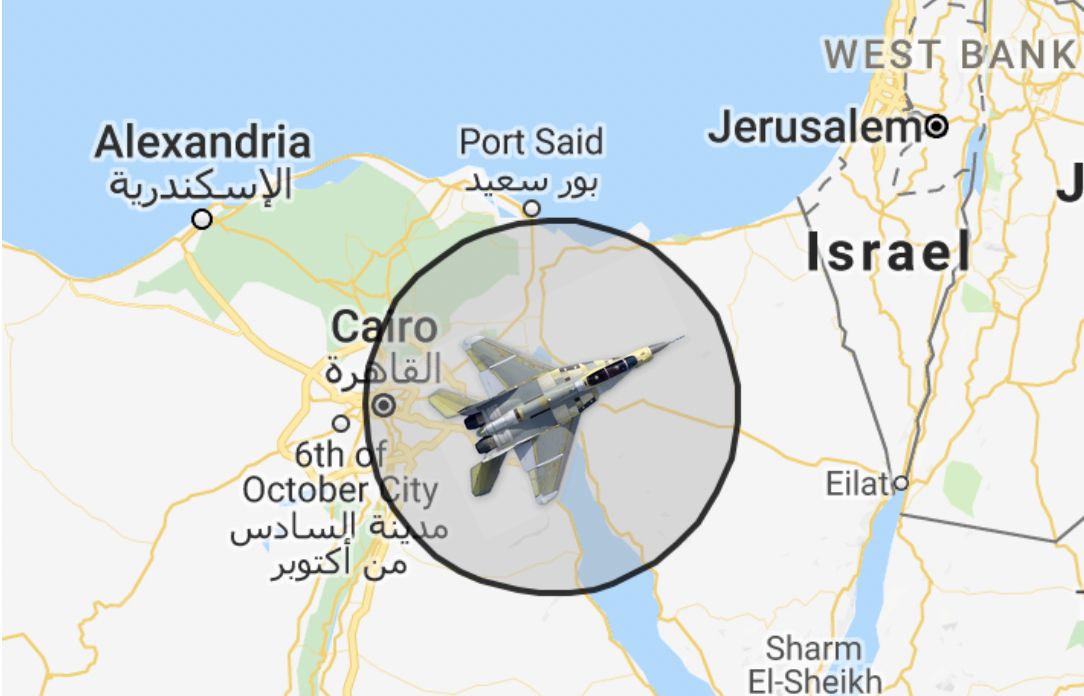
Engagement Radius of Egyptian Air Force MiG-29M Twin Engine Fighter
The MiG-29M is set to be a major game changer for the Egyptian Air Force precisely because it remains high end capabilities which the Egyptian Fighting Falcons lack. The fighters are equipped with the Russian analogue to the AIM-120, the R-77, which is considerably more precise and resistant to EW countermeasures than the AIM-7 and has a 110km range. Egyptian fighters may also integrate the R-27ER, which retains a further extended range of 130km and would provide an excellent complement to the country’s E-2 Hawkeye AWACS platforms. Whether the MiG-29M will be able to integrate the Russian K-77 air to air missile remains to be seen, as does Cairo’s willingness to purchase this extremely costly munition, but should these missiles be fitted onto Egyptian jets they would effectively turn the tables in beyond visual range air to air engagements - with a range of 193km and unrivalled accuracy and electronic capabilities.
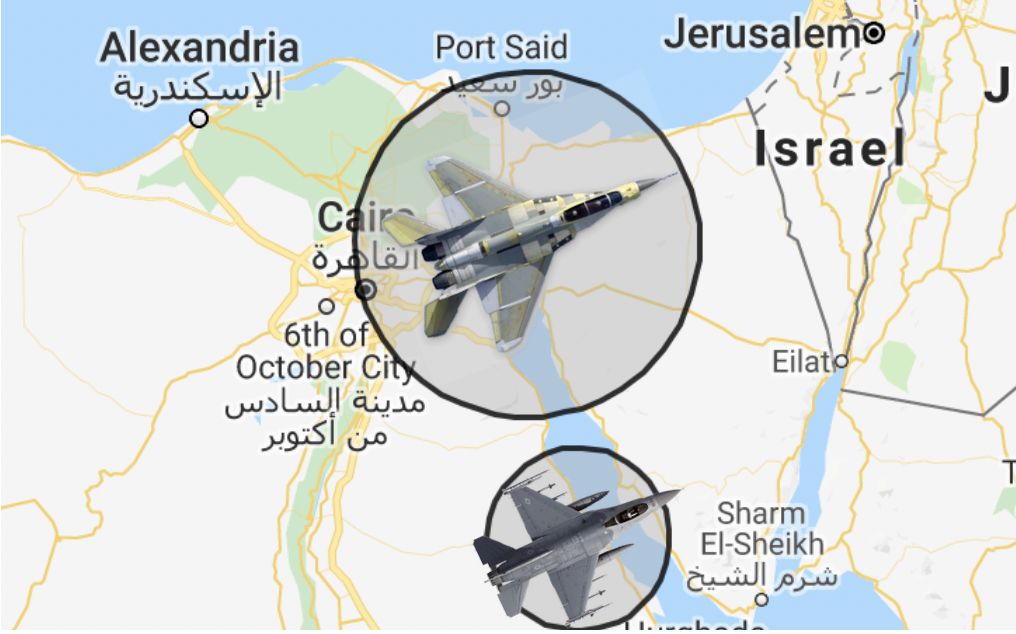
Engagement Radius of Egyptian Air Force MiG-29M and F-16C Fighting Falcon
Egypt’s MiG-29M fighters are prized not only for the advanced beyond visual range munitions they can carry, but also for the high end capabilities of their airframes. The fighters are designed with a considerably longer range and superior sensors than the original MiG-29, and are well suited to beyond visual range engagements. The aircraft benefit for infra red search and track systems (IRST) which allow them to operate without a radar signature - and potentially lethal in medium and short range engagements. This combined with their 18km operational altitude, far surpassing that of the F-16, and their extremely high manoeuvrability and low maintenance requirements makes them a very highly prized asset. While the MiG-29M would very likely struggle to counter Israel’s elite F-15 air superiority fighters, a role for which they were not designed which would require a heavier platform such as the Su-30, they are a major game changer for the Egyptian Air Force and represent the most capable aircraft in its fighter fleet. Further acquisitions of Russian fighter jets, possibly including the more advanced and lower maintenance MiG-35 or the heavier Su-30, remain considerable possibilities in future.
