
Satellite Images Show Most New Su-35s From Production Lines Are Going to Egypt
Military Watch Magazine Editorial Staff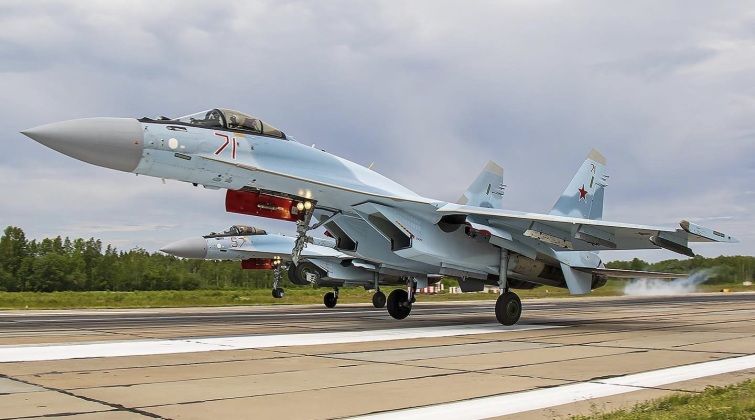
Russian Su-35 Heavy Fighters
New satellite images of the Komsomolsk-on-Amur Aircraft Plant show that the significant majority of newly completed Su-35 fighter jets continue to be painted in Egyptian Air Force colours, with Egypt having placed an order for an estimated 26 fighters in late 2018. Russia operates only a single production line for the Su-35, but since the Cold War’s end has prioritised deliveries to foreign clients over its own armed forces, meaning the Egyptian purchase has likely delayed plans for the Russian Air Force to expand its own Su-35 fleet. Another notable recent example where domestic needs were similarly placed behind the needs of foreign clients, and the Russian Air Force is thought to have received the fighters ordered late, was the recent sale of Su-30SM fighters to Kazakhstan. Much of Russia’s defence sector has been heavily reliant on export sales since the collapse of the USSR, but particularly since the mid 1990s, due to the sharp 45% economic contraction overseen by the Boris Yeltsin administration at the time.
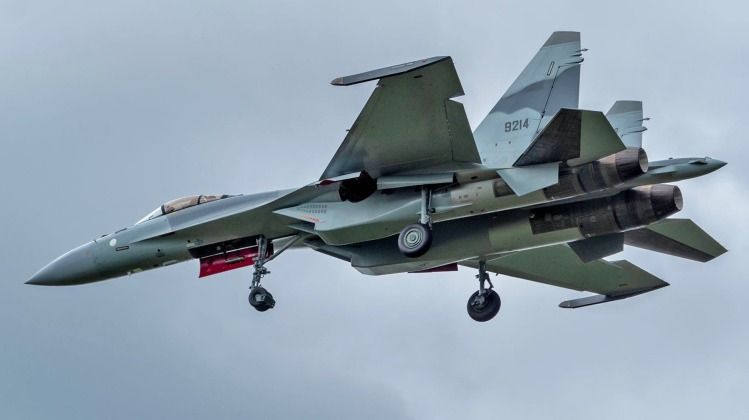
Upon delivery, the Su-35 will be considered the most capable fighter jet in Africa or the Arab world, and will provide Egypt with the kind of high performance air superiority fighters which the U.S. has been denying it for over four decades. The Su-35 is a particularly valuable asset due to Egypt’s ongoing tensions with Ethiopia, and will be the only fighter in the Egyptian inventory able to reach Ethiopian airspace with a full weapons load and without depending heavily on aerial refuelling. Other than its range, the Su-35 is prized for its very high manoeuvrability, its powerful sensor suite and its very long air to air engagement range when using the hypersonic R-37M missile. The fighter made is debut in the Russian military intervention supporting the government of Syria, and has been used to intercept multiple incursions by Turkish and Israeli fighter jets into Syrian airspace. Egypt is expected to consider purchasing followup units once the initial order for Su-35 fighters is met, as the large majority of its fighters including all aircraft purchased before the change in government in 2013 are effectively obsolete and lack modern armaments. The country is also reportedly considering placing a followup order for MiG-29M or MiG-35 fighters after receiving 46 of them, which until recently represented the most capable fighters in its fleet.
