
Top Five Most Dangerous Fighters in the Middle East: From Saudi F-15s to Egyptian Su-35s
Military Watch Magazine Editorial Staff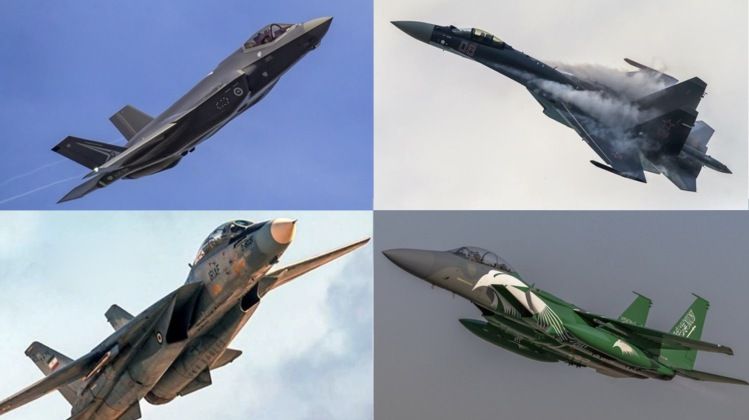
F-35, Su-35, F-15, F-14 (clockwise from top left)
The Middle East has long been highly contested theatre in terms of aerial warfare, with many advanced combat jets ranging from the Soviet MiG-23 and MiG-25 to the American F-14 and F-15 seeing their first ever exports going to the region during the Cold War to bolster opposing sides. While the skies over the Arabian peninsula are much less hotly contested than in previous years, due to a number of factors including the decline of hostilities both between the Arab world and Israel and between Iran and Iraq, high tensions do remain on a number of fronts which, combined with very high defence budgets particularly in the gulf, has made the region a leading recipient of modern combat aircraft. A look at the five most capable combat aircraft currently deployed by Middle Eastern states is given below - which does not include aircraft deployed by foreign countries to bases in the region or aircraft on order but yet to be delivered.
Su-35 - Egypt
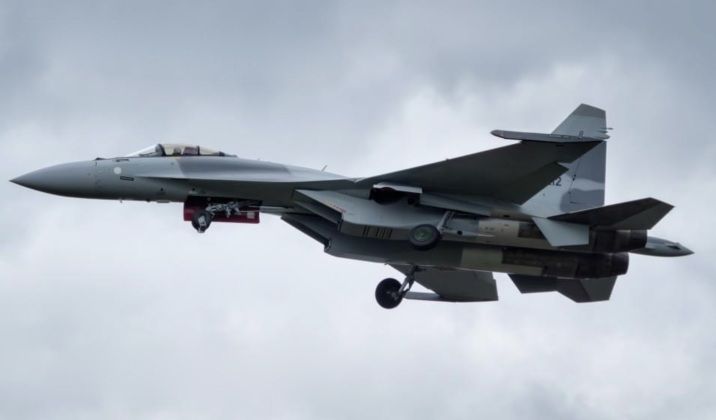
Egypt placed its first ever order for heavyweight fighter jets in 2018, which were officially announced in March 2019 making it the second foreign client for Russia’s elite ‘4++ generation’ combat jet the Su-35. The acquisition comes as part of an effort to revolutionise Egyptian aerial warfare capabilities after 40 years of serious neglect, following on from prior purchases of MiG-29M medium weight fighters, S-300V4 air defence systems and a range of other advanced Russian armaments following the overthrow of Egypt’s pro-Western Islamist government in 2013. The Su-35 is considered the most capable fighter not only in the Middle East, but also in Africa, and boasts a range of advanced features including a reduced radar cross section, three dimensional thrust vectoring engines, a larger an very powerful Irbis-E radar, and access to R-37M air to air missiles with a 400km range and Mach 6 speed. It is likely that Egypt will follow up its first contract for around two dozen Su-35 jets with further contracts for more of the fighters, which with its ageing and poorly armed F-16 jets beginning to be phased out of service would provide a far more capable replacement.
F-15SA - Saudi Arabia
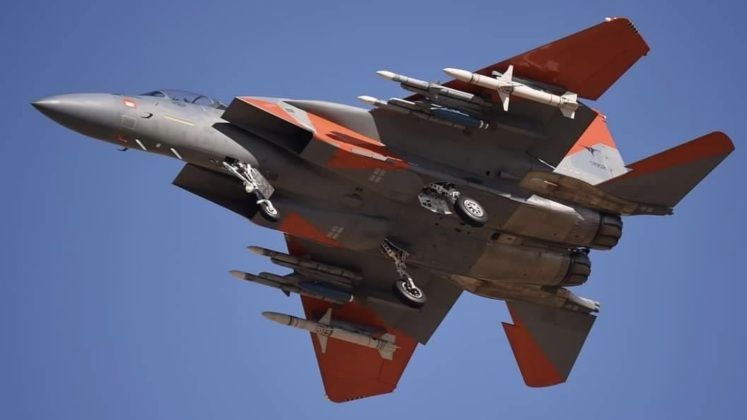
The Boeing F-15SA twin engine heavyweight strike fighter is the most advanced variant of the F-15 in service anywhere in the world today, building on the advances made for the F-15K, F-15SG designs built for South Korea, Singapore respectively, and was acquired as part of the largest arms export deal in world history with the jets beginning to be delivered in 2016. Over 70 F-15SA jets are currently in service with more on order, alongside around 70 more F-15S fighters which are being upgraded to the F-15SA standard and another 81 older F-15C/D jets from the Cold War period. While it lacks the advanced F119 engines and stealth capabilities of its fifth generation counterpart the F-22 raptor, the F-15SA benefits from technologies developed over a decade later including a much newer computer architecture and sophisticated electronic warfare systems, cockpit displays and data links. The fighter enjoys Mach 2.5 speeds and can manoeuvre excellently at high speed and operate at extreme altitudes well above those of any other export available Western fighter. With powerful and large AESA radars the jets boast excellent situational awareness, although they are hindered by a very large radar cross section and by a lack of access to more capable air to air missile classes such as the AIM-120D or Meteor.
F-35A - Israel
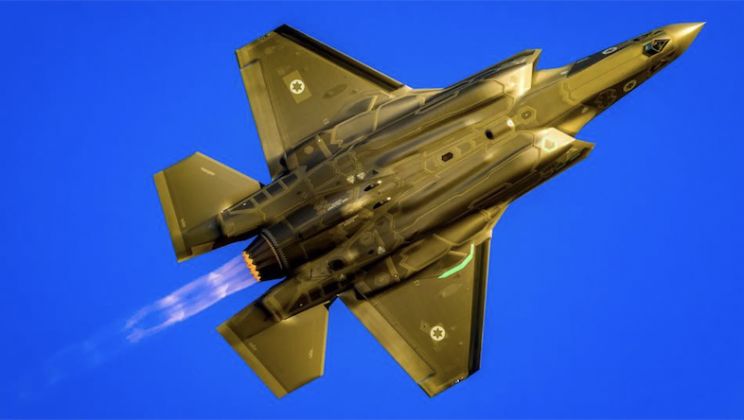
The Israeli Air Force F-35 is the only class of stealth fighter currently deployed by a Middle Eastern state, and boasts a range of advanced features beyond its radar evading capabilities including powerful electronic warfare systems, network centric warfare capabilities and sensors. The F-35 was designed as a lightweight single engine counterpart to the most costly F-22, and its status is reflected by its range and flight performance with a very modest operational altitude, speed and manoeuvrability. Its internal weapons bays, meanwhile, can carry just four air to air missiles - compared to the F-15SA’s missile carrriage of 12 and the Su-35’s of 14. The main issue with the F-35 today, however, is that it is very far from ready for high or even medium intensity combat, with serious ongoing problems with its design which are not expected to be resolved before 2025.
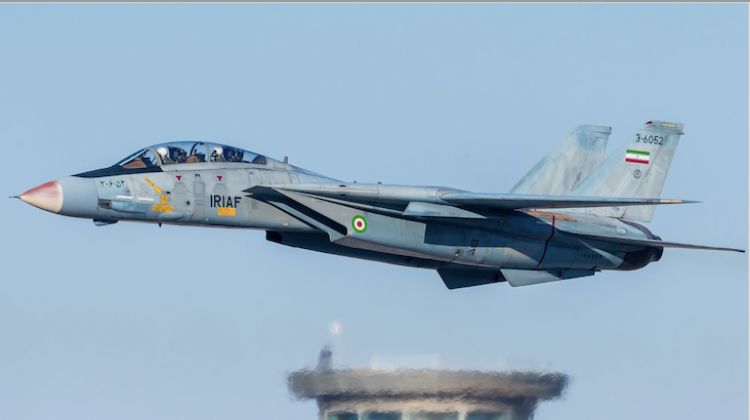
F-14 - Iran
The F-14A is the heaviest fighter in the Middle East, and for its time was the most expensive in the world, with Iran being the only export client for the jets and receiving them in the mid-late 1970s. The fighters have proven extremely formidable in combat with more shootdowns of manned enemy aircraft than any other fourth generation fighter - downing over 160 Iraqi jets in the Iran-Iraq War for just three losses in air to air combat. This was achieved despite a severe shortage of spare parts and missiles. The F-14 today has been heavily upgraded, and if it performs anywhere near as well as Iranian sources claim it will be one of the most capable fighters in the region. Given the significant defence cooperation Iran maintains with partners such as China and North Korea, which have helped to upgrade other fighters in the Iranian inventory, there have been considerable grounds for speculation that the F-14 upgrade program has benefitted from foreign assistance. Most notable among the enhancements are integration of a new radar - which is larger than radars on rival fighter designs such as the F-15 and F-35 - and of new air to air missiles. The F-14’s new Fakour 90 missile is derived from the highly capable American AIM-54, and has an estimated 300km range and a speed exceeding Mach 5 making it one of the most powerful air to air missiles in the world. The missile's very large size, however, means the very heavy fighter can only carry six and it cannot be deployed by lighter aircraft.
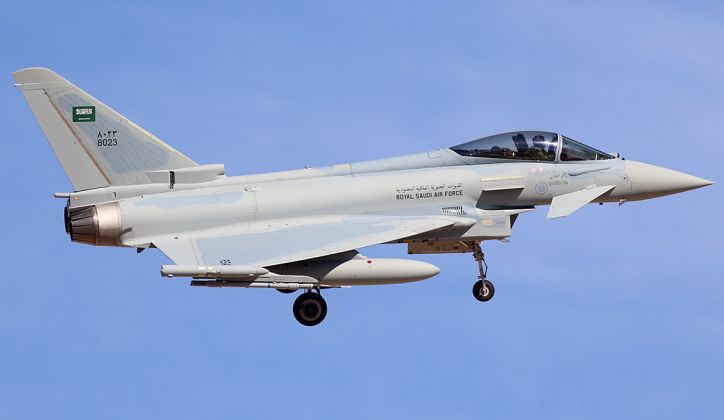
Eurofighter (Tranche 2) - Saudi Arabia
The Royal Saudi Air Force was one of the first foreign clients for the Eurofighter - an aircraft which, with the exception of a small sale to Austria, has seen no exports outside the gulf region due to its questionable cost effectiveness. The aircraft provided the Saudi Air Force with a lighter and cheaper counterpart to the F-15 Eagle, and while the purchase is thought to have been made mainly for political reasons it has provided the service with a robust secondary aircraft. Unlike the much more advanced Tranche 3 Eurofighters recently ordered by Kuwait, those in Saudi service aircraft lack a number of advanced features such as AESA radars or Meteor long range air to air missiles, meaning their air to air capabilities are somewhat mediocre at longer ranges with no signs of any upgrades planned.
