
American F-22 Raptors Back in the Gulf in Force; Why Iran Should Be Worried
Military Watch Magazine Editorial Staff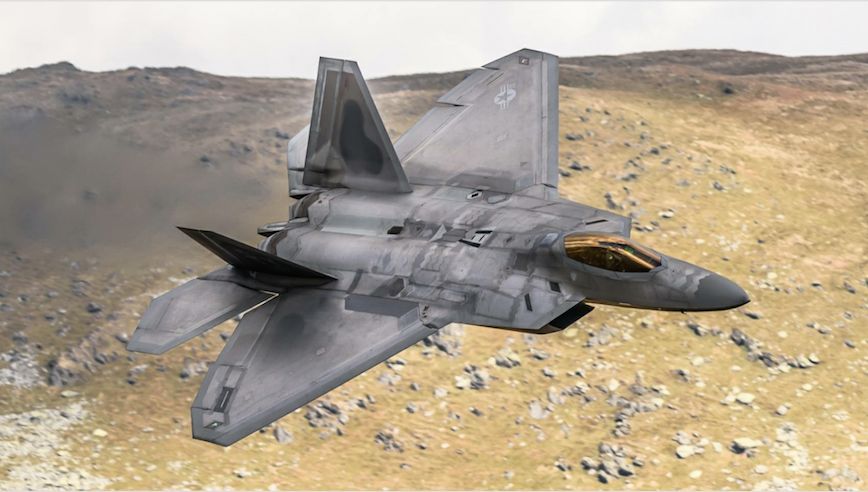
U.S. Air Force F-22 Raptor Fifth Generation Air Superiority Fighter
The U.S. deployment of a dozen F-22 Raptor fifth generation air superiority fighters from the 192nd Fighter Wing to Al Udeid Airbase in Qatar marks a major escalation in tensions with the Islamic Republic of Iran - and comes a week after Iranian air defences shot down an American RQ-4A Global Hawk surveillance drone worth over $220 million operating in or very near its airspace. The F-22s are the latest of many American air units to deploy to the region with the purpose of countering Iran, and were preceded by a squadron each of F-35A multirole light fighters, F-15C air superiority fighters, F-15E strike fighters and B-52H heavy bombers alongside multiple further squadrons of U.S. Navy F-18E Super Hornet multirole medium fighters. Representing the cutting edge of American military aviation, and the only Western fifth generation fighter which is considered fully operational, the Raptor’s deployment differs from those of previous fighters and represents perhaps the most significant threat to Iran yet.
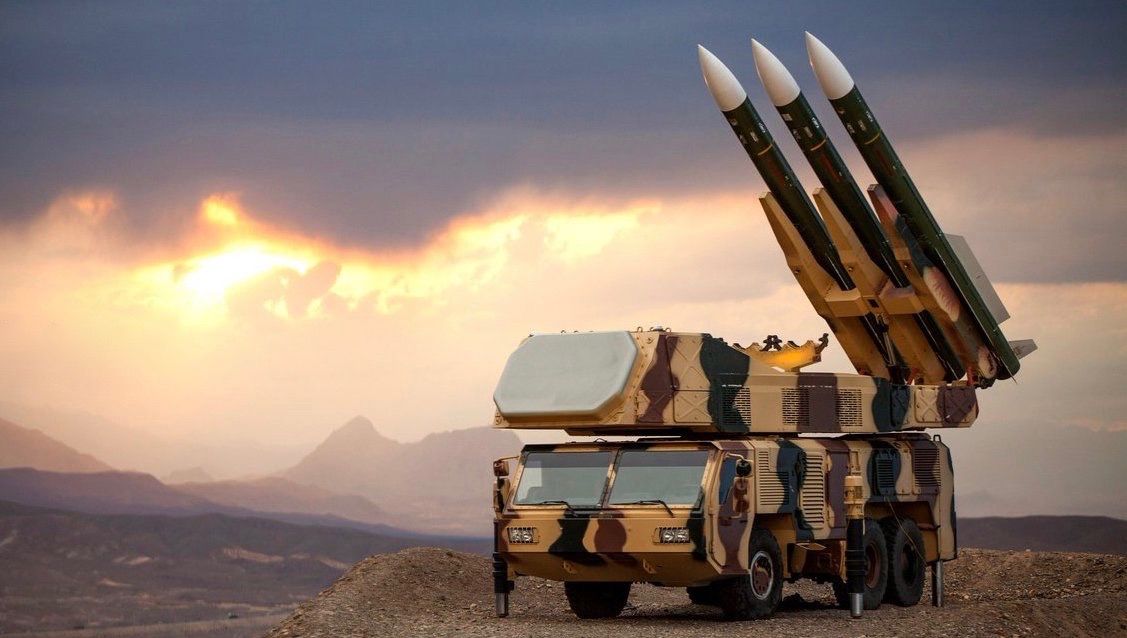
As a high end heavyweight air superiority fighter, the F-22’s airframe has an excellent performance allowing it to operate at very high 20km altitudes, exceed speeds of Mach 2.2, and penetrate deep into enemy airspace with its long range. The fighter benefits from a very high level of manoeuvrability and is the only Western fighter to integrate thrust vectoring systems for this purpose. The Raptor's survivability is further enhanced by its radar evading stealth profile. Iran’s defences rely heavily on ground based air defences such as the indigenous Raad (3rd Khordad) which recent downed the RQ-4A and the Russian S-200 and S-300PMU-2 long range systems. Iran also fields two fighter squadrons equipped with modern air to air missiles, the F-14 Tomcats armed with hypersonic Fakour 90 long range missiles, and these are heavily optimised for beyond visual range air to air engagements. Against all of these assets, the F-22 retains considerable strengths. The fighter’s survivability gives it a far higher chance of penetrating Iranian air defences and launching airstrikes on radar systems and missile launchers to weaken the network. The Raptors are also ideal for seeking and destroying Iranian F-14 Tomcats due to their stealth and manoeuvrability which provides survivability against long range air to air missile attacks - allowing the American jets to close in and neutralise the units in close quarters.
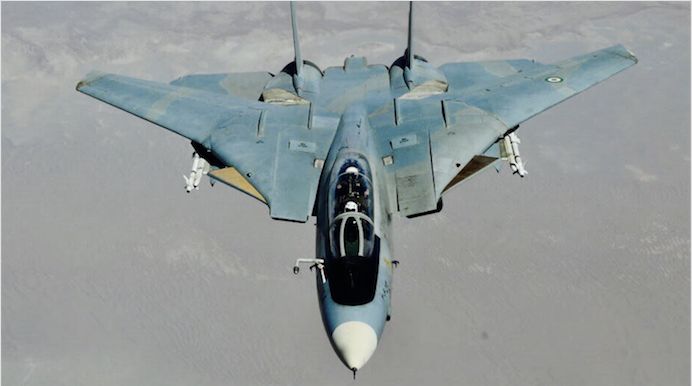
Iran’s ground based air defences and F-14 squadrons are considered a major threat to American air units, with fighters such as the F-15C and F-18E potentially highly vulnerable due to their lower manoeuvrability and lack of stealth capabilities. The Raptor also retains the advantage of deploying AIM-120D air to air missiles - currently the only fighter to integrate them, which provide a 180km engagement range - considerably longer than the AIM-120C of the F-15 and F-18 squadrons. By deploying Raptors to the Gulf Region in force, with a contingent twice the size of that previously stationed in the region, the United States military sends a strong signal to Iran that should hostilities break out its air and air defence forces will face nothing less than the most elite fighter in the Western world. While the F-35A stealth fighter squadron previously deployed also retained radar evading stealth capabilities, the fighter is not considered fully combat ready and was designed as lighter and less costly complements to the Raptors. The F-35’s stealth profile, speed, manoeuvrability, weapons payload, range and operational altitude all leave much to be desired relative to their heavier counterpart - and with the aircraft suffering from multiple performance bugs it will be many years before they are considered ready for missions into highly contested airspace.
