
Watch Out Iran - U.S. Deploys a Dozen Lethal F-22 Raptors to the Persian Gulf
Military Watch Magazine Editorial Staff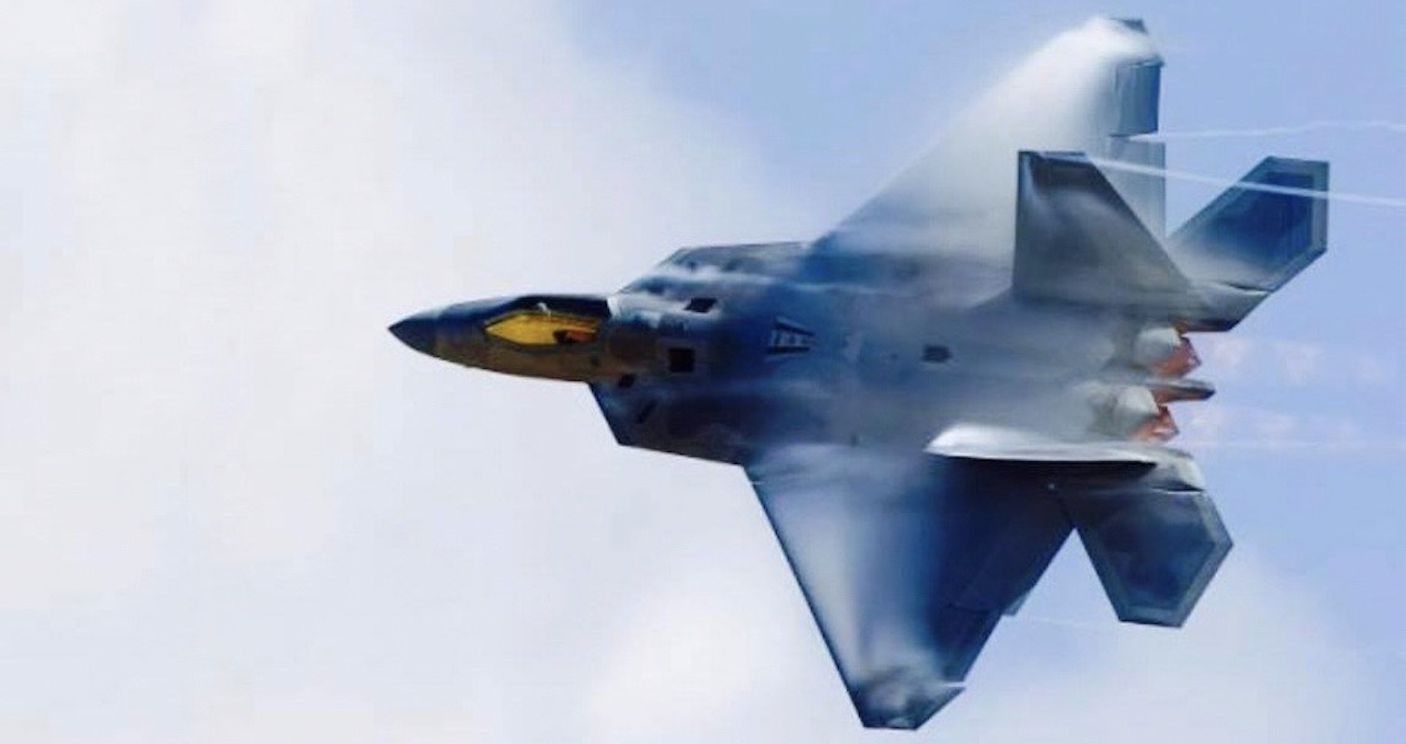
U.S. Air Force F-22 Raptor Fifth Generation Air Superiority Fighter
The latest in a series of prominent deployments of high end American military assets to the Persian Gulf region amid growing tensions with Iran, the U.S. Air Force has announced the deployment of twelve F-22 Raptor fifth generation air superiority fighters to the region of which nine have already been dispatched. The Raptors, belonging to the 192nd Fighter Wing and previously stationed at Joint Base Langley-Eustis, Virginia, were redeployed to the Middle East accompanied by a single KC-135 and four KC-10 aerial tankers. Where the U.S. previously deployed a small unit of six Raptors to Al Dhafra Airbase in the United Arab Emirates for operations over Syrian and Afghanistan - which were particularly critical in the former theatre to counter the presence of Russian Su-35 air superiority fighters, the newly deployed Raptors will be stationed at Al Udeid Airbase in Qatar. Al Dhafra currently hosts F-15E Strike Eagle strike fighters and F-35A lightweight multirole stealth fighters. Raptors were reportedly withdrawn from the UAE due to their extreme operational costs and maintenance requirements, with the U.S. Air Force seeking to increase its units’ combat readiness levels from around 50% to 80% despite budgetary limitations which required cuts to the operating hours of its more costly jets.
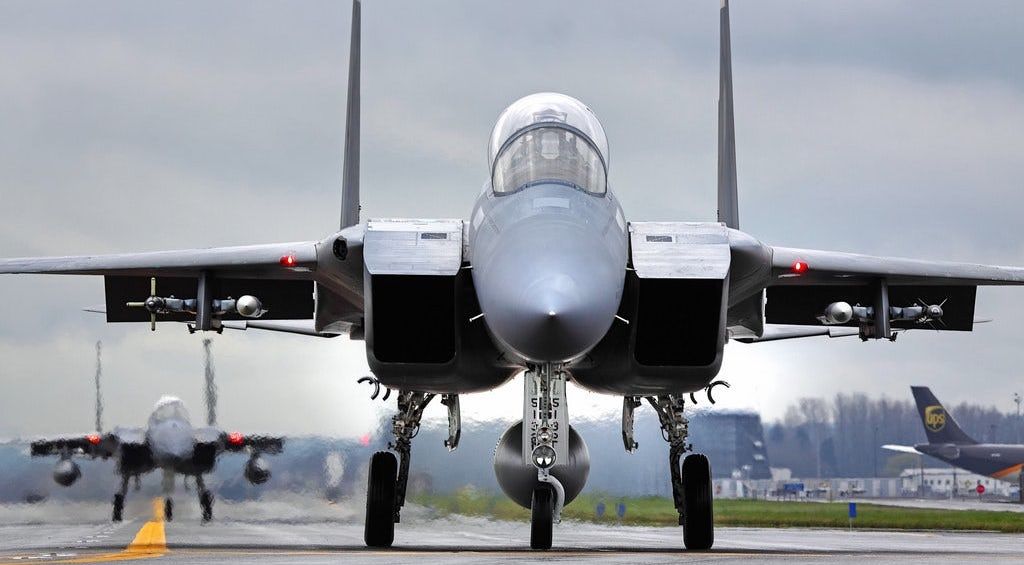
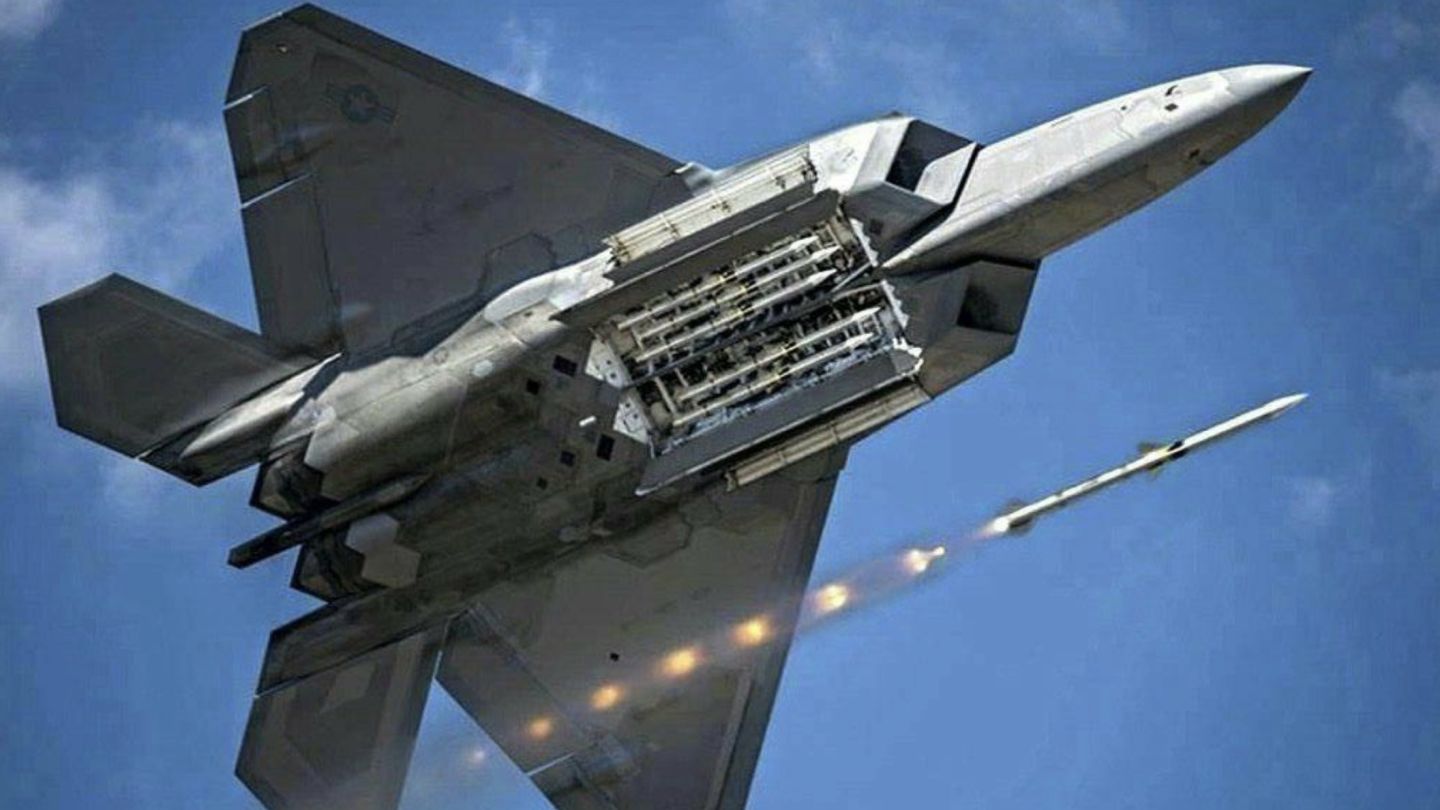
The deployment of the F-22 follows deployments of F-15C Eagle air superiority fighters from the 48th Fighter Wing in early May - aircraft with the same role as the Raptors but with capabilities a full generation behind. While the capabilities of the F-15C were considered comparable to those of the Iranian Air Force’s two F-14 Tomcat squadrons, the only squadrons of 17 in the Iranian fleet equipped with modern air to air missiles and the heaviest Western air superiority jets ever exported, the presence of the F-22 Raptor will provide an overwhelming advantage in the event of conflict. While Iran’s Tomcats have been extensively upgraded with new radars, avionics and electronic warfare systems and new long range hypersonic air to air missiles, the Raptor brings to the field the world’s most advanced and reliable stealth capabilities, the world’s most powerful radar mounted on a serially produced fighter, two dimensional thrust vectoring systems for seriously enhanced manoeuvrability, and access to AIM-120D air to air missiles. The AIM-120D is the most advanced Western air to air missile developed, and is currently reserved for the American F-22 Raptor fleet exclusively. The missile benefits from improved electronic warfare countermeasures and has a long 180km range.
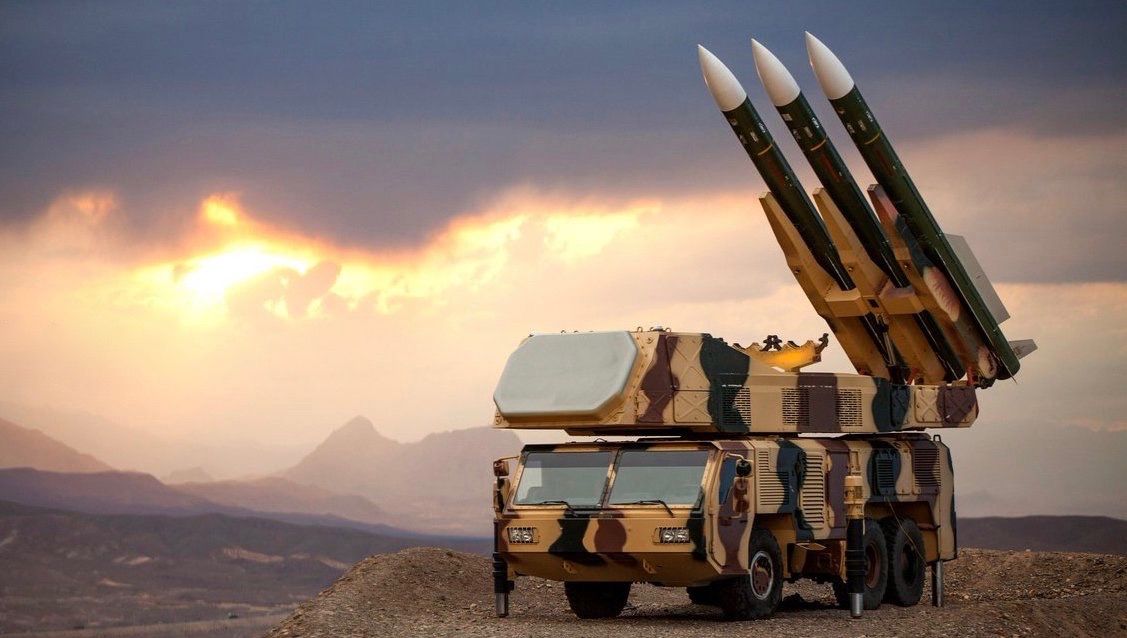
The deployment of the F-22 Raptor sends a strong signal to Tehran, and comes shortly after the downing of a Northrop Grumman RQ-4A Global Hawk surveillance drone worth over $220 million. According to Iranian reports, the drone was operating in ‘full stealth mode’ and was downed by an indigenous Raad air defence system of the 3rd Khordad variant. The vulnerability of a high end drone to indigenous Iranian surface to air missile batteries called into question the survivability of non-stealthy fourth generation aircraft such as the F-15C, F-15E and F-18E deployed to the region should they operate within range of Iranian defences in the event of war. The threat was particularly dire considering that the F-35A squadron deployed remains far from ready to operate in contested airspace, and that the 3rd Khordad air defence system is far from the most advanced in Iranian service with more capable platforms such as the Khordad 15 and Russian S-300PMU-2 also in service. The Raptor has previously been touted as an ’S-300 killer’ due to its unrivalled survivability and resulting ability to penetrate heavily defended airspace, and its entry into service in December 2005 forced Russia to rush its next generation S-400 into service within two years.
While the S-400 retains advanced counter-stealth capabilities and more advanced sensors, electronic warfare countermeasures and hypersonic missiles needed to deny Raptors access to protected airspace, Iran currently lacks a comparable platform which leaves it potentially vulnerable to attacks by the American F-22 squadron. It is likely that the U.S. Air Force will need to further reinforce its contingent with more Raptors, at least three times the contingent of twelve currently planned, should Washington seek anything more than a limited strike on Iran. While highly survivable when in the air, the Raptor remains vulnerable to Iranian ballistic missile strikes due to its extreme maintenance needs which force it to remain grounded for several days for each long range sortie it carries out. With Al Udeid airbase well within the range of Iranian ballistic and cruise missiles, this remains a considerable point of vulnerability.
