
Khordad 15; Iran’s New Air Defence System is No S-400, But it May Make the Country Safer
Military Watch Magazine Editorial Staff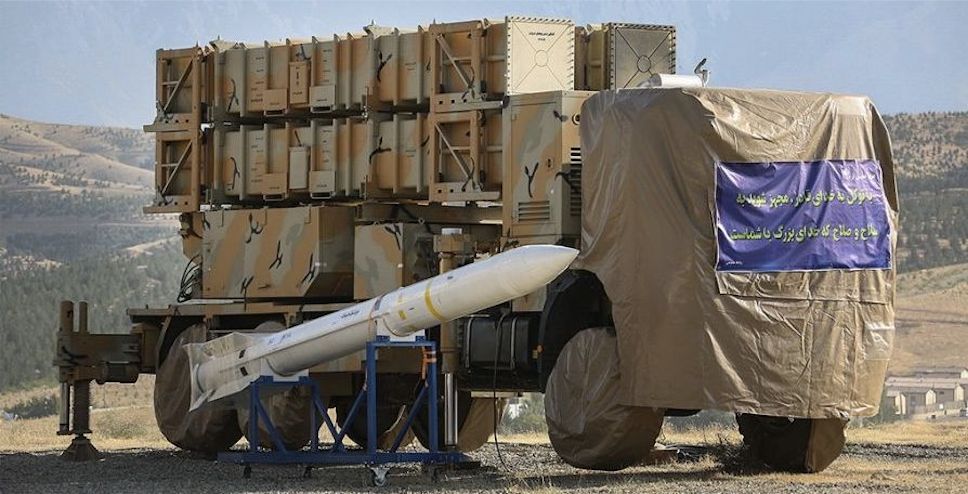
Iranian Khordad 15 Surface to Air Missile Batteries with Sayyad 3 Missile
FARS News Agency
Amid high tensions with the United States, and shortly following a massive deployment of American naval and aerial assets to the Middle East with Tehran in their crosshairs, Iran on June 9th unveiled a new surface to air missile system known as the Khordad 15. The platform was the latest in a series of indigenous platforms following on from the Bavar 373 which was unveiled seven years prior in 2012. The platform is reportedly equipped with a passive phased array radar and is capable of locking onto fighter jets, stealth targets and cruise missiles. According to Defense Minister Brigadier General Amir Hatami, the missile system is capable of engaging both manned and unmanned combat aircraft at ranges of up to 120km using Sayyad 3 surface to air missiles. The platform is also reportedly capable of tracking radar evading ‘stealth’ targets and intercepting them at ranges of up to 45km, and can engage up to six targets simultaneously. F-35A stealth fighters were recently deployed by the United States Air Force to the Middle East, and around a dozen are currently in service in the Israeli Air Force out of 50 ordered and a further 25 planned.
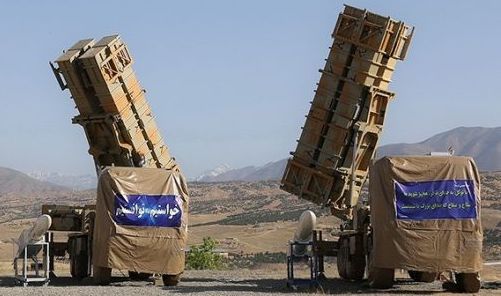
The Khordad 15 appears similar to the Russian S-350 and South Korean KM-SAM in its role and engagement rage, though it appears to lack the high mobility and anti missile capabilities of the other platforms. Given Iran’s history of acquiring North Korean missile technologies and integrating them onto indigenous systems, it remains a considerable possibility that the Khordad 15 is at least partly influenced by the KN-06 surface to air missile system which entered mass production for North Korea’s armed forces in 2017. The platform is expected to use an advanced cold launch system like the KN-06 and Russian S-400 - although this has yet to be confirmed. Iran’s aerial warfare capabilities have long left much to be desired, with only two of its Air Force’s seventeen fighter squadrons equipped with modern long range air to air missiles, a lack of fortified emplacements for its air defence assets comparable to those of Russia or North Korea, and only a small number of S-300PMU-2 batteries capable of providing a modern air defence capabilities. These platforms are over two decades old, and with the ability to engage only 32 targets simultaneously they are prone to being overwhelmed unless receiving considerable support from complementary systems. Should the Khordad 15 be manufactured and deployed in large numbers, and integrated into the same network as the S-300, S-200 and other air defence systems in service, it could provide a valuable addition to Iran’s air defence network which is currently at considerable risk of being quickly overwhelmed in the event of conflict with the United States. The platform is no substitute for more fighter squadrons with better equipment, or for an advanced long ranged air defence platform such as the S-400 which has 333% the range and 1333% the target engagement rate of the Iranian system, access to hypersonic missiles and considerably superior counter-stealth capabilities. The Khordad 15 nevertheless represents an impressive achievement for Iran's defence sector, and fields capabilities few countries can match with their own air defence systems.
