
Newly Deployed B-52 Bombers Pose Major Threat to Iran - Can its Air Defences Shoot Them Down?
Military Watch Magazine Editorial Staff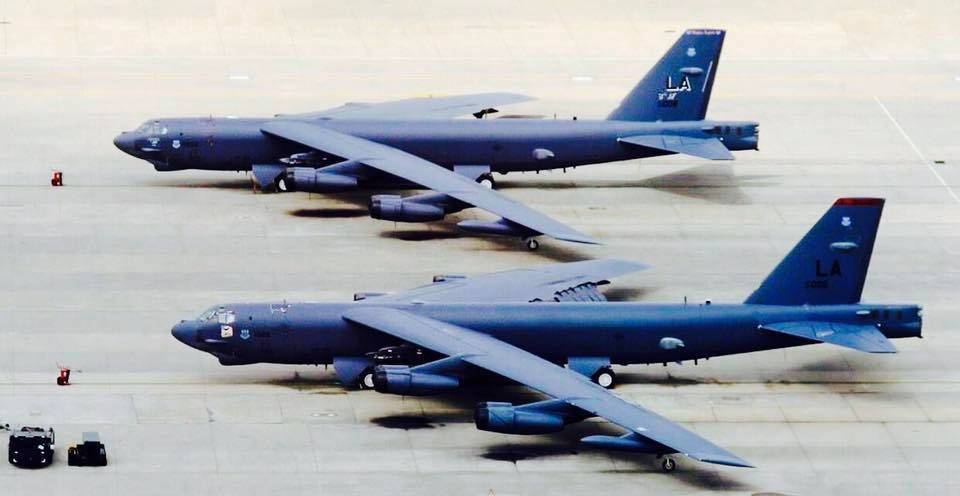
U.S. Air Force B-52H Heavy Bombers
To support the U.S. Navy’s deployment of a carrier strike group to the Persian Gulf, the U.S. Air Force is set to deploy several of its B-52H Stratofortress heavy bombers to the region to deter potential threats from the Islamic Republic of Iran. The escalation of the U.S. military presence comes following American allegations that Iran planned attacks on its military assets deployed to the region, after a rise in tensions between the two longstanding adversaries as Washington moved to increase economic sanctions against the Middle Eastern state. While Iranian forces have reportedly trained for years and are highly prepared to engage American carriers and their escorts, deploying a wide array of assets from anti ship cruise and ballistic missiles to submarines and attack aircraft for this purpose, the deployment of the B-52H represents an asset which America’s adversary has few means of countering - leaving targets potentially highly vulnerable to precision strikes including tactical nuclear strikes by the aircraft.
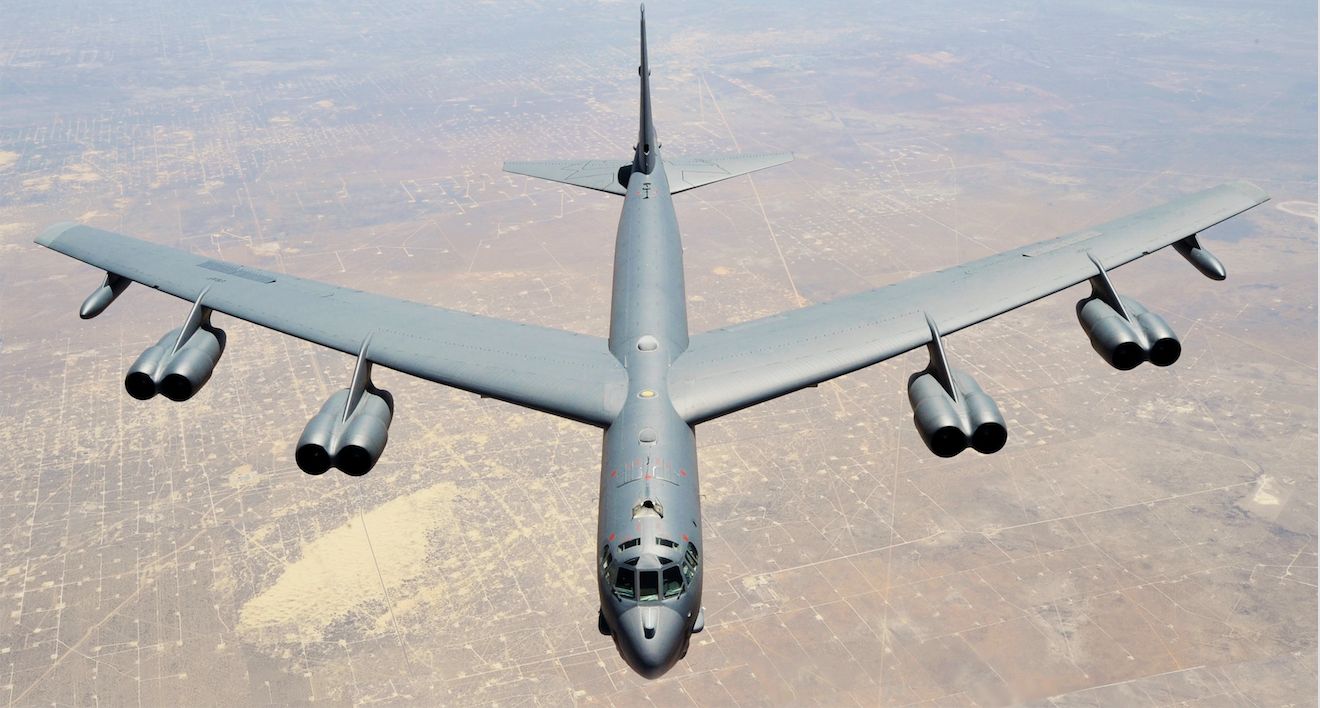
Regarding the cause of the bomber and carrier deployment, the U.S. Defense Department cited “recent and clear indications that Iranian and Iranian proxy forces were making preparations to possibly attack U.S. forces.” Pentagon spokesman Charles Summers further elaborated: “The deployment of the USS Abraham Lincoln Carrier Strike Group and a bomber task force are considered a prudent step in response to indications of heightened Iranian readiness to conduct offensive operations against U.S. forces and our interests… We emphasize the White House statement that we do not seek war with the Iranian regime, but we will defend U.S. personnel, our allies and our interests in the region.” The U.S. Air Force currently deploys five squadrons of B-52H bombers, out of a total of 11 bomber squadrons. Despite its age, the aircraft is highly prized for both its low maintenance requirements and its compatibility with a wide variety of advanced standoff munitions - with new missile systems continuing to be developed for the aircraft.
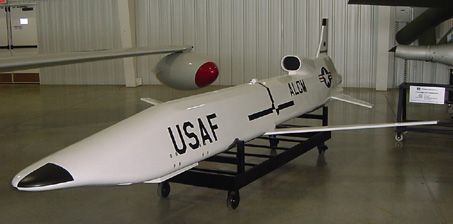
The recent addition of external weapons pylons to the B-52 has increased its external payload to 18,000kg from 4000kg, which combined with its ability to deploy the formidable Massive Ordnance Airburst Bomb (MOAB) - a platform employed in neighbouring Afghanistan in 2017, and the regular updating of its munitions, makes the eight engine bomber a force to be reckoned with. In particular, the bomber’s ability to carry up to 20 AGM-86 cruise missiles allows a squadron to overwhelm most air defence systems with the sheer number of missiles deployed. The AGM-86 retains advanced radar evading capabilities making them particularly difficult to intercept, and can be used to deliver conventional, penetrative and fragmentation warheads at ranges of over 2,500km. Iran’s most sophisticated air defence system, the S-300PMU-2, dates back to the mid 1990s and was fully integrated into the country’s air defence network in mid 2017 after a delayed acquisition from Russia. While formidable, the platform has less than half the rate of fire of the newer S-400 and lacks the anti missile specialisation or the mobility of the S-300VM - leaving it potentially highly vulnerable to an attack by B-52H bombers. While the S-300PMU-2 is considered more than capable of intercepting the AGM-86, only a small number of these missiles need to penetrate the country’s air defence network to strike launchers, command centres and radars to undermine the air defence platform's effectiveness and pave the way for further strikes. An S-300PMU-2 system is restricted to engaging just 36 targets simultaneously with up to 72 interceptor missiles - meaning even with a successful interception rate of near 100% two B-52H bombers could potentially overwhelm its defences. Iran’s lack of sufficient complementary shorter ranged systems such as the BuK-M3 or HQ-16 makes the threat of the B-52’s arsenal all the more serious.
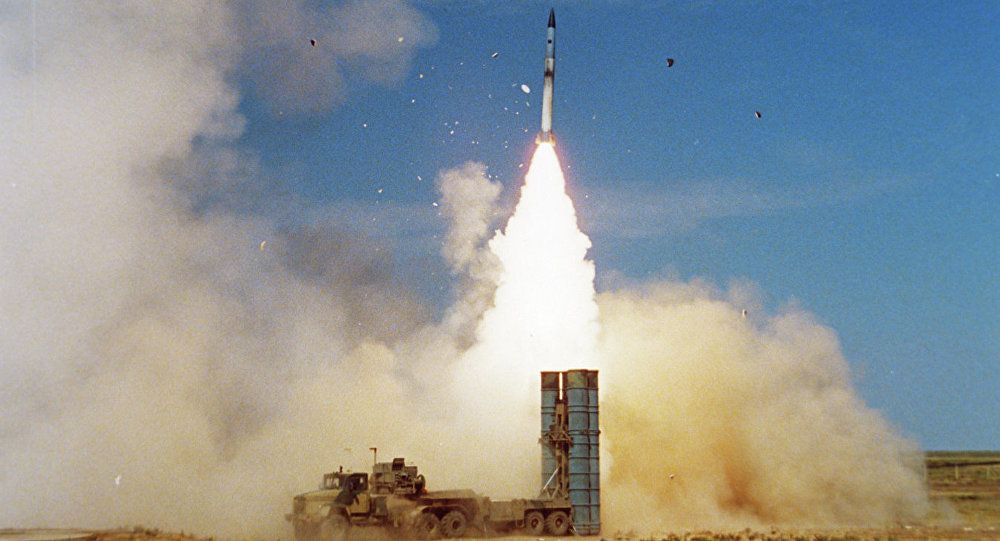
While the B-52H would very likely prove highly vulnerable if flying over Iranian airspace directly - which it would need to do to deploy the MOAB or other heavy ordinance, deployment of the AGM-86 ensures that Iranian anti aircraft systems would most likely be unable to target it. The greatest threat to the bombers would come from the S-300PMU-2’s hypersonic 48N6E3 surface to air missiles, which retain a 250km range, and the Fakour-90 air to air missiles deployed from Iranian F-14 Tomcats with ranges estimated at between 220km and 300km. The long engagement range of the F-14 combined with its high speed makes it perhaps the only credible threat to the B-52H due to its ability to chase down the aircraft and fire at them from beyond Iranian airspace. While The U.S. Air Force has recently withdrawn its elite F-22 Raptor air superiority fighters from the Middle East, other aircraft such as the F-15C Eagles deployed to the United Arab Emiates and F-18E Super Hornets deployed from U.S. carriers should prove sufficient to prevent Iran’s F-14’s from coming within engagement range of the B-52H - providing that the bombers operate near the limits of the AGM-86's range.
