
S-300PMU-2 vs. S-400; How Capable is Syria’s New Air Defence Platform Compared to the Russian Military’s Own?
Military Watch Magazine Editorial Staff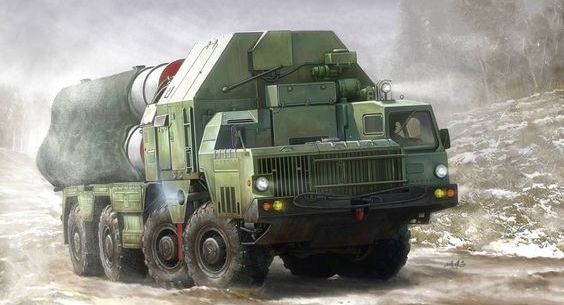
S-400 Missile System - artwork
With reports indicating that Russia has delivered the first S-300PMU-2 batteries to the Syrian armed forces, the new weapons system is set to revolutionise Syria’s air defence capabilities and provide a much needed deterrent to hostile powers - namely Israel and the Western Bloc, from launching strikes on Syrian territory. While far more capable than the S-200, a system received in the 1980s which dates back to 1967, and surpassing the capabilities of Western analogues such as the Patriot, the S-300PMU-2 is still dated relative to the capabilities of the latest Russian and Chinese weapons platforms such as the S-300V4, S-400 and HQ-9B - having entered service in 1997. As such, should the S-300PMU-2 fail in Syrian hands, or should the Western Bloc attempt to use its deployment to Syria as an opportunity to test its capabilities, it will not represent a considerable loss for Russia or compromise the country’s own defence - which relies on weapons platforms decades in advance of the PMU-2 in their sophistication.
A comparison of the S-300PMU-2 fielded by the Syrian armed forces and the S-400 deployed by Russia to Syrian territory (the PMU-2’s direct successor initially named PMU-3) shows a considerable discrepancy in their capabilities. The S-300PMU-2 is capable of engaging 36 targets simultaneously, including cruise and ballistic missiles and aircraft - allocating two interceptor missiles per target and so guiding 72 missiles in total. The platform retains a maximum engagement range of 195km, though some reports indicate that this may have been extended to 250km since the weapons system first entered service. The system is restricted to engaging targets at medium and high altitudes, and relies heavily on protection from specialised shorter ranged systems such as the S-125, BuK-M2 or Pantsir-S1 to provide survivability against low altitude strikes. The system is capable of intercepting targets at several times the speed of sound.
The S-400 system, which entered service nine years after the PMU-2 in 2006, is considerably more capable than its predecessor across the spectrum. The platform can engage more than double the number of targets simultaneously - up to 80 with 160 missiles. The S-400 retains a 400km maximum engagement range and 600km detection range, and can engage targets at altitudes as low as five meters off the ground - allowing it to operate as a helicopter killer at extreme ranges alongside its conventional air defence role. The weapons platform deploys a number of long range missiles including the 400km range 40N6, the 200km range 48N6E2 and the 250km range 48N6DM/48N6E3. Its missiles are capable of impacting their targets at hypersonic speeds and striking with high degrees of precision - allowing the S-400 to effectively eliminate any known formation of attacking combat jets in little over a minute even at extreme ranges.
While it can detect and engage stealth aircraft, the S-300PMU-2 cannot do so as capably as newer systems such as the S-400 or S-300V4, and elite jets such as the F-22 Raptor - which combining high speeds, altitudes and manoeuvrability with electronic warfare stealth, remain highly challenging targets. The ability of the S-300PMU-2 to engage the Raptor under most circumstances remains highly questionable, though against the slower, lower flying and less stealthy F-35 the weapons platform has a considerably greater chance of targeting it successfully - assuming it is capably manned and crews have some training in countering stealth technology. With the F-22 fielded only by the United States Air Force, and in highly limited numbers, Syria's S-300 is far more likely to face either fourth generation jets or the lighter and less capable F-35 in the event of conflict with either Israel or the Western Bloc.
Ultimately the S-300PMU-2 is a far cry from Russia’s most advanced surface to air missile system, with at least three other long ranged systems in the S-300 series possessing superior capabilities, which means that while Moscow is escalating its support for Damascus in the face of hostile attacks - this is far from a total escalation as per that which took place in 1982, which saw the very latest Soviet air defence assets and combat jets transferred effectively free of charge to Syrian hands. The S-300PMU-2 nevertheless poses a major threat to Western combat jets, with fourth generation fighter designs which compromise the vast majority of NATO and Israeli fleets all highly vulnerable to the system, and the F-35A, though not yet fully operational, also potentially vulnerable. Whether Russia will move to cement Syria’s defences by providing complementary systems such as the BuK-M3, or more advanced platforms such as the S-300V4 or S-400 in future, remains to be seen - and is likely to be largely dependant on the actions of Israel and the Western Bloc in regards to their respect for Russian interests in the country.
