
Taiwan Inducts Lethal New Apache Attack Helicopters Into Service - But Can They Really Affect the Balance of Power in the Taiwan Strait?
Military Watch Magazine Editorial Staff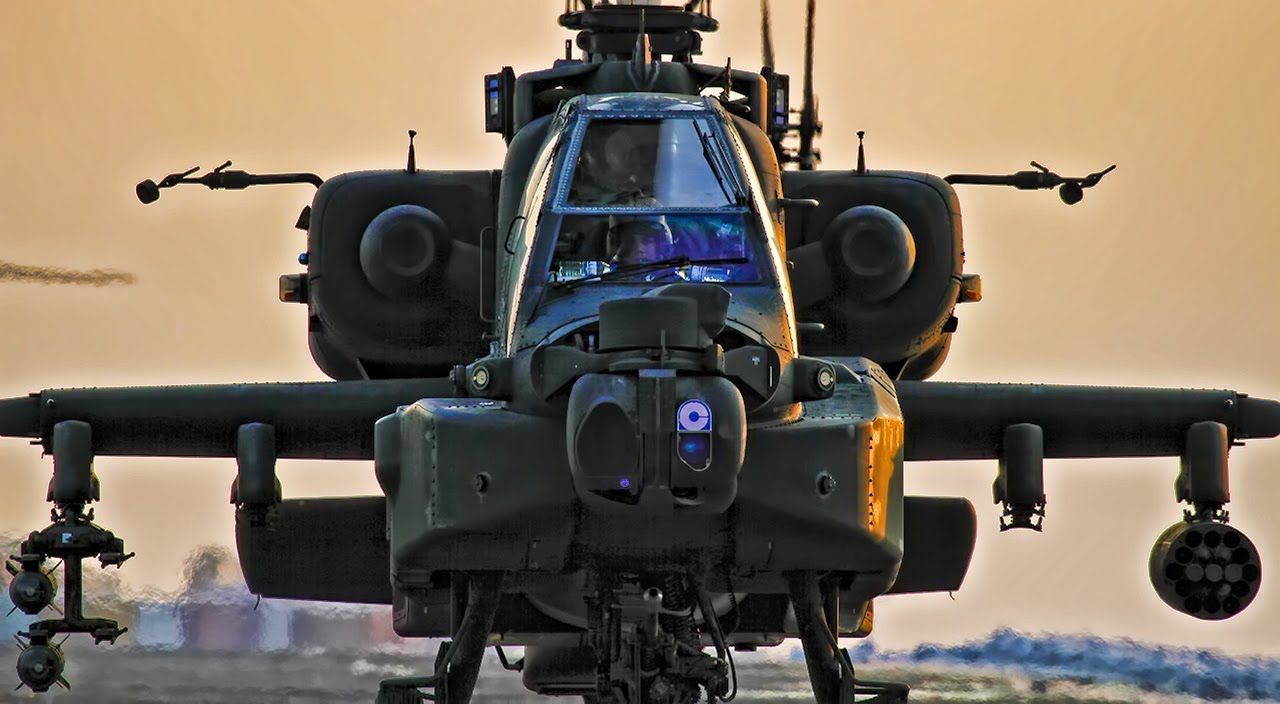
Apache Attack Helicopter
Taiwan’s armed forces have recently activated a brigade of elite AH-64E Apache attack helicopters, with 29 of the new aircraft acquired under a $1.9 billion with U.S. defence manufacturer Boeing. The helicopters were ordered in 2011 for the 601st Air Cavalry Brigade, originally for 30 helicopters though one crashed into a building during a 2014 training flight, and delivery of the platforms was completed in 2014 - after which Taiwanese crews took time to integrate the aircraft into their armed forces and provide crews with the training needed to reach full operational capability. The elite cavalry brigade is reportedly tasked with the defence of Taipei and the far north of Formosa, a strategically critical region facing the Chinese mainland from where the bulk of enemy attacks are expected in the even of a cross strait war. The brigade‘s Apaches are comprised of two combat squadrons, which train to work closely with special forces, infantry and artillery and provide much needed support for the ground forces’ ageing Vietnam War era battle tanks.
The AH-64E is very likely the most capable Western attack helicopter ever designed, and is set to retain a considerable edge over the lighter but formidable Z-10 fielded by mainland China. The most capable iteration of the Apache, the platforms are armed with Longbow radars and either 16 Hellfire anti tank missiles or four Stinger anti aircraft missiles each alongside an assortment of gun turrets allowing them to deliver a fearsome amount of firepower. The aircraft are set to serve as a formidable complement to the 61 lighter AH-1W SuperCobra attack helicopters already fielded by Taiwan’s armed forces.
The Apache has a fearsome reputation as a tank hunter, and its acquisition could well be ideal for Taiwan’s forces to counter the elite armoured warfare capabilities of the Chinese People’s Liberation Army’s tank divisions. This asset can be considered particularly critical given the vast qualitative superiority of Chinese battle tanks such as the Type 99 and Type 96, which even in small numbers would very likely prove well beyond the capabilities of Taiwan’s ground forces to handle. With the mainstay of the Taiwanese ground forces being comprised of M48 battle tanks, platforms dating back 65 years to the year of the Korean War’s end, and with its most modern tank, the Vietnam War era M60, considered outdated and ineffective by the early 1970s, Taiwanese armour has little chance of engaging a spearhead landing force of Chinese Type 96 tanks - let alone the elite Type 99 which is considered one of the world’s foremost battle tanks. Lighter platforms deployed by China’s Marines, though in many ways less capable than those of the Army, will nevertheless also make use of state of the art protection systems which will allow them to engage Taiwanese armoured units many times their size.
The AH-64E, as by far Taiwan’s most capable tank killer, provides a much needed means of threatening the elite of China’s armoured units - and allows its ground forces to contend with platforms such as the Type 099 in small numbers expected for a beach landing force. Nevertheless, it should be noted that Taiwan’s ability to make use of the Apache relies heavily on its ability to deny China’s People’s Liberation Army air superiority over its airspace - something in serious doubt given the highly limited capabilities of its ageing aerial warfare assets relative to those of the Chinese People’s Liberation Army. Indeed, with China having recently acquired the elite Russian made S-400 surface to air missile system, a asset which came at similar cost to Taiwan’s Apache fleet, and the platform can be used to target up to 80 aircraft over Taiwanese airspace simultaneously at hypersonic speeds - including those operating at altitudes as low as 5 meters. Though helicopters are safe against most air defence platforms of this type so long as they remain at low altitudes, the S-400's capabilities effectively eliminates this possibility and thereby seriously undermines the platform's viability even in a basic defensive role. While the Apache was designed with a considerable degree of survivability against rocket propelled grenades, the cannon of battle tanks and even basic MANPADS such as the STINGER, the 48N6E2, 48N6DM/48N6E3, and 40N6 missiles fired from batteries on the Chinese mainland are a threat of an entirely different category - one which is set to allow the PLA to enforce an effective no fly zone over Formosa and ground the Apache fleet from the very beginning of hostilities.
Taiwan may well have been far better of attempting to acquire an S-400 battalion of its own as a much needed addition to its air defence capabilities for a similar price rather than Apache helicopters, given its situation and the fact that the primary threat posed by the PLA is not on the ground - but in the air. The risk of drawing Washington’s ire for purchasing Russian arms however, though they are a potential game changer for Taiwan's defence, makes such a course of action a political risk Taipei is almost certainly unwilling to take given its longstanding reliance on Western patronage for its defence.
