
Fighting America Through Syria; How the Soviet Union Armed its Middle Eastern Ally to Undermine the U.S. Position in Lebanon
Military Watch Magazine Editorial Staff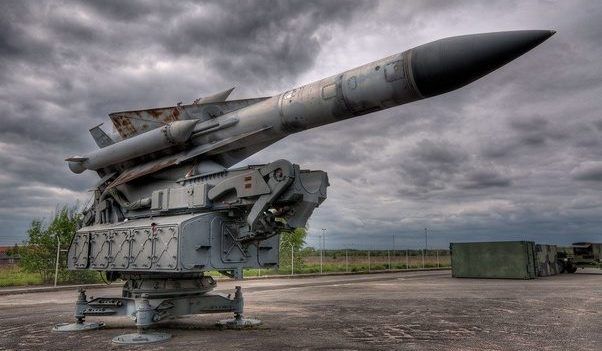
S-200 Surface to Air Missile
As Russia today plays a key role in supporting the Syrian armed forces in what looks set to be an eight year conflict, intervening directly with aerial assets, special forces and other vital assistance from 2015 to turn the tide of the war against a number of Western backed Islamist groups, the history of Russian assistance to the Arab republic and the nature of the two country’s partnership has taken on a new significance. Following Egypt’s Pivot to the Western Bloc in the 1970s and Iraqi’s shift further Westwards under Saddam Hussein from 1980 to gain assistance in the war against Iran, Syria emerged as the Soviet Union’s primary defence partner in the Middle East - and played a key role in balancing the power of the West and their regional allies. A far smaller and less resource rich state than other Arab powers, Syria’s armed forces long relied on extensive Russian assistance - which in the 1980s was provided generously to confront both Israeli forces on the border and to directly face the might of the U.S. military and their European allies in neighbouring Lebanon - a small state to which Damascus deployed a considerable task force in response to an Israeli invasion. The Soviet Union, by providing extensive military assistance to Syria, was able to wage an indirect war on the United States and largely frustrate its attempts to pursue its objectives in Lebanon - much as it had done previously in Vietnam. With Syrian forces armed with the very latest Soviet arms, their presence in Lebanon managed to serve as an effective counterbalance to those of the Western Bloc and Israel.
Former Egyptian Chief of Staff General Saad Al Shazly noted regarding the Soviet role in undermining the U.S. position in Lebanon: “There were several local reasons for America’s failure in Lebanon, among them the resistance of the Lebanese people themselves, and the resolute stand of Syria. But Soviet support for both was, to my mind, the crucial strategic factor in their success. The Soviet Challenge to America’s presence in Lebanon took two forms. The first was increased supplies of weaponry to Syria, sufficient in quantity and quality to sustain Syria’s position in Lebanon against any American or Israeli threat. The re-equippment of Syria, in fact, was little short of awesome in its speed and scale. In June 1982, Syrian forces in Lebanon had suffered heavily in their confrontation with Israel. Syrian losses were put at 400 tanks, 100 aircraft and helicopters, and 18 battalions of SAMs (surface to air missiles.) The Soviet Union promptly replaced them all - with more modern equipment. On top of that the Soviet Union then gave the Syrians an extra 200 T-72 tanks; a battalion of the SS-21 battlefield missile; strengthened Syria’s air defences with a further 68 battalions of SAMs - including eight battalions of the long range SAM-5 (S-200); and gave its air force another 54 combat helicopters, 25 MiG-23s, and 25 MiG-25s.”
With Syria’s armed forces having suffered heavily losses the year before to the Israeli Air Force, particularly under operation Mole Cricket which saw Syrian air defences crippled and its fighter fleet decimated by new fourth generation Israeli jets - namely the F-15 Eagle supported by a number of lighter fighters - the USSR’s move to rapidly restore its ally’s fighting capacity, and particularly its air defence capabilities, was a critical development which ensured that the United States and its allies would not retain an absolute advantage. With the capabilities of MiG-23 fighters and S-75 and S-125 air defence batteries, including their weaknesses, all being well known to the U.S. and their Israeli allies - courtesy of Egyptian President Sadat who had provided these formerly highly effective systems to the Western Bloc for study following is pivot away from the Soviet Union, the introduction of S-200 batteries and MiG-25 interceptors remained a key means of strengthening Syria’s anti aircraft capabilities - with even a relatively small force making a critical difference. These assets were notably reserved for some of the USSR’s closest export clients, with Syria being the first ever export client for the S-200 outside the Warsaw Pact.
Regarding the effect of an infusion of some of the latest Soviet military hardware into the Syrian armed forces, the Egyptian Chief of Staff noted: “The Soviet investment paid off. On 4 December 1983, the Syrian shot down three American aircraft over Lebanon. It was a humiliating blow to America’s prestige. For the first time, an Arab country had shot down American aircraft and taken America pilots prisoner (such occurrences had been common in Vietnam and Korea, but not in the Middle East.) Of course, Americans had been shot down during the October 1973 (Yom Kippur) war; but these were American Jews with dual Israeli nationality, and they were flying aircraft, albeit American made, which bore Israeli insignia. This was different. For once an Arab country had found the means to defend itself.”
The arms acquired by the Syrian armed forces in the 1980s have played a central role in its defence doctrine ever since, though its advanced MiG-25 fleet appears to in recent years be held in reserve in case a large scale air attack by either Israel or the Western Bloc should occur, with the interceptors otherwise of little use against Western backed insurgent forces which continue to form the primary threat to the country’s security today. With Russia stepping back its military cooperation following the fall of the USSR, and forming relations with Israel which pressed the country not to provide the country with more advanced air defence assets - namely MiG-31 interceptors and S-300 air defence systems which replaced the MiG-25 and S-200 respective, the cutting edge assets delivered in the 1980s remain central to Damascus’ ability to defend its airspace to this day.
The nature of contacts between the USSR and Hezbollah, which is suspected of having carried out a massacre of U.S. Marines killing 241 in a single night alongside 51 French personnel and was a second major threat to American power, remain uncertain. The Arab militia did however receive extensive support from Iran - which though it was not a Soviet ally at the time retained close ties with the government in Damascus and had shared interests with the communist superpower when it came to opposition to a Western military presence in Lebanon. 35 years later, with Hezbollah larger and more heavily armed than ever, the militia has formed close ties with the Russian military largely through their mutual ally in Syria - with the Lebanese militants operating some of the latest Russian made hardware such as Kornet anti tank missiles while the two have closely coordinated their efforts against a number of Islamist insurgent groups in Syria - with both intervening to protect their ally. Closer ties between Hezbollah, and what the militia’s leadership refer to as the ‘Resistance Axis’ of Shiite powers in the Middle East including Syria, and the Western Bloc’s more global ‘great power adversaries’ - namely Russia, North Korea and to a lesser extent China, bodes ill for the position of the U.S. and its allies in the region.
