
A Look at the B-52H: Capabilities of the Bombers America Keeps Flying Near China and Why the PLA Fears Them?
Military Watch Magazine Editorial Staff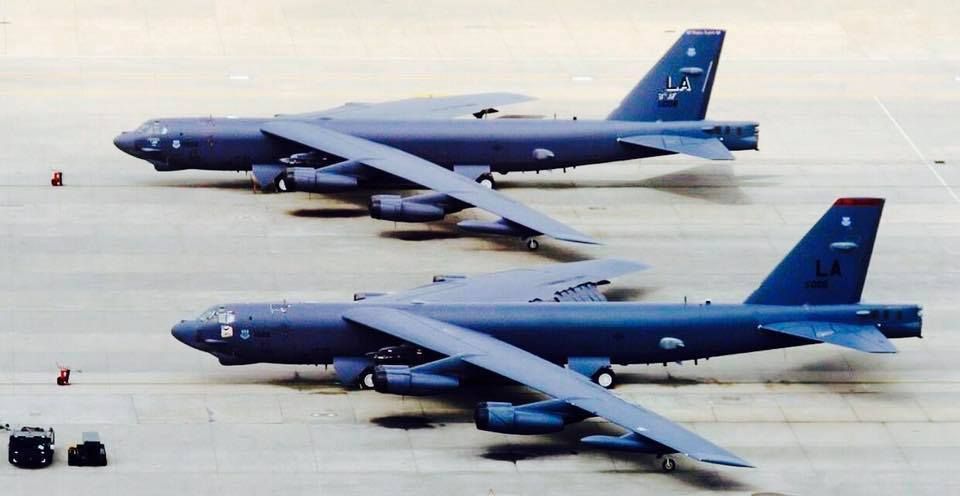
U.S. Air Force B-52 Stratofortress Heavy Bombers
The U.S. Air Force has conducted its second patrol over the South China Sea with B-52H nuclear capable strategic bombers in ten days - and its second in March - which has become an increasingly common occurrence since the United States conducted its ‘Pivot to Asia’ aimed at challenging China’s People’s Liberation Army (PLA) and increasing its military presence in the Asia-Pacific. The U.S. Air Force’s Pacific Command stated regarding the incident: “two B-52H Stratofortress bombers took off from Andersen Air Force Base, Guam, and conducted routine training in the vicinity of the South China Sea March 13, 2019 (HST), before returning to base.” An assessment of the B-52H’s capabilities give some insight into the threat they pose to the PLA, how difficult they may be to counter and what kind of signal the U.S. is seeking to send to Beijing.
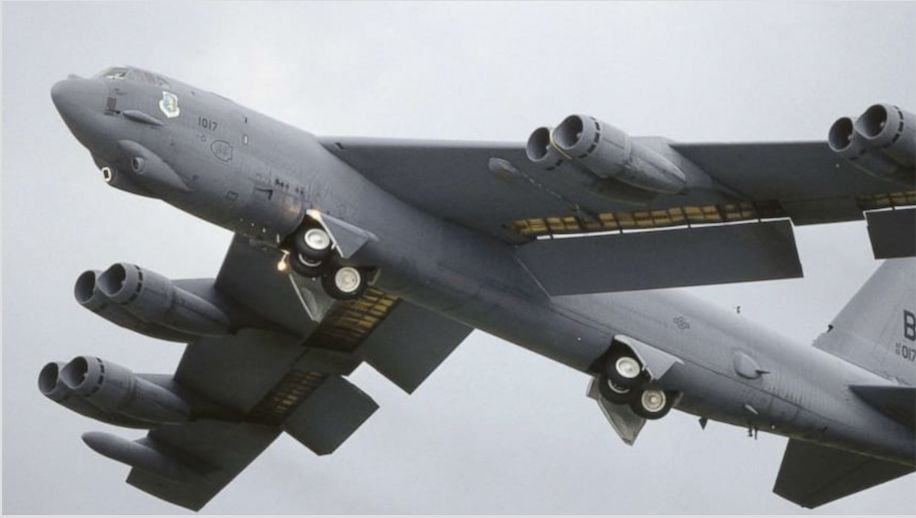
The B-52 saw its first flight in 1952, and entered service with the U.S. Strategic Air Command as the B-52B in 1955. The bombers were initially intended to counter the Soviet Union and deliver nuclear strikes, and while they remain arguably the most lethal pillar of the air arm of the American nuclear triad - they have also been extensively pressed into service in a conventional role. The bombers saw extensive deployments during the Vietnam War, and from 1965 more advanced B-52 variants underwent 'Big Belly' modifications to carry a larger payloads - up to 60,000 Ib of ordnance each making them highly effective for firebombing and carpet bombing. The bombers were most renowned for their extensive deployment in December 1972 against North Vietnam, which saw waves of bombers fly 729 sorties. Over 80 bombers were committed to the war effort, of which 31 were lost. After the war, the B-52 fleet underwent extensive modifications allowing them to remain viable in modern combat - and they are today arguably the most valued bombers in the U.S. Air Force, set to serve alongside the upcoming B-21 bomber long after the newer and more high tech but in many ways less reliable B-1B and B-2 are retired.
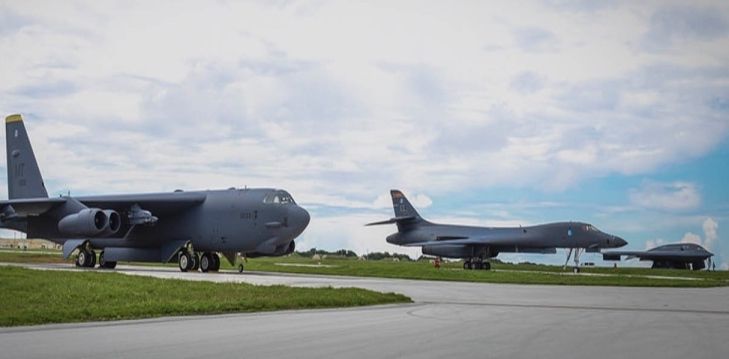
The B-52H is the most capable variant of the Stratofortress, and incorporates eight of the more efficient TF33-P-3 turbofan engines, a new ‘wet’ wing with integral fuel tanks for an extended range, a shorter tail fin, an enlarged nose radome, ejection seats, new fire control systems, new avionics and a new rear defensive armament (later removed in the 1990s.) The aircraft pair powerful sensors which a high weapons payload and long range, allowing them to serve as highly effective missile delivery vehicles. While subsonic bombers remain extremely vulnerable against air defences and modern combat aircraft, the emphasis on use of standoff munitions has allowed them to remain survivable, striking adversaries from several thousand kilometres away well beyond the range of retaliation. Incorporation of more modern electronic warfare systems and flares further improve their survivability against potential beyond visual range air attacks.
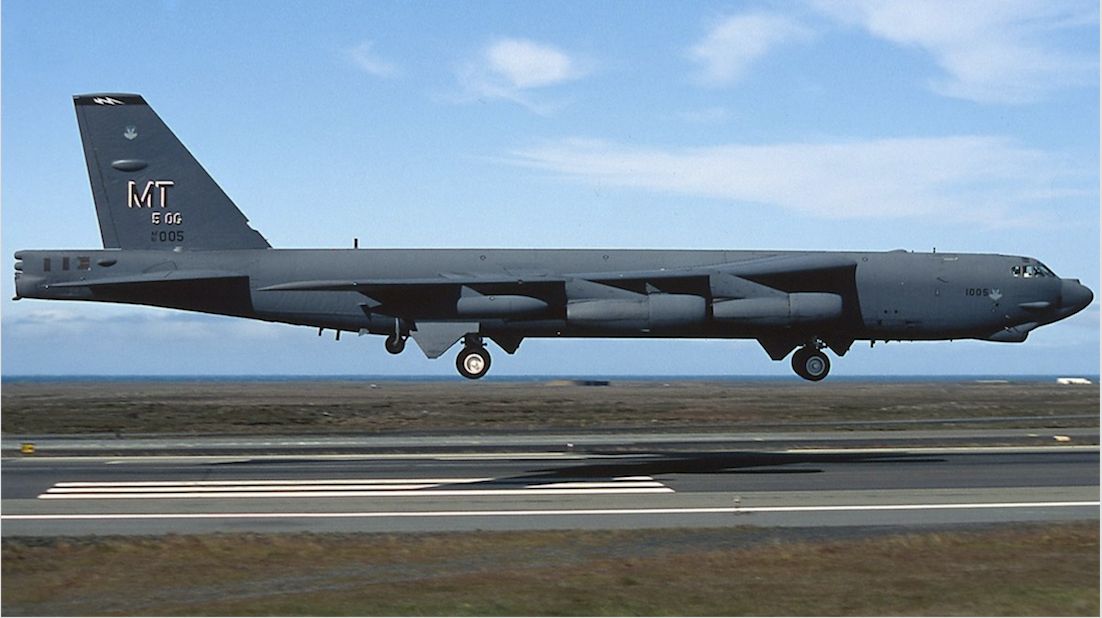
Most recently, the B-52H has been equipped with a new external weapons pylon which increases its external payload from approximately 4,500kg to over 18,000kg - compatible with almost any of the air launched munitions currently in the inventory of the U.S. Air Force, including the Massive Ordnance Air Burst Bomb (MOAB). Arguably the bomber’s most dangerous munition is the AGM-86 missile, of which each bomber deploys 20 in standard configuration. The payload of two bombers is very likely enough to overwhelm the defences of most Chinese installations, including islets in the South China Sea which are often defended by HQ-9B surface to air missile batteries. The missiles, while subsonic, are extremely difficult to intercept for all but the most advanced air defence systems due to their advanced radar evading stealth capabilities. While China does field the Russian Tor air defence system and its indigenous derivative the HQ-17, designed specifically to target precision cruise missiles, they are not known to be deployed to the South China Sea. The AGM-86 can be used to deliver nuclear, conventional, penetrative and fragmentations warheads at ranges of over 2,500km - well beyond the range of any existing air defence system or air to air missile - making it very dangerous when launched from the B-52H.
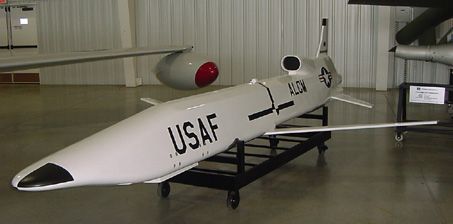
The B-52H is otherwise capable of deploying a variety of munitions, including the harpoon anti ship missile - with a number of new ship hunting munitions currently planned. The bombers formerly operated the Raytheon AGM-129 nuclear missile, with a range of over 3,700km and advanced radar evading capabilities, though these were retired in 2012 in accordance with the SORT/Moscow Treaty of 2002 - and because of a number of reliability issues and the very high costs of maintenance. With its current armament, the B-52H is very likely the most capable and dangerous Western bomber ever developed - a platform which is among the most practical to operate and easy to maintain in the world - with a higher payload and intercontinental range which the Chinese H-6 notably lacks. Its combination of reliability and lethality is a key reason why the B-52H is set to outlive the B-1B and B-2 in its service life, and can be perceived as a considerable threat to the PLA - placing military installations across the South China Sea and key targets on the Chinese mainland in their range without going near Chinese airspace or entering the retaliation range of Chinese anti aircraft assets.
