
What Assets Has America Deployed to Counter Iran in the Middle East? Could Overwhelming Force Deter Tehran From Going Nuclear
Military Watch Magazine Editorial Staff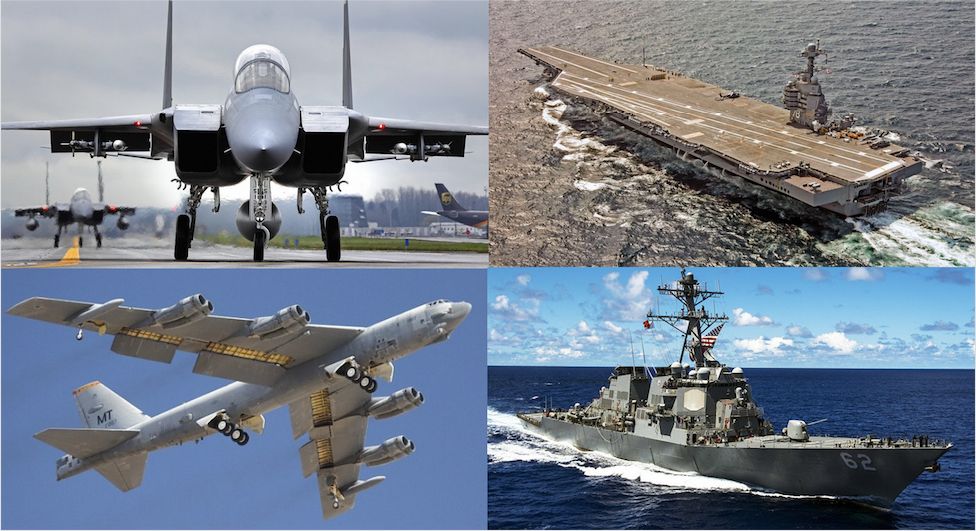
U.S. Assets in the Persian Gulf: F-15C, B-52H, Supercarrier and Destroyer
Following an escalation in tensions between the United States of America and the Islamic Republic of Iran, the U.S. has moved to seriously strengthen its military presence in the Middle East. While the Middle East was formerly the region of prime military focus for the United States in the 2000s, the Obama Doctrine initiated from 2010 and the Pivot to Asia initiative led to a massive drawing down of the American military presence as assets were redirected towards the Asia-Pacific region - with boots on the ground in Iraq and much of the gulf replaced by Western military contractors to reduce the burden on the U.S. Military. Tensions with Iran following increasingly hostile rhetoric from Washington, a withdrawal from the JCPOA nuclear deal and increasingly tight economic sanctions, however, have forced the U.S. to redivert a number of high end assets back to the Middle East - despite the balance of power in the Asia-Pacific region continuing to grow more unfavourable for the U.S. and its allies. Though these assets are currently insufficient to wage a full scale war against Iran, they are considered sufficient to deter potential attacks on U.S. personnel in the region - and could serve as the basis for a larger deployment in future.
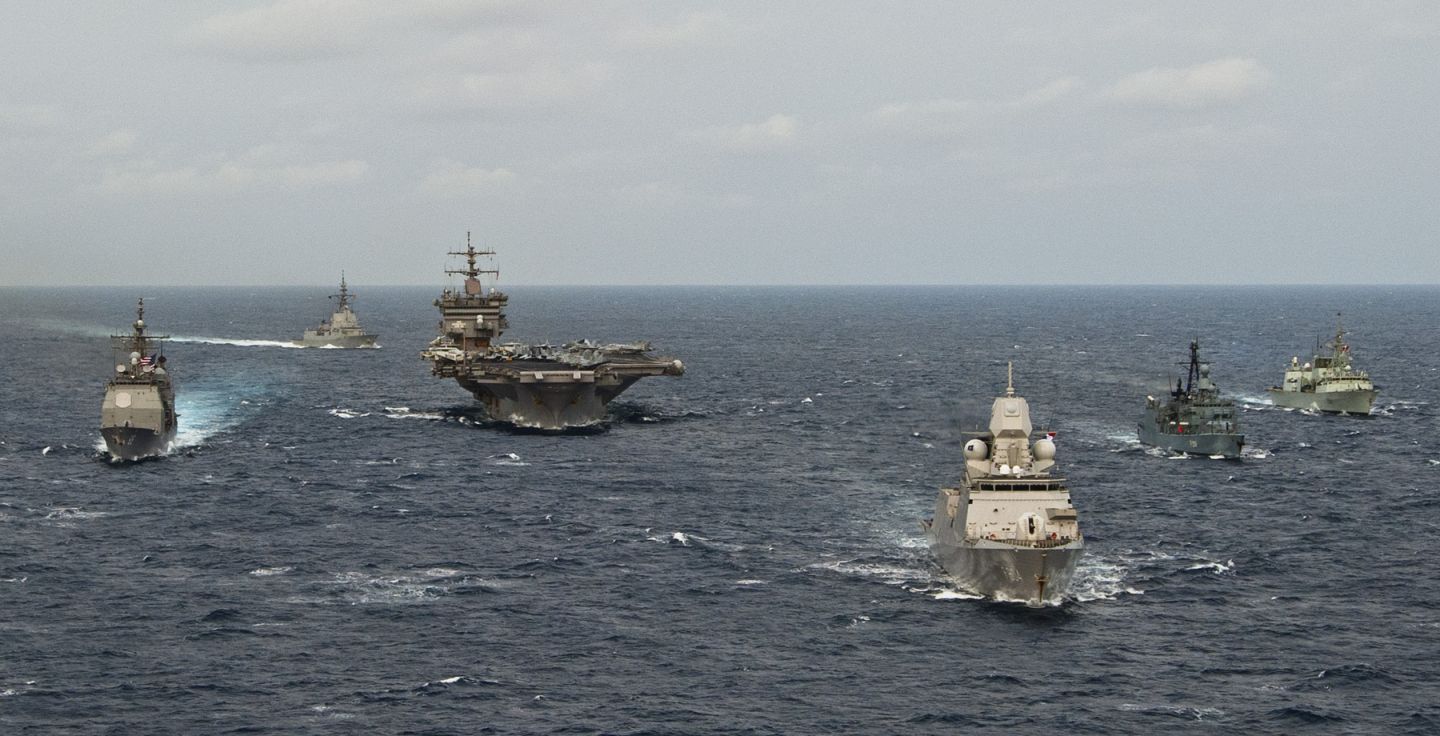
The primary asset the U.S. Military has deployed to the Persian Gulf to counter Iran is Carrier Strike Group Twelve led by the Nimitz Class supercarrier USS Abraham Lincoln. The carrier deploys a sizeable air wing comprised of three squadrons of F-18E and one of F-18F Super Hornet medium weight multirole fighters, one squadron of E/A-18G electronic attack jets and E-2D Advanced Hawkeye AWACS platforms, which though unspecialised are sufficient to deliver considerable ordinance over long ranges to targets across much of Iran with an impressive speed. The Nimitz Class carrier’s steam catapult launch systems allows the fighters to deploy with a heavy weapons payload and high fuel storage, and the Super Hornets can be pressed into an air superiority role when equipped with AIM-120C and AIM-9X air to air missiles. E-2 Hawkeyes deploy powerful AN/APS-145 radar systems to provide key intelligence on Iranian targets, and can guide missiles from fighters towards enemy aircraft and serve as airborne command centres to coordinate attacks. The carrier’s air wing is supported by a Ticonderoga Class cruiser and three Arleigh Burke Class destroyers, the most formidable and heavily armed warships in the region, which while somewhat constrained in an anti ship role using ageing Raytheon Harpoon missiles are highly capable in land attack and to a lesser extent anti air, anti missile and anti submarine roles. The warships deploy the AEGIS combat system which is key to protecting the USS Abraham Lincoln from missile attacks, and between them can carry several hundred Tomahawk cruise missiles.
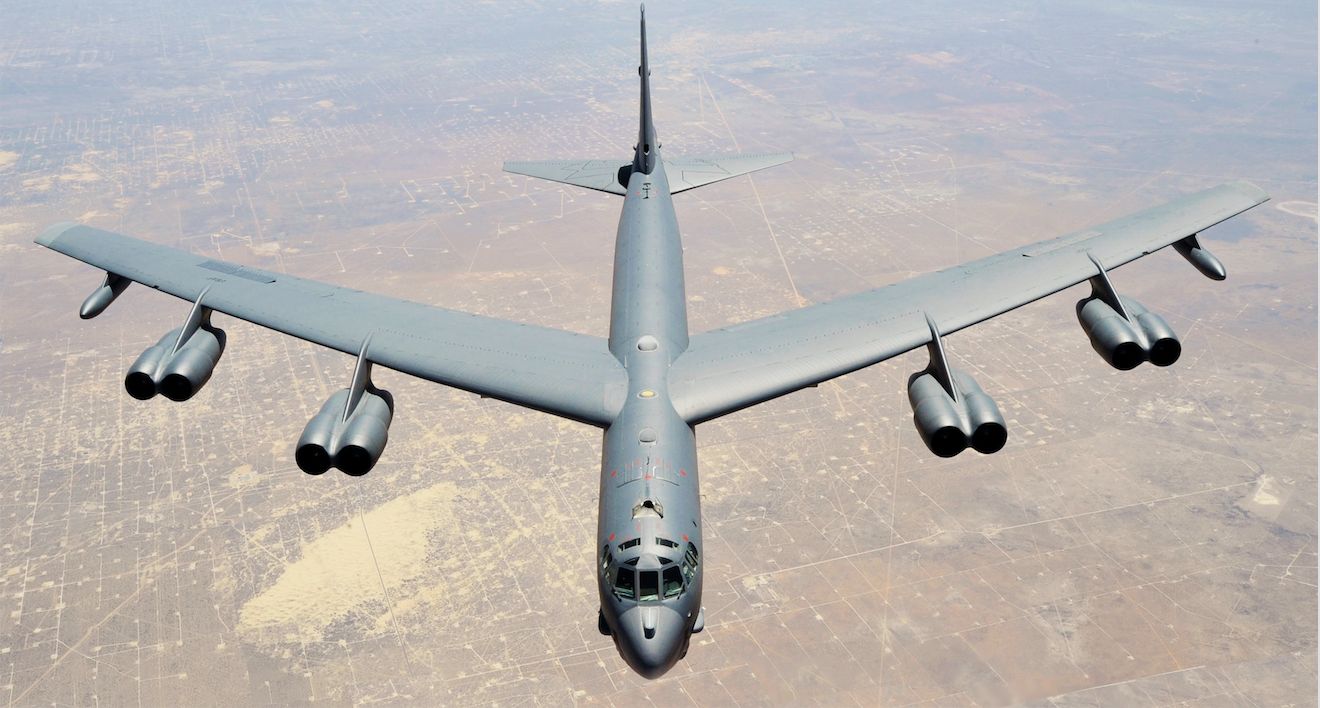
Complementing the capabilities of Carrier Strike Group Twelve, the U.S. Air Force has deployed four nuclear capable B-52H Stratofortress heavy bombers. These aircraft can deploy considerable firepower, most notably the 2,500km range AGM-86 of which each aircraft can carry up to twenty. Such firepower is considered sufficient to overwhelm most air defence networks, and is more than enough to engage Iran’s S-300PMU-2 air defence batteries even assuming a high probability of interception by the Russian made platform. The S-300PMU-2 has less than half the rate of fire as the newer S-400, and a system can only engage up to 36 missiles simultaneously. To compensate for the mediocre capabilities of the carrier group’s F-18E Super Hornets, which are extremely slow at Mach 1.6, cannot manoeuvre well and lack the ability to operate at high altitudes, the U.S. Air Force has also deployed a squadron of F-15C Eagles - dedicated air superiority platforms equipped with AIM-120C air to air missiles and capable of flying at 20km altitudes and at speeds of Mach 2.5. The Eagles are vital to ensuring American control of the skies, and can protect bombers and naval groups from potential air attacks by Iran’s standoff missile equipped fighters.
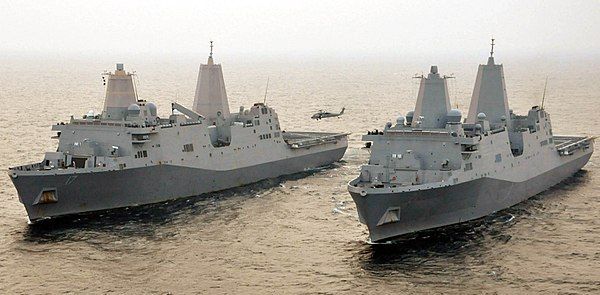
To further secure its military facilities in the Middle East, which are prime targets for Iranian missile attacks, the U.S. has deployed additional Raytheon MIM-104 Patriot missile batteries to protect key assets. The Patriot’s test record has left much to be desired, particularly relative to the AEGIS system on American destroyers, and its combat performance even against relatively basic missiles such as the Scud-B has if anything been worse. Considering the capabilities of Iranian ballistic missiles such as the Khorramshahr, a licensed derivative of the North Korean Musudan (Hwasong-10) with multiple warheads, the Patriot is unlikely to provide sufficient protection against missile attacks - but its deployment remains highly symbolic nevertheless. The U.S. Navy has further deployed the USS Arlington, a 25,000 ton San Antonio Class amphibious assault ship capable of landing a contingent of fourteen armoured vehicles and 699 Marines and carrying two MV-22 Osprey helicopters. While deployment of a landing force of this size on the Iranian coast is unlikely, it is a highly symbolic deployment and could prove useful for the capture of Iranian held islets in the Persian Gulf - which are reportedly defended by the country’s Revolutionary Guard Corps. The Ospreys meanwhile could be key to deploying special forces deeper into Iranian territory due to their high endurance and survivability - possibly to secure nuclear or missile sites or gather intelligence. The deployment of these combined assets represents a formidable force, one which if sufficiently expanded and supported by U.S. allies such as Saudi Arabia and Israel, which field massive air fleets of their own, may be sufficient to launch a larger war against the Islamic Republic should Washington deem this necessary. Tehran’s threat to withdraw from the nuclear non proliferation treaty and restart enrichment of uranium is unlikely to be tolerated by America or its allies - and deployment of a large contingent within strike range could serve as an effective warning of the potential consequences should Iran pursue this path.
