
Iran Threatens to Go Nuclear in Response to American Sanctions - What Could Go Wrong?
Military Watch Magazine Editorial Staff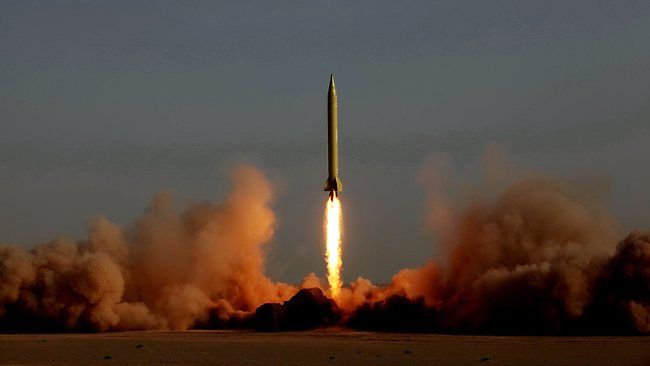
Iranian Shahab-3 Ballistic Missile (Korean Rodong-1)
Following the American withdrawal from the Joint Comprehensive Plan of Action (JCPOA), an agreement signed by the U.S., China, Russia, Germany, Britain, France and the European Union intended to place constraints on Iran’s nuclear program to ensure the country does not obtain nuclear arms in an exchange for a lifting of UN economic sanctions on the country, Washington has gradually strengthened its own unilateral economic sanctions against the Islamic Republic. While American sanctions on Iran were implemented within two weeks of the JCPOA coming into effect, and further sanctions have since been threatened by European states over Tehran’s pursuit of a ballistic missile program perceived to undermine Western interests in the Middle East, these escalated considerably from 2017 under the new administration of President Donald Trump. Recent threats by the U.S. to cut off Iran’s oil exports, vital to the survival of its rentier oriented economy, and later pledges to impose of secondary sanctions on leading clients for Iranian oil including Taiwan, India, Japan and the Chinese mainland, could if successful to bring a severe contraction in the Iranian economy - a crisis which Washington appears to hope the Islamic Republic will be unable to weather. U.S. rhetoric appears to indicate that its goal is to bring about regime change not through military action, but rather through undermining the current Iranian government’s legitimacy by putting pressure on the population’s living standards. State Secretary Mike Pompeo stated to this effect when inaugurating a new round sanctions in 2017, warning of the consequences should Tehran fail to comply with U.S. demands: “The (Iranian) leadership has to make a decision that they want their people to eat…. I’m very confident the Iranian people will take a response that tries to fix that themselves as well.”
In response to mounting U.S. economic pressure, Iranian Foreign Minister Mohammad Javad Zarif said Tehran could consider a number of options which could see the country seek the development of a nuclear deterrent. Minister Zarif stated to this effect: "there are many options available to the Islamic republic, and the country's officials are considering them. Leaving the Non-Proliferation Treaty (NPT) is one of the options." The NPT prohibits signatories other than the five permanent UN Security Council members (U.S., China, Russia, Britain and France) from pursing nuclear weapons, but guarantees them the right to pursuit of civilian nuclear technologies - a right widely perceived to have been infringed upon by the excessive restrictions imposed by the Western powers on Iran’s nuclear sector. Iran’s withdrawal from the NPT would likely quickly lead to its acquisition of nuclear arms, with the country’s nuclear sector having received extensive assistance from North Korea, Russia and China. This would make Iran the Middle East’s second nuclear power following Israel’s obtaining of nuclear arms in the 1960s, and the world’s tenth nuclear power and fifth non-NPT state to nuclearise. Only one country, North Korea, has ever withdrawn from the NPT - with Pyongyang having been pressured by the Soviet Union to ratify to the treaty in the 1980s in exchange for provision of nuclear reactors. The East Asian state withdrew from the NPT in 2003, in the face of considerable Western economic pressure and threats of U.S. military attack using tactical nuclear weapons, and it has since developed both miniaturised thermonuclear warheads and intercontinental range ballistic missiles capable of deterring any potential U.S. or Western military action.
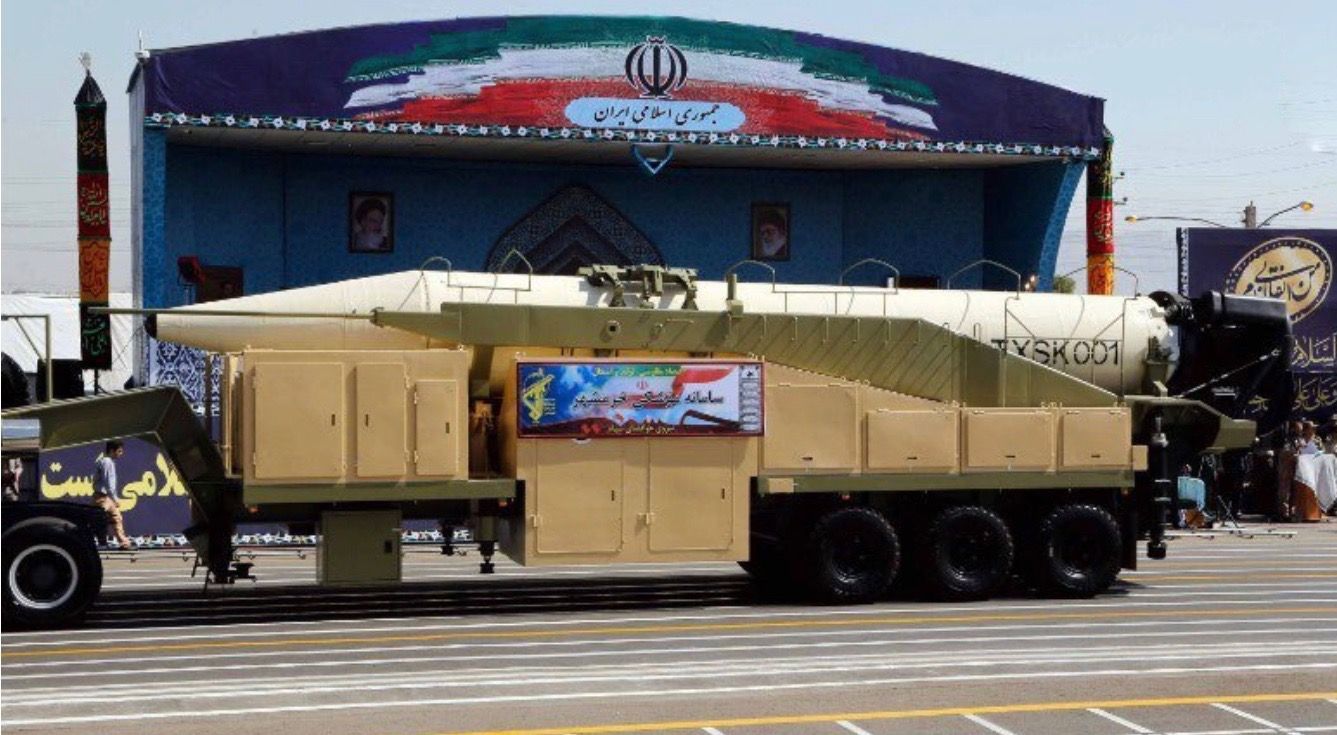
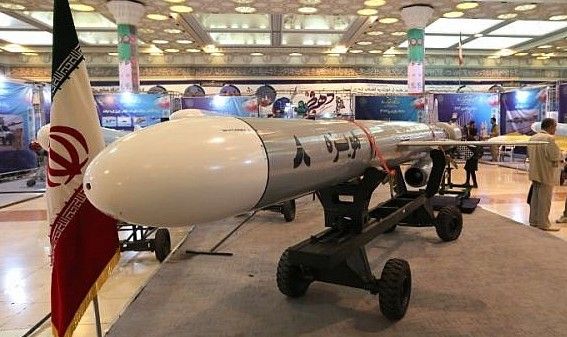
Iran’s pursuit of nuclear weapons could potentially help to alleviate the currently heavy burden on its conventional forces, with the U.S., North Korea and the Soviet Union all having deployed nuclear arms in the past as a means of facilitating a reduction in conventional defence spending. The country’s close cooperation in missile development with North Korea, most recently materialising in the acquisition of the Musudan (Hwasong-10) upper intermediate range ballistic missile with multiple reentry warheads, provides it with the technologies needed for effective nuclear delivery not only to Western allies in the Middle East such as Israel and Saudi Arabia - but also to much of Europe. Iran's new indigenous Hoveyzeh cruise missile and Fateh cruise missile submarines - suspected to have been developed with considerable foreign assistance - could also provide formidable secondary long range delivery platforms if equipped with nuclear warheads. Whether Iran’s threat to nuclearise will serve as a deterrent to the imposition of further Western economic pressure, or whether its withdrawal could spark U.S. led military intervention, remains to be seen. Tehran’s position has nevertheless improved since the signing of the JCPOA, as while pressure from the United States and to a lesser extent its Western allies is considerably - it remains unilateral and lacks UN security council resolutions to support it - allowing Iran to trade freely with China, Russia, India and other non-Western parties which do not seek to invoke the toppling of its political system or curb its regional influence.
