
U.S. Deploys F-15C Air Superiority Fighters to Reinforce Growing Contingent Targeting Iran in Middle East
Military Watch Magazine Editorial Staff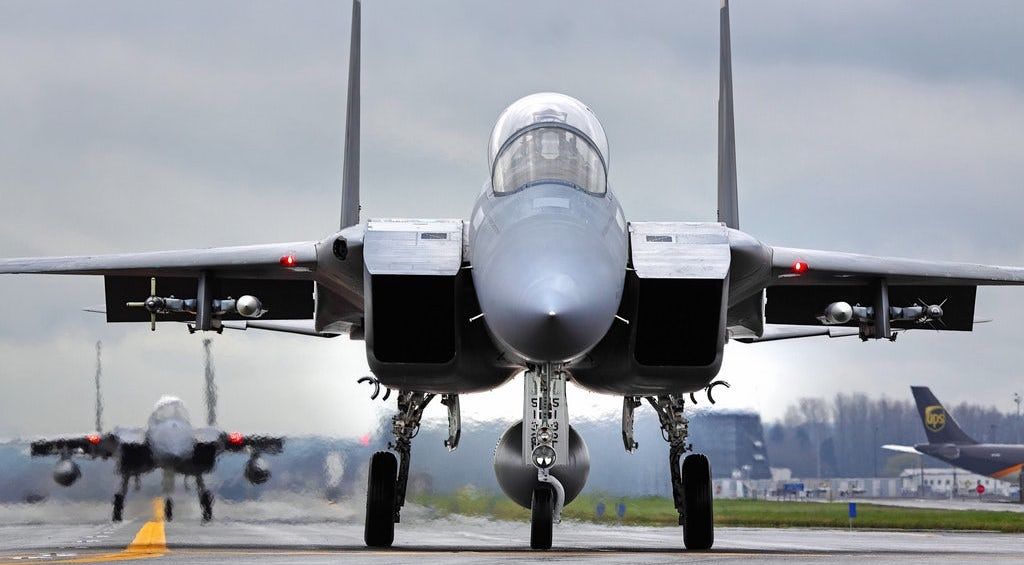
U.S. Air Force F-15C Eagle Air Superiority Fighters
Tyler Rogoway
The U.S. Air Force has deployed a squadron of F-15C Eagle air superiority fighters to an undisclosed location in the Middle East, with the elite fighters outfitted for air to air combat and deploying AIM-120C and AIM-9X air to air missiles. The deployment follows the dispatching of a carrier strike group to the Persian Gulf led by aircraft carrier USS Abraham Lincoln, which as reinforced by four B-52H Stratofortress nuclear capable heavy bombers, additional Patriot missile batteries and the USS Arlington San Antonio Class 25,000 ton amphibious assault ship. These deployments have been carried out in the context of fast growing tensions between Washington and Tehran, and in response to unclassified threats to American forces posed by Iranian forces and and overseas assets following the imposition of further economic sanctions on Tehran. The deployment of the F-15s comes shortly following the withdrawal of American F-22 Raptors three months prior, which returned to the U.S. as part of the Air Force’s attempt to increase combat readiness rates for its Raptor fleet by reducing overseas operations. The F-15C is the most capable Western air superiority fighter ever to enter service, with the sole exception of the F-22, and is the fastest fighter jet in the world capable of achieving speeds of Mach 2.5 at altitudes of 20km. This heavily specialised variant of the Eagle is deployed only by the United States, Saudi Arabia, Japan (as F-15J) and Israel.
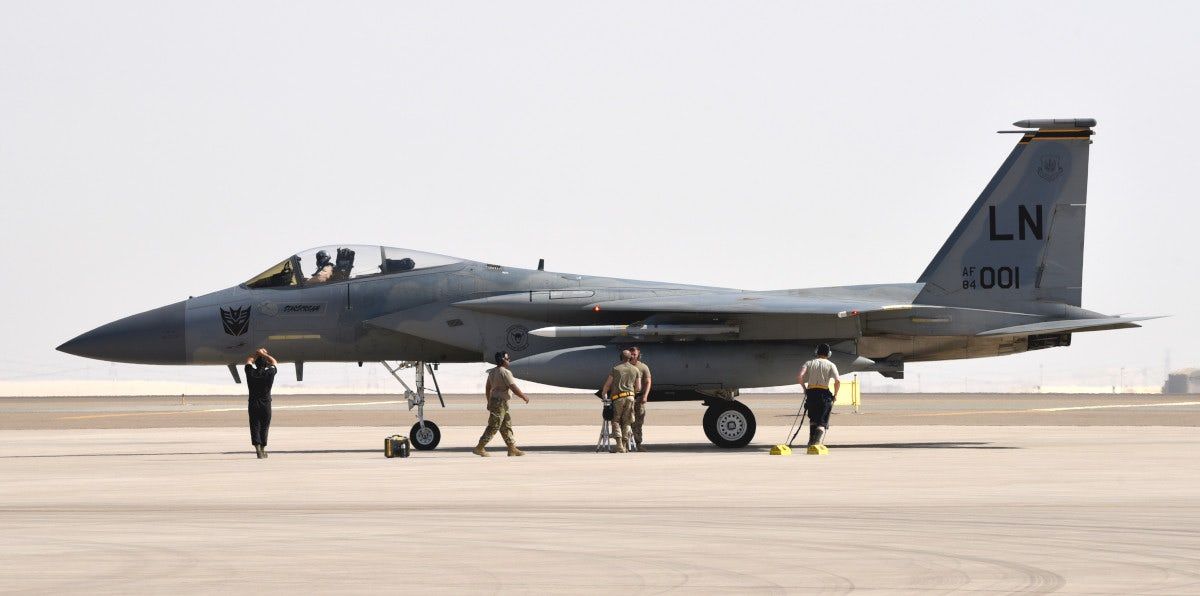
F-15C fighters deployed were reportedly part of the 48th Fighter Wing, and were previously based at RAF Lakenheath in the United Kingdom. The aircraft retain a considerable advantage in their performance specifications over any fighter currently in the Iranian inventory with the exception of the F-14 Tomcat - a heavier U.S. Navy counterpart to the F-15 which entered service two years prior and was sold to Iran in the 1970s. As the F-14 has been highlighted as a potential threat to American B-52H bombers in the case of hostilities, particularly when deploying Fakour-90 air to air missiles with ranges of over 200km, the F-15C could well serve as an escort for the Stratofortresses in the case of an attack. Iran's two lighter MiG-29 squadrons acquired from the Soviet Union, while potentially formidable, have not been significantly modernised since acquisition or equipped with modern air to air missiles such as the R-77 - and are thus heavily restricted in their ability to contest air superiority or engage the AIM-120C equipped American Eagles. While U.S. assets in the Middle East are currently insufficient for a major strike on Iran, they are capable of retaliating for any attack on U.S. personnel, and if further reinforced could form the basis of a large permanent deployment which would pose a major threat to Iranian security. This could potential force Iran’s government to divert more resources towards its military, the budget for which is currently low, which would complement the effects of tightening American economic sanctions by further stretching state funds - a highly unwelcome development for Tehran.
