
Iran’s Revolution 40 Years Later; Consequences for the Military and the Middle Eastern Balance of Power
Military Watch Magazine Editorial Staff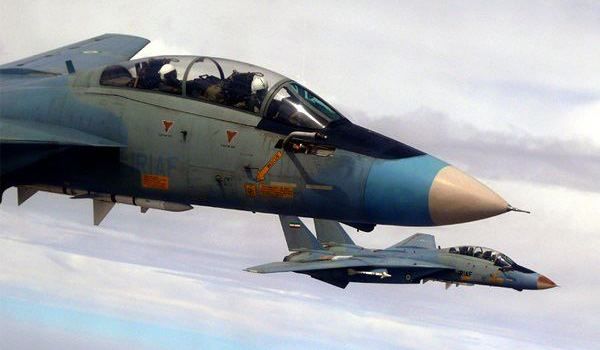
Iranian Air Force F-14 Tomcat Air Superiority Fighters
1979 saw the overthrow of Iran's Pahlavi dynasty and the end of centuries of dynastic rule in favour of a republican system which remains in place to this day. Until that time, under the rule of Mohamad Reza Shah, Iran had maintained high levels of military expenditure and sought to become one of the world's foremost military powers - something it was well on its way to achieving. This was accompanied by land redistribution and considerably investments in industrialisation - transforming the country from a developing nation to a middle income state within relatively short period of time. The country was one of the world's largest oil exporters, and had also embarked on a civilian nuclear energy program which the U.S. Central Intelligence Agency predicted in 1984 would almost certainly materialise into a nuclear weapons program within two decades. The vast majority of Iranian military equipment was sourced from the United States, with Britain also providing considerable quantities of arms including extremely large numbers of its indigenous Chieftain battle tanks, while Iran also provided the U.S. with listening posts and military facilities on its northern border with the Soviet Union. Iranian airbases and other key military facilities were built according to American specifications to allow them to withstand a Soviet attack, and while Iran was not a NATO member it was expected to participate in any Western led military action against the Soviet Bloc should such a war occur.
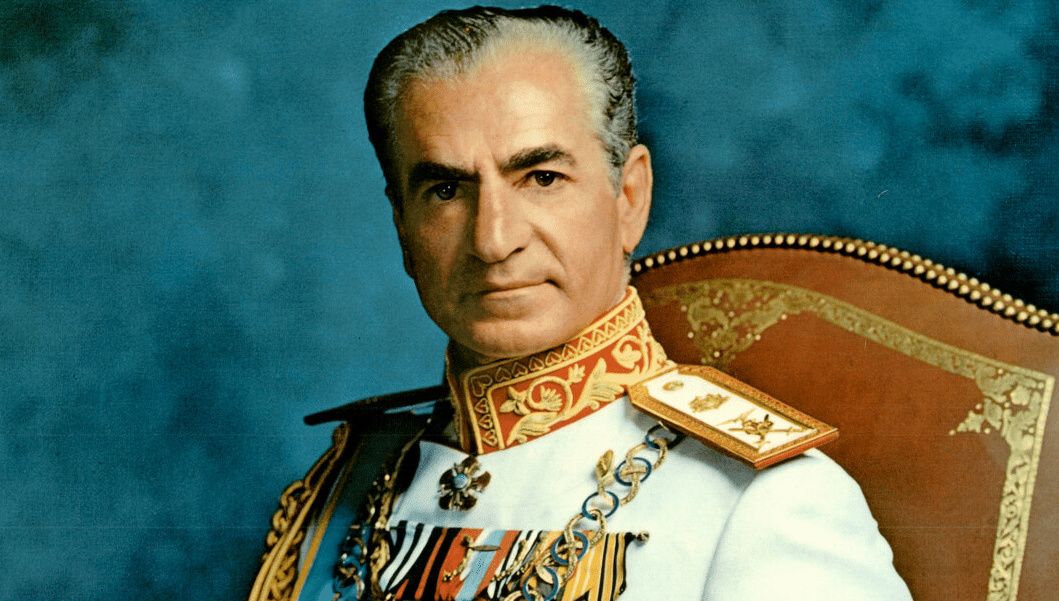
Iranian Shah Mohammad Reza Pahlavi
Himself a fully qualified pilot, the Mohammad Reza Shah was able to establish connections with some of the most influential U.S. aerospace companies as well as its government and military - allowing Iran special privileges when negotiating for American arms. Iran was as a result often one of the first if not the very first foreign country to acquire the most advanced American weapons available. While most Arab states and other American third world allies such as Thailand and South Vietnam were at the time forced to make do with light and unspecialised F-5 combat jets, Iran was offered advanced F-14 Tomcat and F-15 Eagle air superiority fighters of the next generation - and became the first recipient of American fourth generation combat aircraft in the world with the deployment of the Tomcat from the mid 1970s. Iran's position as the Western Bloc's prime ally in the Middle East was undisputed by either Saudi Arabia or Israel - neither of which had a comparable combination of economic clout, political influence and military might.
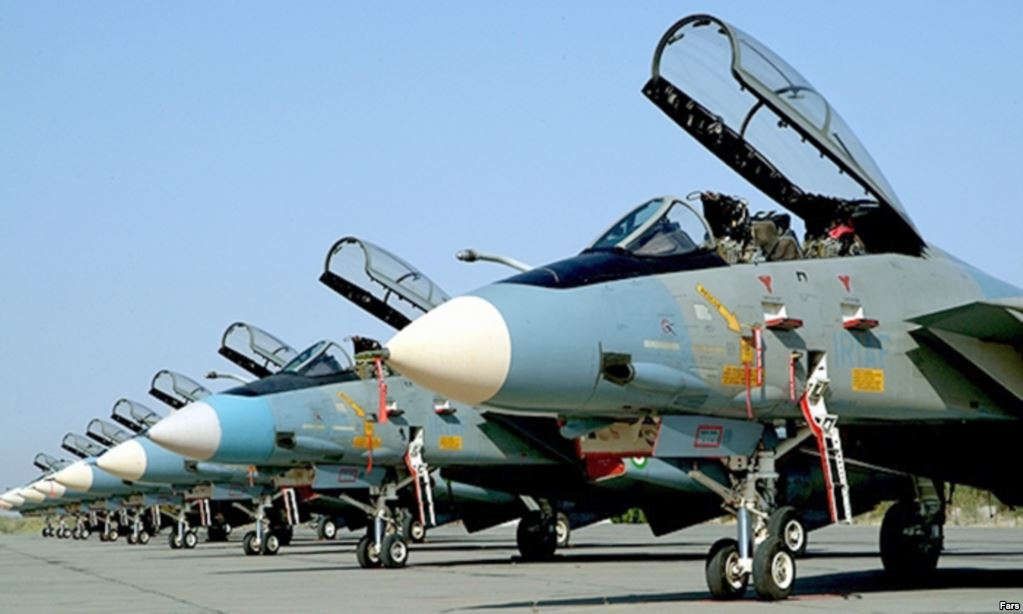
Iranian Air Force F-14 Tomcats
The ambitions of Iran's armed forces set them on a trajectory to become one of the most capable in the world, with the country fielding arguably the most capable fleets of air superiority fighters outside the United States or Soviet Union by the late 1970s with several hundred F-4D/E and F-5E high end third generation combat jets augmented by the elite F-14 - then the most expensive and sophisticated fighter in the world. The country had also planned to acquire 300 fourth generation F-16 light multirole fighters to augment this fleet - the first of which it had placed orders for before they entered service in the U.S. military itself. The Iranian Air Force was likely to become the aircraft's first foreign operator, and the largest operator other than the United States Air Force. Acquisition of three British made Invincible Class aircraft carriers and Harrier Jump Jets for their decks was also under consideration to project Iranian power in the Indian Ocean, and Iran was also set to be the first to receive American Oliver Hazard Perry Class high endurance destroyers to serve as escorts.
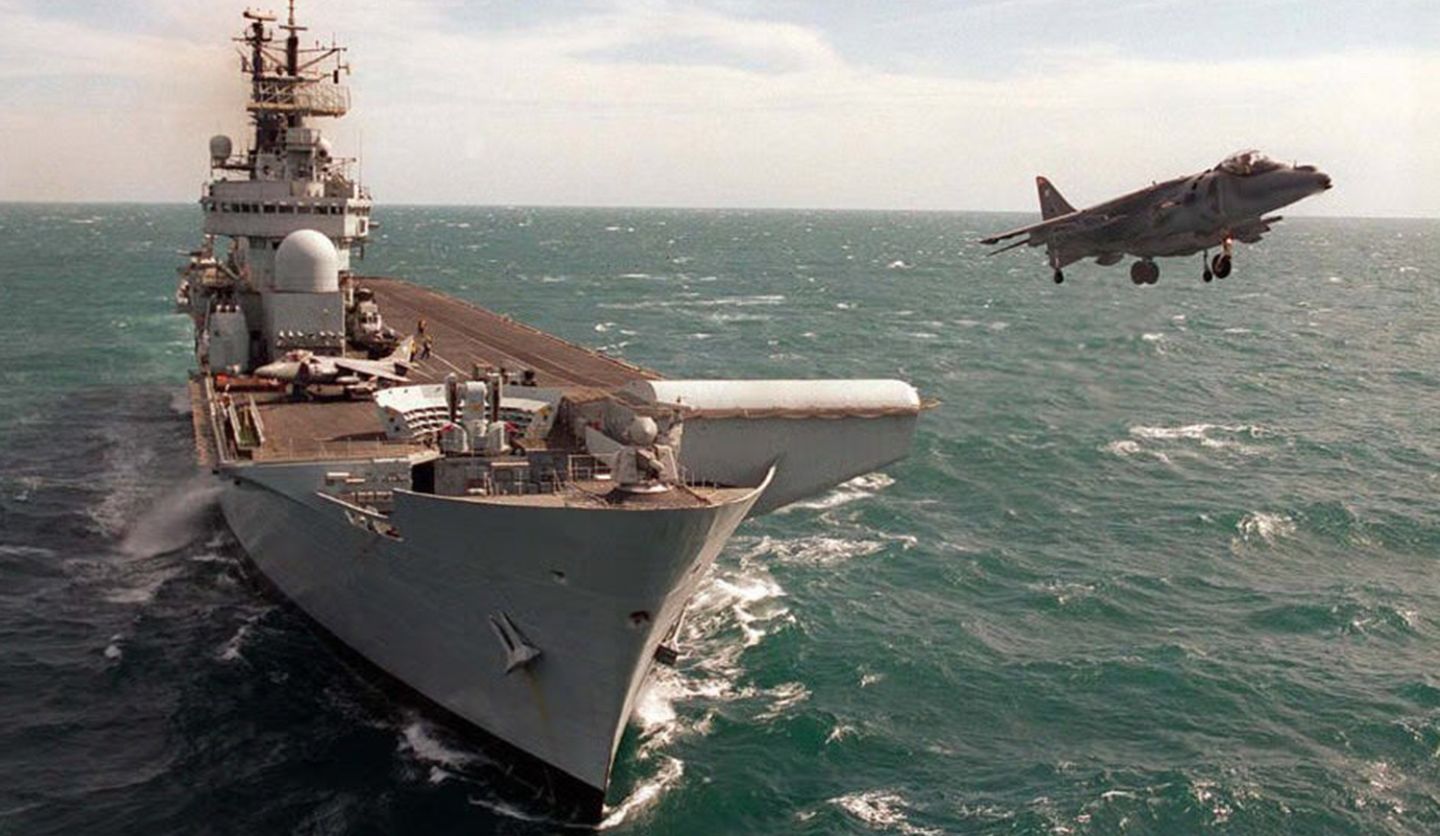
Invincible Class Carrier Launches Harrier Jump Jet
Iran's Islamic Revolution of 1979 and the overthrow of the Pahlavi dynasty changed not only the ideological orientation of the Iranian government, but it also represented a complete change in both its foreign policy and its military development. The collapse of relations with the West meant Iran was no longer able to purchase arms or spare parts from the United States - struggling to service its existing fleets. F-16 fighters and Oliver Hazard Perry Class destroyers under production in the U.S. to fulfil Iranian orders were instead sold to Israel and Taiwan respectively. Iran's only international supporters in the early days of the revolution were North Korea and Syria, with Libya and Pakistan providing some limited backing. With all U.S. arms deliveries halted and a negligible domestic defence industry, not only was Iran's rise to become a major military power stalled but the country also found itself with only minimal capabilities to defend itself - an issue worsened by the executions of most of the senior military command by the country's new government. While the causes of the Iran-Iraq War's breakout the following year in 1980 remain disputed, one key reason was that Iraq believed it could gain territorial concessions in Iran's oil rich border regions as the country's military was in disarray and it had lost all International backing. Iraq meanwhile enjoyed extensive military and intelligence support from the United States, which would lead the U.S. Navy to at times engage the Iranians at sea on Baghdad's behalf. The Western Bloc and Arab states almost unanimously supported Iraq in its efforts, while the Soviet Bloc continued arms sales to Baghdad but officially remained neutral.
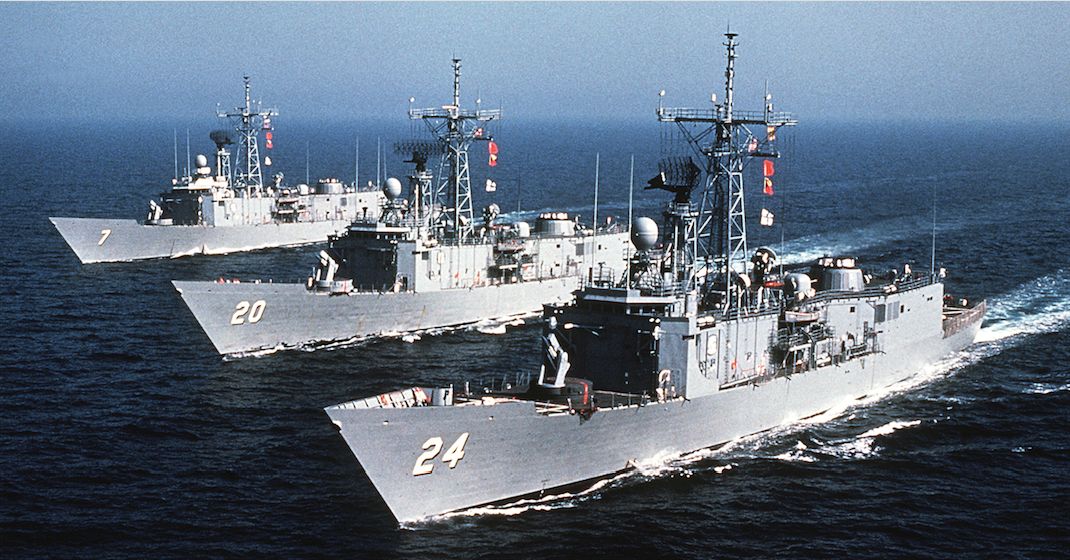
Oliver Hazard Perry Class Destroyers
Had the Pahlavi dynasty remained in power it is likely that the Iran-Iraq War would not have taken place. Nevertheless, Iran's military gave some indication of their potential during the conflict. The country's small F-14 fleet managed to shoot down over 160 Iraqi fighters - while only three of them were lost to Iraq's Air Force. This was despite the operational capabilities of the F-14s being severely depleted and lacking short or medium range air to air missiles - which had yet to be delivered from the U.S. when the Shah was overthrown. Had Iran continued to receive parts and munitions for its F-14 fighters and received the remaining fourth generation fighters for which it placed orders, even without considering the delivery of further F-16 batches and plans for additional squadrons of Tomcats, it would almost certainly have been able to exercise absolute air superiority over Iraq whose Air Force and air defences had struggled to counter even the far smaller forces Iran was capable of deploying. The Iranian Air Force's circumstances represent a trend prevalent in other fields of the military, and strongly indicate that had the Iran-Iraq war occurred under Pahlavi rule - Iraq would have been overwhelmingly defeated within a matter of months if not weeks.
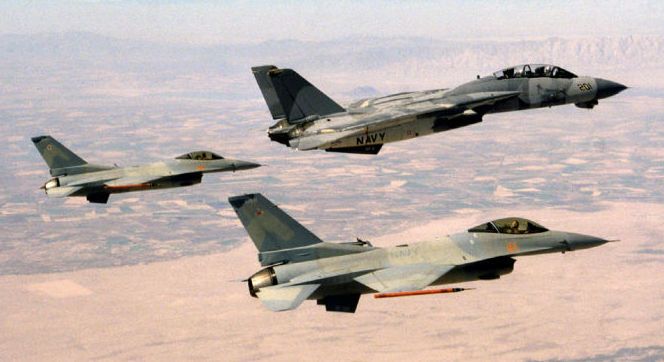
F-14 Tomcat and F-16 Fighting Falcons - set to have formed the mainstay of the Iranian fleet in the 1980s
The F-14 today remains the most advanced and capable fighter jet in the Iranian Air Force - over 40 years after its entry into service. The status of the is highly symbolic of the transformation of Iran's military from one of the most modern forces in the world to a body which operates primarily legacy weaponry. The F-14 is also a symbol, however, of republican Iran's considerable achievements in the field of defence production in response to its isolation, with the country's defence sector succeeding in reverse engineering advanced parts for the high end combat jets to keep them in service. The reverse engineering of the AIM-54 Pheonix air to air missile, the Tomcat's signature weapon, and development of the more capable indigenous variant the Fakour 90, is also symbolic of Iran's success in domestic defence manufacturing. Despite these achievements however, the country's trajectory to become a world leading military power ended in 1979 with economic downturn and a loss of access to advanced foreign arms. Formerly the second most advanced military in Asia - second in the sophistication of its systems only to the Soviet Union, Iran today relies heavily on the licence manufacture of Chinese and North Korean systems - or reverse engineering of 1970s American systems - to maintain its inventory. While the country's nuclear facilities suffered only minor damage due to Iraqi attacks in the 1980s, the Iranian nuclear program has come under considerably scrutiny from Western powers and considerable economic sanctions leading it to eventually yield to Western pressure and allow Western inspections of its nuclear sites. The republic's failure to develop an economy capable of better withstanding Western economic pressure has been one of its major failings, and without an economic upturn to facilitate a larger defence budget prospects for the military to return to the trajectory of the Pahlavi era remain slim.
